Magazine
Inside North Korea: An Israeli Traveler’s Terrifying Encounter in the World’s Most Isolated Regime
Meir Alfasi recounts his chilling journey into Kim Jong-un’s North Korea and why he will never return
- Chaim Gefen
- |Updated
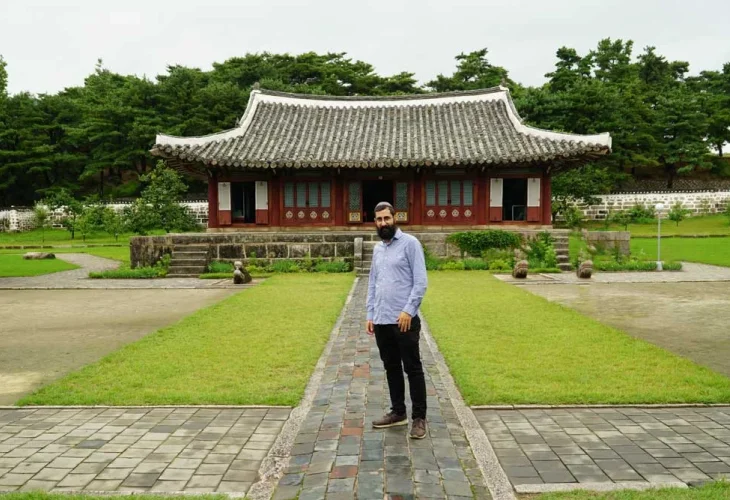 Meir Alfasi
Room 41 at the North Korean “Chung-Yun” Hotel was especially gloomy and gray. Complete darkness stared back through its narrow windows, and only a faint light seeped into the room from the shadowy lighting of the long corridor on the fourth floor. Meir Alfasi shut the windows, drew the curtains, and sat down to write about the turbulent experience he had gone through over the past hour, since landing at the international airport near Pyongyang, the capital of North Korea.
It was 5:30 a.m. when frightening music suddenly burst into the room. Alfasi woke in alarm and leapt out of bed. “Good morning to the citizens of North Korea,” boomed the state loudspeaker system. “Rise to your work, citizens,” the announcement continued, woven into the rising and falling musical notes that grew more and more ominous by the second.
Then, after the entire population was certainly awake, came the daily dramatic proclamation: “Long live the Great Leader Kim Jong-un, long live, long live.”
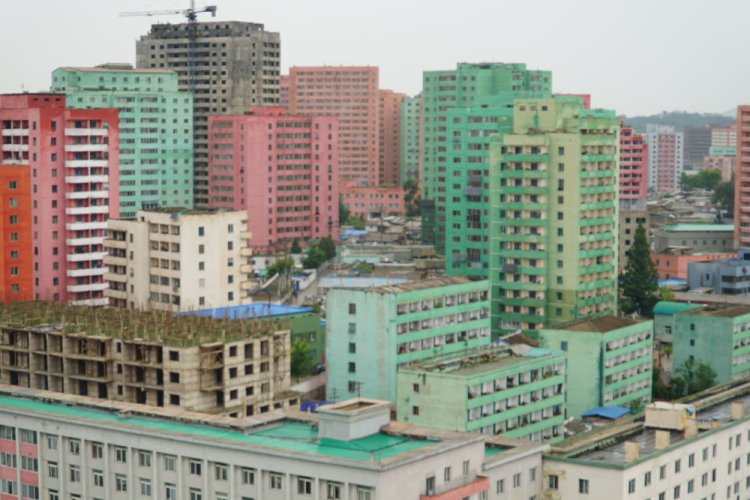 בנייה טיפוסית בצפון קוריאה
The world’s largest prison
The photographer and traveler Meir Alfasi, 40, a Chabad Chasid living in Rehovot, has visited more than 100 countries around the world — from remote, frozen Antarctica to Muslim countries whose visits are subject to publication bans imposed by Israel’s security establishment. But the most frightening journey of his life took place in North Korea, which he visited eight years ago.
North Korea is one of the most isolated and dangerous countries in the world. Over the past decades, the Kim dynasty has turned it into a brutal and threatening dictatorship. The terrifying stories told about the current ruler, 41-year-old Kim Jong-un, strike fear into the hearts of all citizens. Since coming to power in 2011, the dictator has been responsible for murderous purges, including executions of family members and close associates accused of treason. Some were executed by firing squad; others were thrown into cages with starving dogs and torn apart. Kim himself is said to watch these “spectacles” up close, smiling his cold, cynical smile.
The cult of personality surrounding the Kim family is evident everywhere. Their images hang in public spaces and private homes alike, and citizens bow before statues of the leaders whenever they pass them. In the north of the country lie Camp 14 and Camp 21, notorious labor camps holding around 200,000 political prisoners subjected to torture, executions, and even scientific experiments. Only a few survive, released broken and half-dead after undergoing “re-education.”
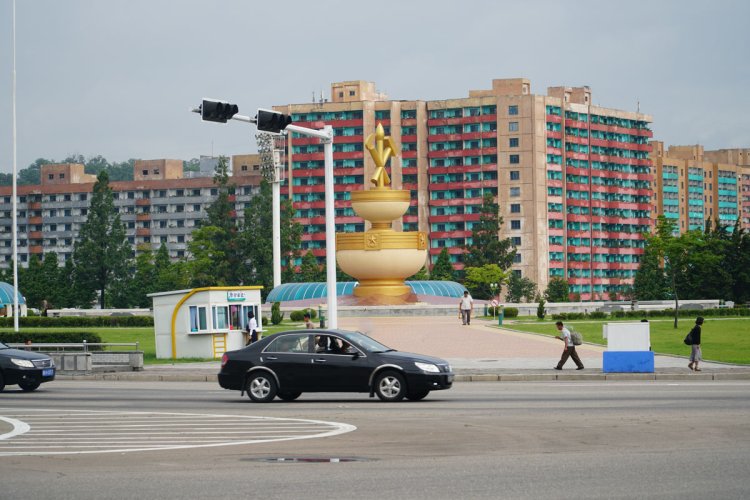 סמלה הקומוניסטי של מפלגת הפועלים בהנהגתו של קים ג'ונג-און, על כיכר בקוריאה הצפונית
A near-death moment
Alfasi’s first terrifying experience occurred at Sunan International Airport near Pyongyang. After nearly twelve hours of travel from Israel to China, he boarded a flight of North Korea’s national airline, Air Koryo. Three hours later, he found himself facing armed North Korean soldiers.
“The airport was empty,” Alfasi recalls. “Only a few locals hurried past, staring at me strangely — I was the only tourist there. I walked past a robotic camera filming me, and not one soldier smiled. They all looked at me with a cold, chilling gaze.”
Before entering the country, Alfasi had been instructed not to bring prayer books or a Bible. “My tefillin were in my suitcase. When the soldier decided to open it for a manual search, I started shaking with fear. Inside the tefillin are parchment scrolls containing biblical passages, and if they discovered them, I was finished. North Korea defines itself as a secular, religion-free state, and smuggling religious materials carries the death penalty.
“For long moments he rummaged through the suitcase, and my heart sank. Suddenly he found the tefillin, pulled them out, examined them from all sides, and motioned to another soldier: ‘Go get me a screwdriver.’ He wanted to open them to see what was inside. I was trembling.”
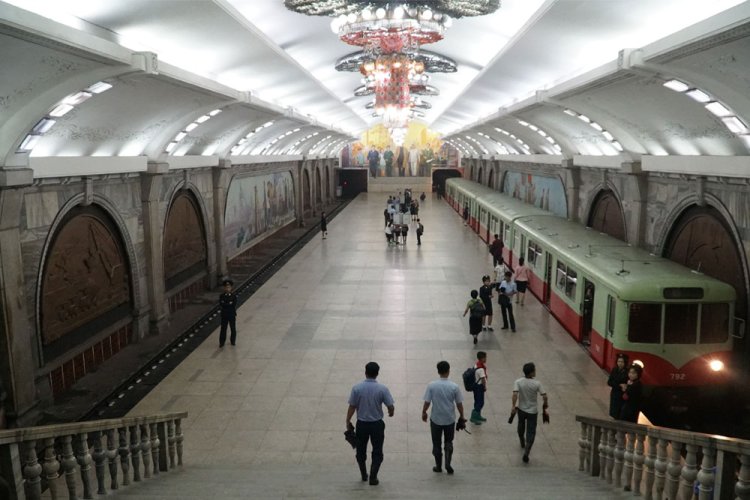 הרכבת התחתית בפיונגיאנג, קוריאה הצפונית
Did you regret your idea of visiting North Korea at that moment?
“I always regret my ideas,” he says half-jokingly. “Every time I tell myself this is the last time I put myself in danger — but then I keep traveling to dangerous places. I can’t control my urge to discover every corner of the world.”
The minutes at the airport felt like eternity. “Just before the soldier returned with the screwdriver, I saw my guide approaching from afar. Her name was Lee — I remember it to this day. When tourists visit North Korea, the government assigns them an official guide. She spoke with the soldiers, showed them my permits, distracted them, and they let me go.”
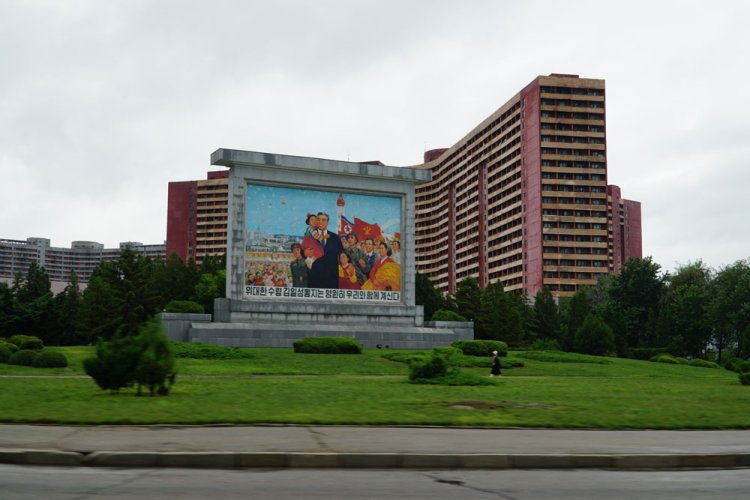 הסגידה למנהיג המדינה ניכרת בכל מקום
Constant surveillance
Alfasi’s first night in North Korea was painfully long. The hotel was silent, as were the streets outside. He describes Pyongyang as a ghost city: “There’s deep sadness in people’s eyes. Everyone walks like robots, without a smile or unnecessary movement. By early evening, there are no streetlights, and the city is completely dark. Entertainment venues close early, and the streets become empty and deserted.”
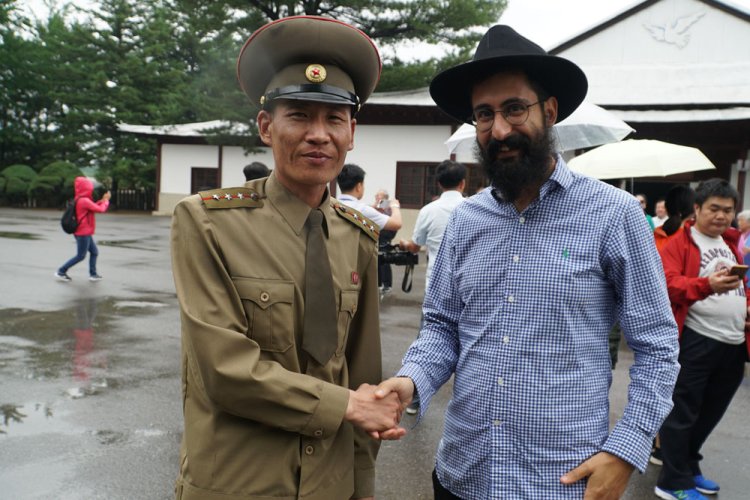 לאחר הבעיטה, עם אחד החיילים
How did you spend the evening?
“Very boringly. I left my room intending to take the elevator to the top floor to view Pyongyang from above. Suddenly someone approached me and, with a cold, secretive look, signaled for me to return to my room. Later I learned that the top floor housed a branch of the North Korean intelligence service.
“I went back to my room and began writing about everything I’d experienced, hoping it would calm me. The next morning, when I met my guide again, she looked at me sharply and asked what I had written during the night.”
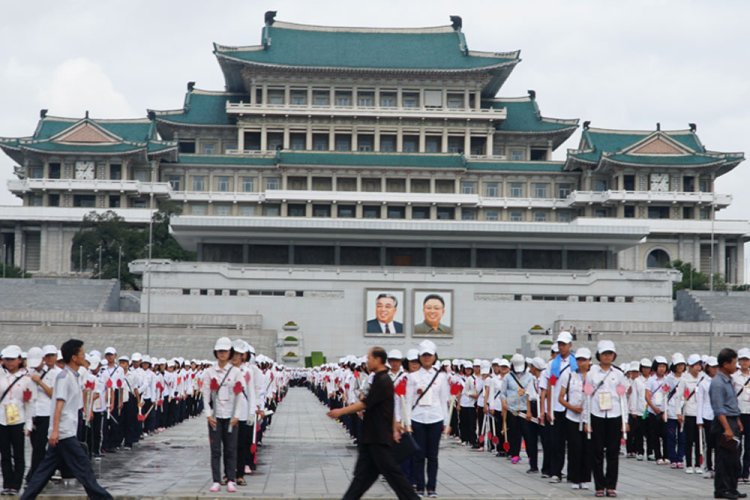 סגידה למנהיג, גם בבתי הספר
Were you being watched? Were there cameras in the room?
“Of course I was being watched — the question is how. I checked every corner of the room and found no cameras. I’ll never know how they knew what I was doing when I was alone.”
During his stay, Alfasi visited the Grand Monument in Pyongyang, featuring 229 statues of revolutionary figures, led by Kim Il-sung and Kim Jong-il. “The guides told me exactly which angles I was allowed to photograph. I was very tense and apparently stood in a way that didn’t show enough respect. Suddenly I was kicked hard from behind. I turned around and saw a soldier staring straight into my eyes. From that moment, fear overwhelmed me.”
According to North Korean law, everyone must bow before the statues, and soldiers patrol to ensure compliance. “Even though it’s a bow of respect and not worship, Jewish law forbids it. I was torn — if I didn’t bow, it could be the end of me.”
“I found a creative solution. I silently recited the prayer Aleinu, and when I reached the words ‘they bow to vanity and emptiness,’ I bowed slightly.”
That night, he returned to the hotel, anxious and unable to sleep. With no internet, he flipped through the TV channels until he found Al Jazeera. “Ironically, hearing a different language calmed me a bit.”
How did you cope with the fear?
“It was a night of terror. I got up, took my tefillin, and hugged them. I fell asleep briefly and woke up to find I’d slept with them beside me.”
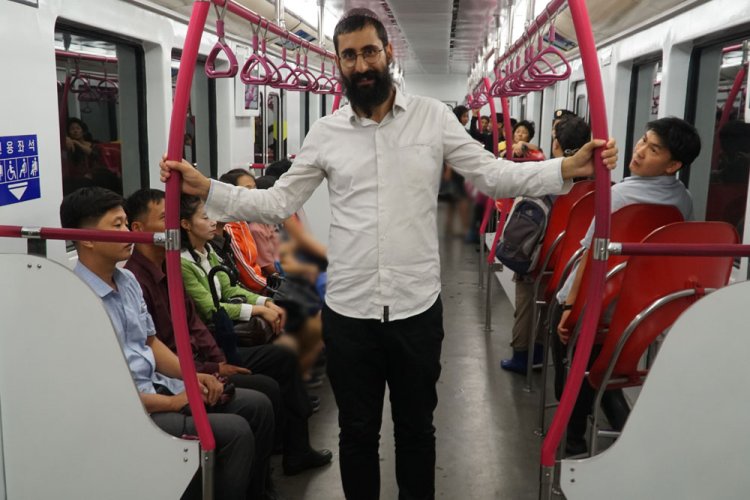 אלפסי ברכבת
A serious threat
Alfasi spent four days in North Korea, visiting the Pyongyang metro and the Korean Demilitarized Zone — the most dangerous border in the world. He had hoped to print the Tanya there, following the Lubavitcher Rebbe’s instruction to print it wherever Jews reach. “But all printers are locked in safes. The government monitors every print job to prevent religious or anti-regime messages.”
Despite the ban, Alfasi distributed cards listing the Seven Noahide Laws to locals. “I saw curiosity mixed with confusion in their sad eyes.”
On his final night, he received a government order forbidding him to publish the photos he’d taken. Back in Israel, he published them anyway. “Afterward, I received an official email from Pyongyang threatening my life,” he says. “But I’m not afraid — this is an isolated country with plenty of enemies.”
Will you ever return?
“I’ve visited many dangerous places and might return to some,” he concludes. “But one thing is certain: I will never return to North Korea.”