
Magazine
The Artist and His Psalms: A Journey of Faith and Art
From humble beginnings to a lifelong mission of bringing Psalms, faith, and color into Jewish homes and public spaces worldwide
- Hidabroot
- |Updated
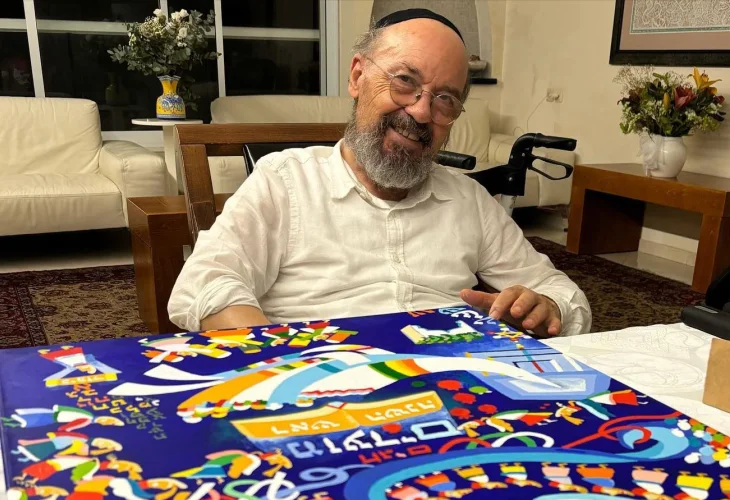 Artist Raphael Abecassis
When visiting the impressive studio of artist Raphael Abecassis in Netanya, it’s impossible to ignore the many Books of Tehillim (Psalms) displayed there — each one exquisitely designed with extraordinary artistic talent.
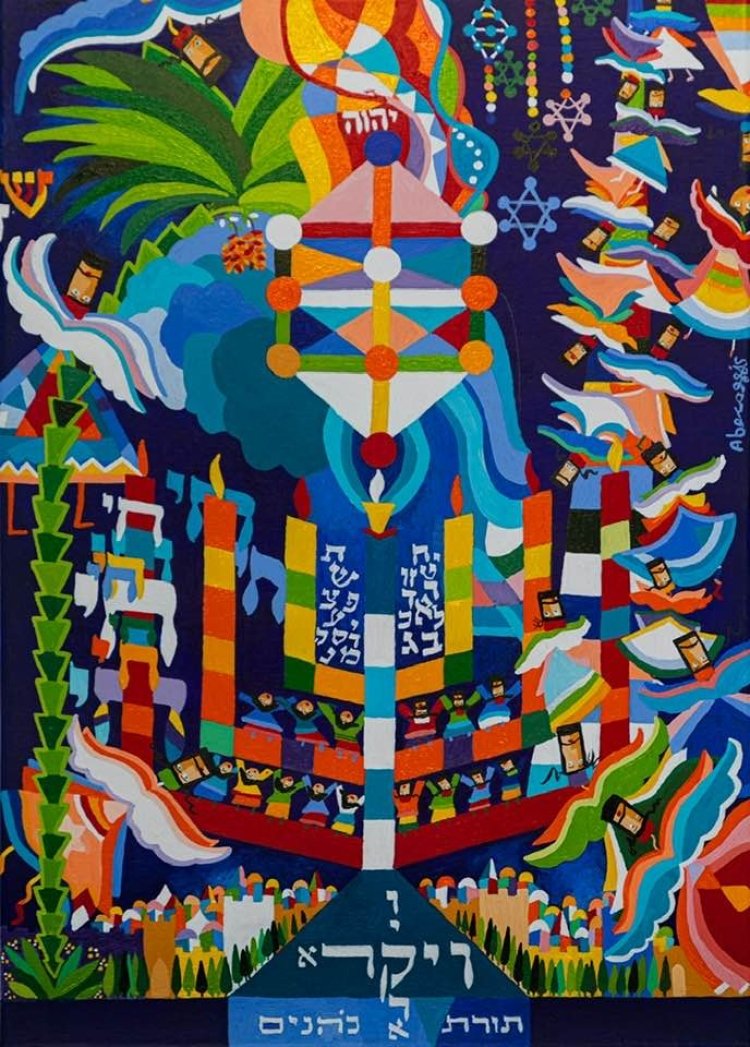
“Books of Tehillim are my passion,” he explains. “I’ve devoted my entire life to them. Over the years I’ve designed countless Books of Psalms, and no two are ever the same. What they all share is an intense, vibrant use of color. That’s no coincidence — I come from Morocco, where everything is colorful, lively, and joyful, and I adopted that same spirit in my art.”
When Art Enters Life
Unlike many artists, Abecassis did not grow up in an art-loving family, nor was art part of his early life.
“I grew up as a child in a struggling family in Netivot, in a small house — one of the first built in what was then a development town. My parents barely managed to support us, and of course there was no money for classes or cultivating talents.”
It was only at the age of twenty that he first discovered his affinity for art.
“At the time I planned to enter the workforce and study to become an electrician,” he recalls, “but by pure chance I found myself in Be’er Sheva and saw a large building with a sign that read ‘Teachers’ Seminary for Art.’ To this day I don’t know why, but I decided to go in. I introduced myself and said I wanted to study there. When the course coordinator asked, ‘Where are your works and certificates?’ I dodged the question. Eventually he tested me, asked me to draw a bit, and then approved my admission. That’s how I began studying.”
What he initially thought would be an easy and enjoyable course quickly proved demanding.
“I had to complete a huge amount of theoretical and practical material,” he says, “but at the end of that year, the course coordinator told me I had covered all types of drawing and that from then on I could paint whatever I wished.”
As a final project, Abecassis and his classmates were required to submit a major work. While others chose modern art, Abecassis decided to create an illuminated ketubah (Jewish marriage contract).
Why a ketubah?
“Something in my heart drew me there,” he says. “It was an unusual decision that required me to study sacred scribal writing and even undergo special training with an expert scribe. But then something remarkable happened, and I suddenly felt myself being drawn deeply into Judaism. Judaism was never foreign to me; I come from a religious family with strong roots. But like many immigrants, over the years the connection cooled a bit and I drifted away. When I began working with the sacred letters, they entered my soul. I felt as if they were speaking to me. Suddenly I understood that of all art forms, I connected most deeply to Judaica — and specifically to that.”
That same year, Abecassis decorated hundreds of ketubot and realized he had found his calling.
“I also painted other things such as posters for the Ministry of Information that existed at the time, shop signs, newspaper illustrations — but ultimately I positioned myself entirely within Judaica. For nearly fifty years now, that is the only thing I do: Judaica art.”
“The Rebbe Said: ‘Wait a Little’”
During those years, Abecassis lived in Netivot, close to the revered Baba Sali of blessed memory. His wife was close friends with the Baba Sali’s wife and was often invited to their home to help translate handwritten correspondence sent to the rabbi.
“I too had many opportunities to visit the Baba Sali,” Abecassis recalls. “I witnessed profoundly uplifting things there — an atmosphere of wondrous holiness and deep awe.”
That feeling returned years later when he traveled to New York to visit art exhibitions and, on that occasion, visited 770 Eastern Parkway in Crown Heights — the residence of the Lubavitcher Rebbe.
“When I came to the Rebbe, I brought with me fifty parchment paintings I had created for the Book of Tehillim,” he says. “I had invested two full years in this project, with each illustration accompanying a different psalm written on rare, high-quality parchment. I desperately wanted the Rebbe’s blessing so I could complete the project and reach all 150 psalms.”
What happened next surprised him.
“He shook my hand and asked what I did. I told him I was a painter and explained the Psalms project. The Rebbe asked, ‘May I see the works?’ I excitedly took out the leather case, and the Rebbe said, ‘I need a month to look through them.’ The paintings remained with him for a full month while I extended my stay in New York. When I returned, the Rebbe gave the works back, blessed me, and offered several instructions and recommendations — among them, not to paint eyes on the figures, since they were holy. He also blessed me with several personal blessings I had requested, all of which came true. Finally, he blessed me that I should merit to paint in the Holy Temple.”
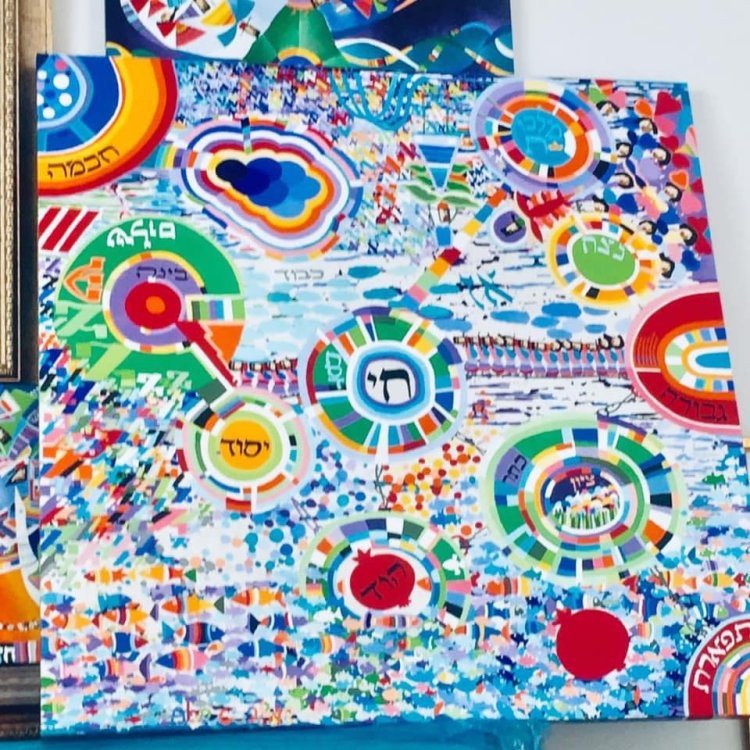
Awakening the Imagination
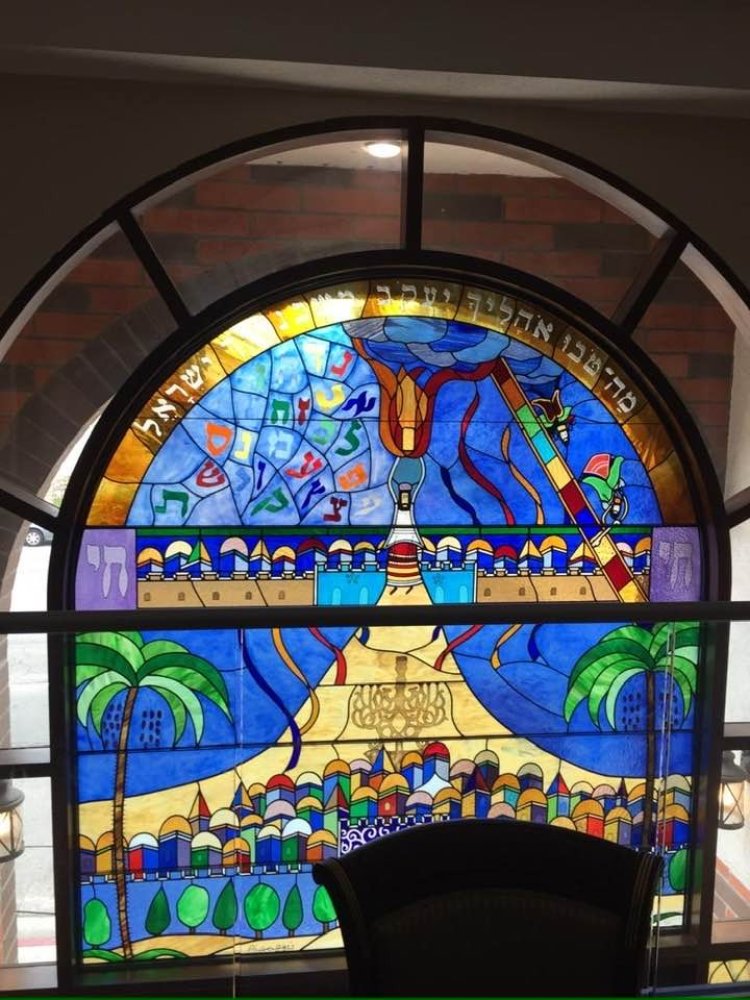
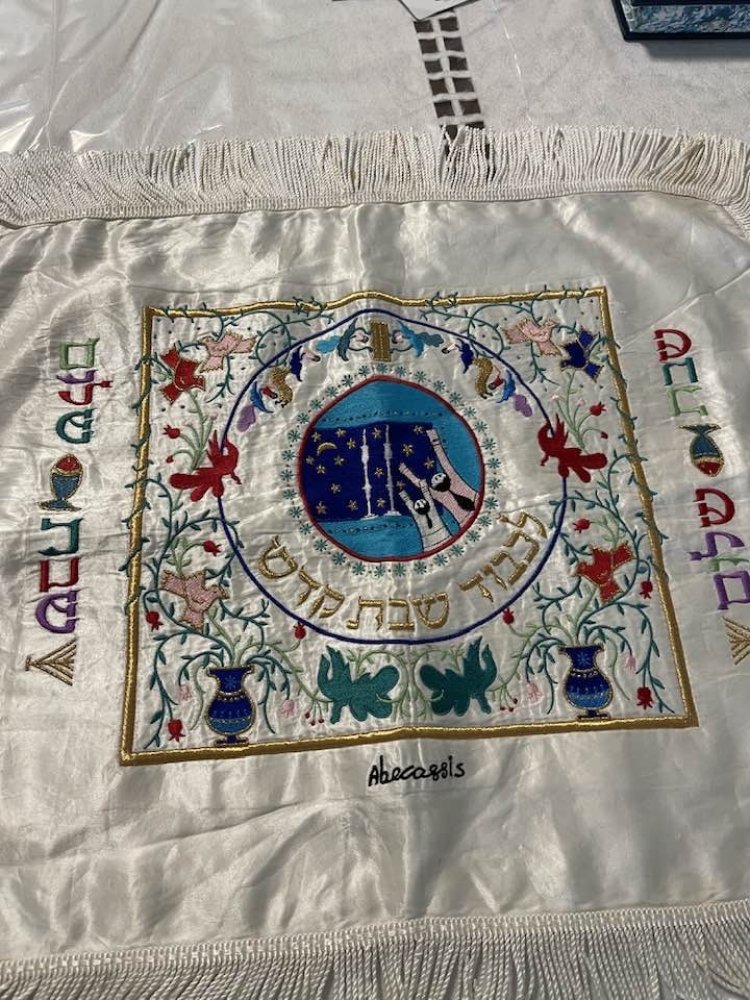
Forty years have passed since Abecassis returned to Israel from that visit, and he continues to create Judaica. His works have reached homes, institutions, synagogues, and public buildings across Israel and around the world.
In recent years, he has also entered a new field: paper cut art. “This is meticulous, almost ant-like work that combines art with cutting,” he explains. “You have to be extremely precise. Each piece takes months to complete, but people truly appreciate it, and the field is flourishing. Personally, I love creating verses and even entire psalms from Tehillim in paper cuttings — it connects directly to my lifelong passion.”
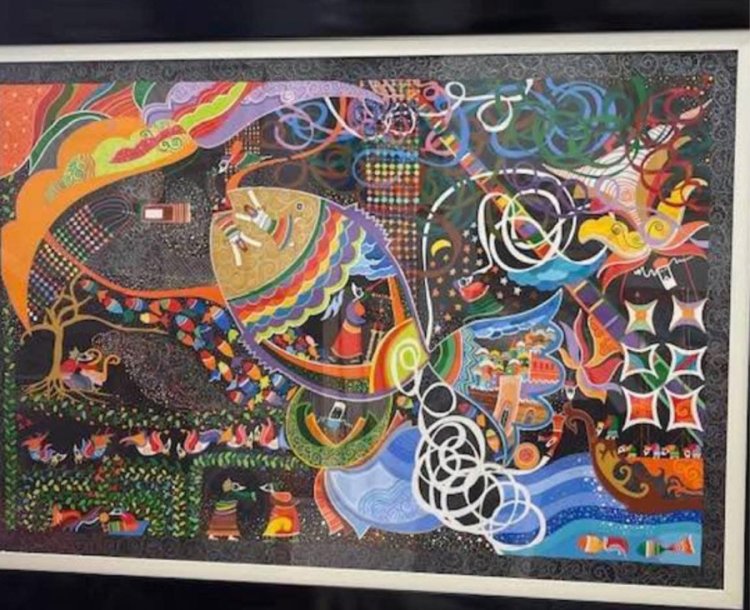
What about the Psalms project you showed the Rebbe — was it ever completed?
“It’s interesting,” he says. “Despite having created countless Books of Psalms since then, that massive parchment project was never finished. I can’t explain why, but it remains sealed and preserved in its leather case. Even today, I don’t see myself completing it.”
Abecassis has a dream that extends beyond his studio: “I want to make the Book of Psalms an integral part of the public space, through illustrations on street posters, billboards, and even vehicles. Imagine someone stuck in traffic reading an illustrated psalm, or a passerby drawing inspiration from a psalm painted on a wall. Think of someone waiting in line at a bank or clinic, immersed in Psalms instead. How many merits would that add for the Jewish people — especially in a time when we need it so badly.”

