Magazine
From the Safe Room in Be’eri to a Voice of Strength: Sigal Kraunik’s Story After October 7
A powerful testimony of faith, responsibility, and moral clarity
- Moriah Luz
- |Updated
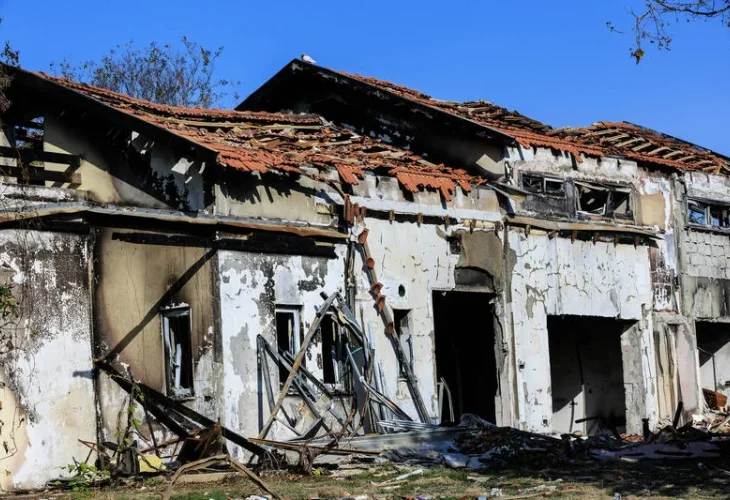 The devastation in Kibbutz Be'eri following the attack, December 2023 (Photo: Moshe Shai, Flash 90)
On Simchat Torah 5784, terrorists who infiltrated Kibbutz Be’eri also broke into the home of Sigal Kraunik. On an ordinary day, her husband — the community’s security coordinator, would have been by her side. But the artillery fire and alerts of an infiltration summoned him to the defense mission he had carried out faithfully for years. All Sigal could do was lock herself inside the safe room with her young daughter, grip the door handle with all her strength, and whisper, “May this hour be an hour of mercy and favor before You.”
“A failure, not abandonment”
“We failed terribly on October 7, but it’s clear to me that no one abandoned me,” Kraunik begins. “I don’t think anyone knew about the massacre and deliberately chose not to get up and defend us.” Today she lives in Hatzerim, in the temporary housing of the Be’eri community, until their kibbutz is rebuilt from the destruction left by the murderers. She lived in Be’eri for 23 years and raised four children there. Her husband, Arik (may God avenge his blood), came from a long-rooted kibbutz family and served as Be’eri’s security chief. On the morning of Simchat Torah, when the first sirens sounded, Arik understood it was diversionary fire. He hurried to say goodbye to Sigal and ran out to defend the residents. He managed to eliminate one terrorist cell, was shot and killed shortly afterward, and was the first fatality in the kibbutz.
Kraunik describes life in Be’eri before that terrible day as “95% paradise and 5% hell. We lived in a successful kibbutz, with nature, single-family homes, and above all, very, very good people — truly the salt of the earth. At the same time, I don’t remember quiet years. We called it ‘rounds’ [of escalation].”
Was there fear living in a kibbutz bordering Gaza?
“Not at all. As a family, we never evacuated Be’eri during escalations. We stayed with the kids, near or inside the protected space.
“Despite everything, I’ll admit — throughout all the years of rockets and different wars, I was terrified that the army would go in. Every soldier is a soul. I said we could crush them from the air, and it’s better that way. But we didn’t crush them.”
Kraunik herself never believed in coexistence with Gaza’s Arabs. As the daughter of a religious family who went through twists in her life and married a kibbutz-born man, she arrived with a worldview different from what was common in Be’eri. Over the years she shifted somewhat leftward, toward the political center. “I lived in a secular, left-wing kibbutz and told myself: ‘Wait, maybe they’re saying something I don’t understand.’ October 7 brought me back to positions much more right-wing than the home I grew up in.”
When she speaks about her community, she believes October 7 was a wake-up call for everyone. “We took far-reaching steps to accommodate the Gazans and gave them opportunities to work with us. We even went to protests against our own people — Jews on the other side of the divide, and called on them to evacuate Gush Katif and give it to the Gazans.
“I also believed what my kibbutz believed. I used to be right-wing, but I thought maybe I didn’t understand so well — and what could really happen? When we met Gazans day to day, we saw ‘nice people’ who greeted us: ‘Sabah al-kheir,’ ‘Sabah al-nour.’ Personally, I saw each person as an individual, and I made sure not to generalize everyone.”
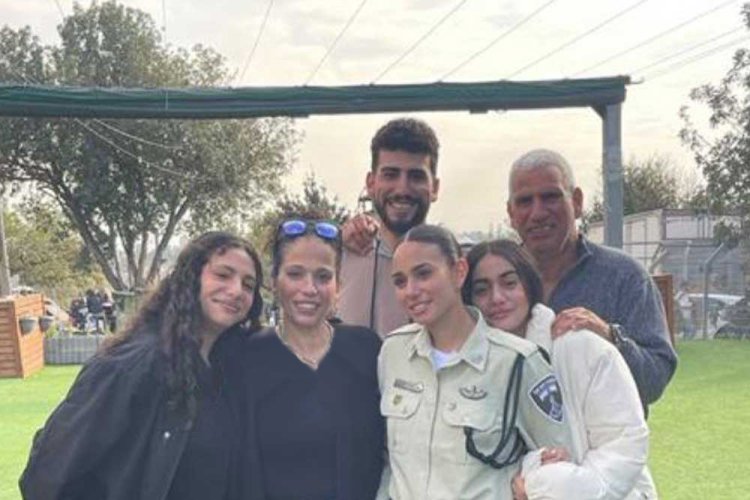 משפחת קראוניק
People talk today about “the conceptzia” (the mistaken assumption). What do you think?
“I don’t call it a ‘conceptzia’ — I call it arrogance. The massacre didn’t begin on October 7. For 11 years we watched them training near the fence. What normal country in the world allows a terror organization to train next to the border, see everything, know everything — and then tells us they’re ‘deterred’?”
When asked how she explains the gap between what residents of the border communities saw and how army leadership perceived Gaza’s plans, Kraunik answers: “The army believed so strongly that they were deterred — the commanders were convinced. If a commander believes something, it filters down to his deputy, and so on. And let’s not forget: soldiers ultimately follow orders from above.
“We armored ourselves to the teeth — everywhere we put protected spaces,” she adds painfully. “One of the previous chiefs of staff said we don’t need so many forces because today technology will win, so we reduced the number of soldiers.” She notes that on the morning of Simchat Torah, the terrorists quickly moved to damage and neutralize the ‘see-and-shoot’ system, after concluding from a prior round that the IDF spotters would rapidly summon forces — so they needed to start specifically by blinding the ‘eyes’ of the system.
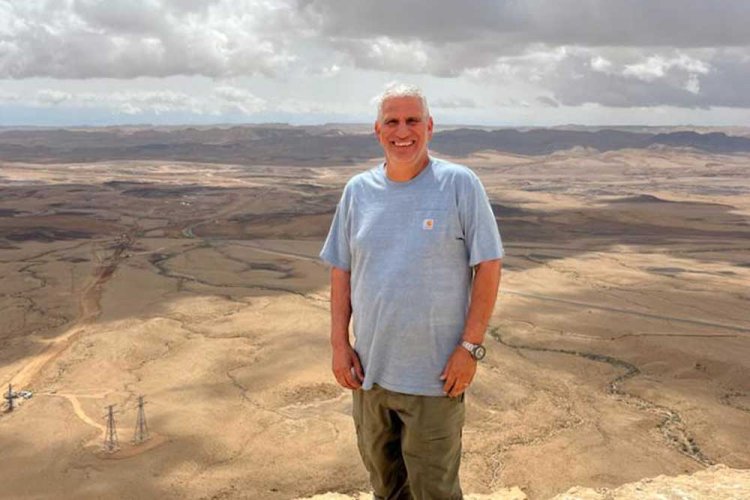 אריק קראוניק הי"ד
“When you admit mistakes, you grow”
“We have a very strong army. Look what we did in such a short time: Gaza, Lebanon, Yemen, and Iran,” Kraunik says. In her view, the problem is not the army’s capabilities, but the long-standing policy of containment toward Gaza terror. “Imagine an employee who works exactly opposite to the workplace culture — does everything poorly, gets negative feedback, and in return the boss raises his salary every week. He’ll keep doing the same thing.
“And the lesson is obvious: the Gazans do us enormous harm — terror of every kind, and at the same time, aid flows like water. Translated into Arabic, they understand one thing: ‘Guys, well done. Keep going.’”
Asked what could prevent a similar massacre in the future, her answer is unequivocal: “First of all, continue the fighting until complete defeat and surrender, and disarm them — down to the point where they beg to surrender. That’s a necessary condition if we want to live here in peace and security.
“And no extortion. People talk a lot about ‘deals,’ and I can’t understand the use of pretty words like ‘deal’ or ‘agreement.’ Use the correct term and say: ‘We are not paying a ransom big enough to armed extortionists.’ What agreement?” she wonders. “Hamas is extorting us with threats and holding us hostage.”
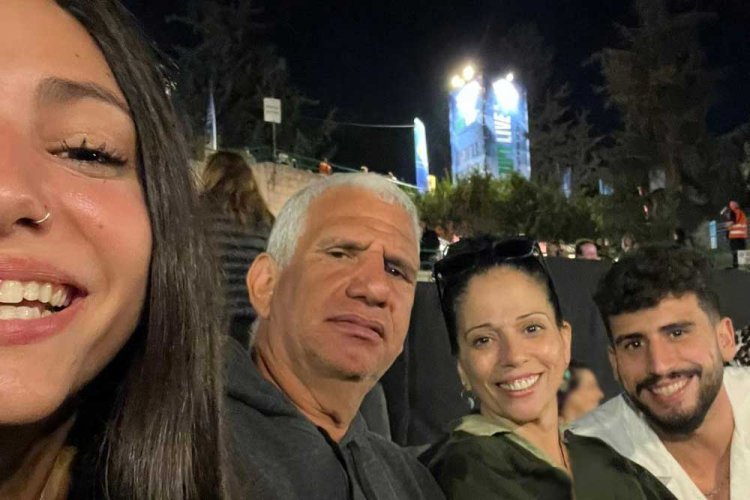 אריק הי"ד וסיגל עם שניים מילדיהם
Do you think there are people in the kibbutz who agree with you but find it hard to admit it?
“I don’t know. But I believe one of the things that helps a person grow is realizing they were wrong and needing to find a different way to succeed. I understand that people treat political opinion as something you don’t change — but this is the time to change and wake up.
“Even today, after the massacre, we’re so arrogant that we can’t admit we were wrong. Retired generals sit in studios and say, ‘If it had been in my time, it wouldn’t have happened.’ And I ask: aren’t you ashamed? For 20 years we trained the Gazans for this day — we were full of ‘containment,’ we accommodated them, and we let them train on the fence. And then, like mushrooms after rain, human-rights groups pop up and block every government decision.
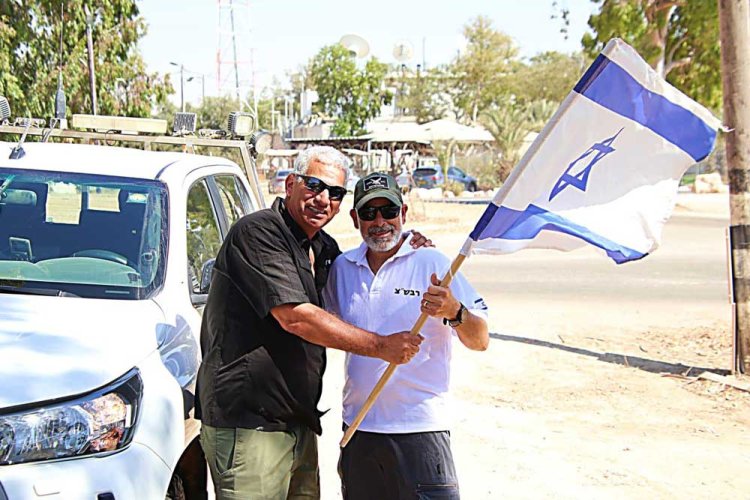 אריק הי"ד עם רבש"ץ חבר
“What is in my control right now?”
A few months ago, Kraunik was invited to speak at a Jerusalem high school. Her talk, titled “From Swords of Iron to a New Revival”, was put together almost spontaneously about a month and a half after the massacre, encouraged by Rabbi Moshe Har-Noy, who accompanied the family, and she has delivered it hundreds of times. Minutes into the talk, she was signaled to move to the edge of the stage. A staff member whispered that the principal wanted her to focus only on her personal story.
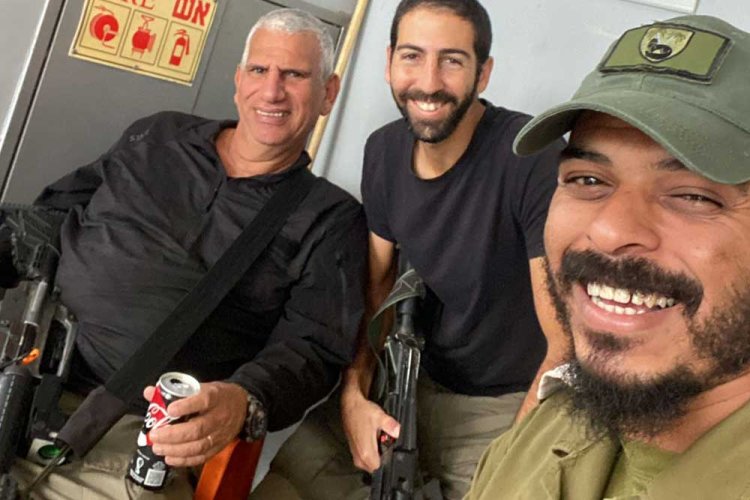 אריק הי"ד באוגדת עזה עם אילן פריורנטינו הי"ד, רבש"ץ נחל עוז, והגשש
“What about your words bothered her?”
“My lectures have run hundreds of times, and I say the same opinions you’re hearing here. Apparently the principal didn’t want me to express a certain stance.
“I went crazy at that request. I told her: ‘Either I give the whole lecture, or I leave.’ The girls in the front rows saw the exchange and were deeply hurt for me — some had tears in their eyes.” While Kraunik waited for the staff member to return with the principal’s answer, the students began clapping and begging her not to step down. The principal, noticing the pushback, motioned for Kraunik to continue. At the end, when Kraunik asked (as she usually does) whether there were questions, the administration immediately said there was no time for questions and the girls had to return to class.
That evening, Kraunik’s social media was flooded with messages from strangers. “They were the parents of those students, and they asked to apologize warmly for the incident. I thanked them and told them the homework is theirs — to do with the school principal.”
Her solid views sharpened during the 17 hours she spent in the safe room with her daughter, Noa. Her three other children were elsewhere, in the kibbutz’s youth housing, and she did not know what had happened to them. Her husband, the security chief, went out to manage the event and defend the community — and only on the bus that evacuated them from the destroyed kibbutz did she learn he had fallen heroically.
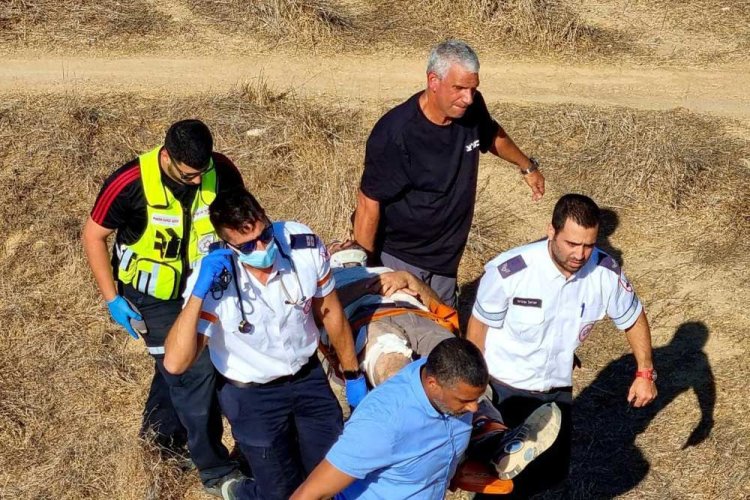 אריק הי"ד מסייע בעבר למד"א בפינוי פצוע
What did you think about during those long hours alone with Noa, cut off from your husband and your other children?
“I didn’t think too much. I just understood we were in a survival war,” she answers. “I asked myself: what is in my control right now? And the answer was: right now, the only thing in my control is holding the safe-room door handle. Is it in my control to leave the safe room and go check on each of my three older kids? No. So I neutralized the worry, because it couldn’t help me move forward.” She also avoided looking at the kibbutz WhatsApp group, understanding the reports there could push her into panicked, imprecise decisions.
When the terrorists entered her home, Kraunik clutched the handle with all her strength and repeated again and again: “May this hour be an hour of mercy and favor before You.” At some point she fainted, and her daughter held the handle until she regained consciousness and took over again, praying. They were rescued at midnight by IDF forces, emerging into a ransacked home that had been looted and vandalized.
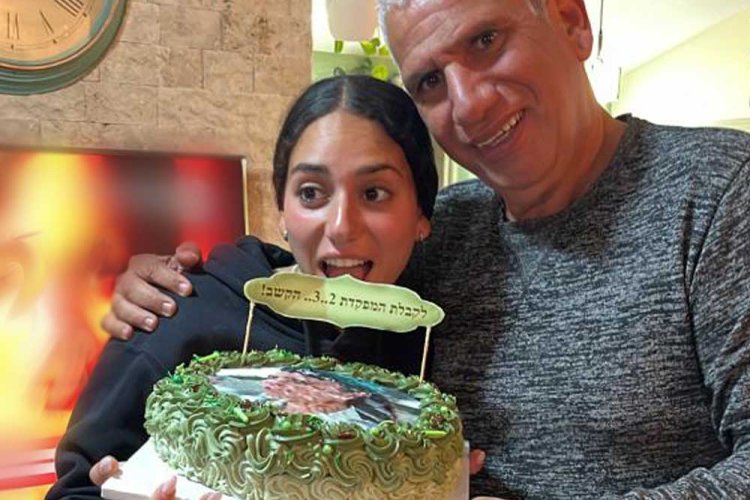 אריק הי"ד ואחת מבנותיו
Do you define yourself as a believing person?
“Of course I believe. How did the Lubavitcher Rebbe say it? ‘Where logic ends, faith begins.’ Look at the hostages who returned. For all of them, where logic ended, faith began — and that’s what kept them going.
“In my eyes, Judaism, the holidays, and the values we received are very good values. I’ve always been a person of faith, and that’s what gives strength. My kids too — thank God, faith plants enormous strength inside them.”
 נעה, בתה של סיגל, שהסתתרה עימה בממ"ד וניצלה
How do you continue living after losing a husband and after such a traumatic event?
“It’s not only losing a husband — that’s what people don’t fully understand,” she emphasizes. She explains that in other tragic situations, the pain is separating from the loved one who died, while the environment remains stable — the home, the car, the neighbors, the friends. “For us, there was nothing,” she says simply — and then she pauses to praise and thank those who wrapped them with support. “The people of Israel at their finest,” she says with awe.
She mentions two things that give her strength: First: “Viktor Frankl said, ‘If you have a why, you can bear any how.’ I have four children, and I want each of them to get married, build a home, and have good lives. It’s important to me that what we went through will be only part of their lives — not their entire life.” To make that happen, she says she doesn’t do anything dramatic. “I just need to be an example. In nature, a lioness doesn’t sit her cubs down for a lesson on how to hunt — she goes out, does it, and they watch and understand what they need to do. You don’t need endless talking — just be an example and act.”
Second: the choice to give thanks. “My mother always says: ‘Don’t look at the half-full cup. Thank the Creator for giving you a cup.’ So I thank the Creator for giving me a cup — for the fact that I’m alive and all four of my children are with me. I’m grateful that the State of Israel put us in a hotel and we’re not living on the streets like so many refugees in the world.
“I choose to look at the good and thank God for every small drop I have in my life. When you place a tiny seed in the ground — it’s in darkness. But if it has enough strength, it breaks through all the soil, and from it a great tree grows.