
Magazine
Born With Cystic Fibrosis, Raised With Faith: Rivki Klein’s Journey
From a fragile twin and decades of CF treatments to a life-saving drug, motherhood, and gratitude — a powerful story of resilience, hope, and unexpected healing
- Moriah Luz
- |Updated
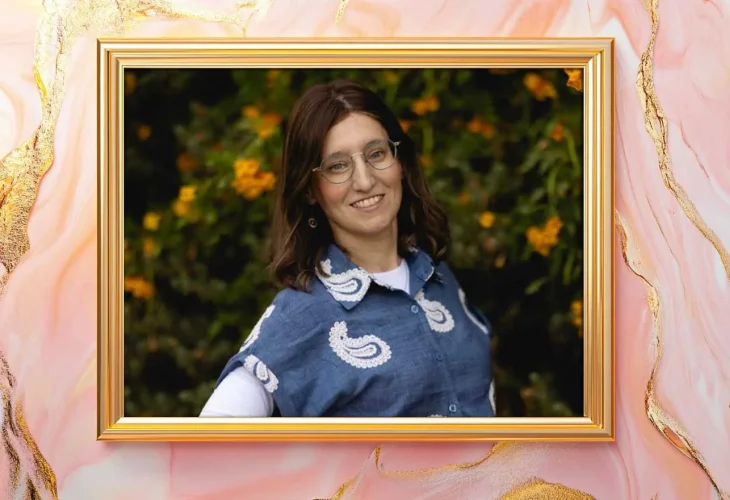 Rebeka Klein. Photo by Malchi Ernst
“We were twin girls: one well-developed and chubby, and the other very thin and far behind development. I was the second twin,” begins Rivki Klein. From birth, she suffered from a range of unexplained gastrointestinal problems and was an unsettled baby who cried a great deal.
A Radio Ad That Changed Everything
When Rivki was two and a half years old, her father happened to hear a radio advertisement by the CF Association supporting people with cystic fibrosis. “The ad mentioned concepts from the world of CF patients: 50 pills a day, daily physiotherapy, inhalations. That was the first time my father ever heard of this disease.”
A few days later, a neighbor knocked on their door — a lecturer at a nursing college. Rivki’s parents often consulted her about Rivki’s medical issues. She said to them: “Maybe Rivki has CF?” She referred them to a specialist, and when the doctor saw Rivki — practically from the doorway, he declared: “She has CF.”
“Who Is Sick Here?”
CF is a genetic disease that affects the lungs and the digestive system. Klein explains that when both parents carry the gene, there is a one-in-four chance that a child will have the disease. The CF gene was first discovered in 1986, the year Rivki was born, so although her parents had undergone genetic testing, they had no way of knowing they were carriers.
What does it mean to live with CF?
“By age four, I already knew how to swallow pills. The disease damages the pancreas, which produces enzymes needed to break down food. CF patients need to take five to ten pills before every meal to replace that function, along with a long list of vitamins. Over time, the pancreas completely stops functioning and no longer produces insulin, which leads to diabetes and the need for insulin injections.” Rivki developed diabetes at age 20.
CF also severely affects the respiratory system. The mechanisms responsible for keeping the lungs clean don’t function properly, so patients need multiple daily inhalations to clear and purify the airways.
A Child Who Didn’t Know She Was Sick
“Even though from a young age I took dozens of pills a day and did five or six inhalations daily, I didn’t realize I was sick,” Rivki says.
In fourth grade, a friend told her that her mother was going to the funeral of a CF patient who had died. The term CF had been mentioned occasionally at home, but Rivki had never connected it to herself.
“When I came home that day, I innocently asked my father who in our house was sick with CF. He took me aside and explained that it was me. Only then did I understand that I had something unique.”
Her parents never treated her differently from her siblings. Even the physiotherapy CF patients need was done together by all the children in the family.
“After that conversation, my mother sat with me and explained that everyone in life receives a ‘bag’ they carry with them. The bag might be glasses, or being overweight. This is the bag I received, and I need to make peace with it, because it’s part of my life.”
Living Fully, Even With Illness
The years passed. Rivki and her parents were meticulous about treatment, and the disease was present but stable. At age 14, she began experiencing recurring high fevers and coughing. Extensive tests revealed that her lungs were filled with pus caused by a rare bacterium called mycobacteria.
“I was the third case in Israel with this bacterium. It’s extremely tiny and very hard to treat. Doctors estimated it would take 10 to 20 years to eradicate.”
So what do you do in the meantime?
“Antibiotics,” Rivki answers simply. “For about 20 years, I was on antibiotics. Whenever the bacteria developed resistance to one type, they switched me to another. I had a PICC line — a central line in my arm, through which the medication was administered.”
Despite everything, the illness didn’t prevent her from being socially active. Because of her commitment to modesty, Rivki didn’t want to expose her arm every time medication was administered. Her friends stepped in and sewed a special zipper into her sleeves so she wouldn’t have to roll them up.
“My friends were my source of strength. They turned inhalations into ‘missions’ and came to visit me during hospitalizations. I had very beautiful years in seminary.”
It sounds like your lightness influenced your friends.
“Everything came from my parents’ upbringing. They never saw me as ‘sick’ or ‘pitiful’ and never gave me special treatment. In their eyes, everyone has a bag — this one was mine.”
There Is No Privilege to Wait
At 19, Rivki married her husband. “We waited several years before we were blessed with a pregnancy, and when it came, it was extremely complex. Our daughter was born weighing just 720 grams.”
Five years passed, and it wasn’t clear whether Rivki could safely handle another pregnancy given her ongoing medical challenges. Then a friend suggested consulting the Amshinov Rebbe.
“She told me to write a note describing my medical situation and the dilemma of bringing another child into the world. She also warned me: ‘The Amshinov Rebbe doesn’t answer black or white — he answers red.’ I was convinced and sent the note.”
A few days later, Rivki received a call from the Rebbe’s assistant. The Rebbe wanted to speak with her.
“He spoke with me for a full hour and asked to hear the doctors’ opinions from previous years. After listening carefully, he said that in order to rule, he wanted me to consult a specific professor at Shaare Zedek Hospital.”
Although Rivki was being treated elsewhere, she made a private appointment and sent over her medical file.
“It’s important to me to say this — the Rebbe didn’t decide lightly. Only after receiving a comprehensive medical opinion and examining the full picture did he give his blessing for another pregnancy.”
By divine grace, Rivki experienced a healthy pregnancy, and a healthy baby girl was born.
When Breathing Became a Struggle
At the same time that Rivki was raising her two daughters, her medical condition deteriorated. Her lung capacity dropped dramatically, and breathing became extremely difficult.
“My doctor told me we had exhausted all available treatments, and the next step was a lung transplant. He added that there was another option — a new drug in the final stages of development, already approved in the U.S., but not yet approved in Israel or included in the national health basket.”
He emphasized that Rivki’s condition didn’t allow her to wait.
“If you manage to obtain the drug in the coming days, it could help you avoid a transplant.”
![רבקי קליין ואחותה התאומה]() רבקי קליין ואחותה התאומה
רבקי קליין ואחותה התאומה
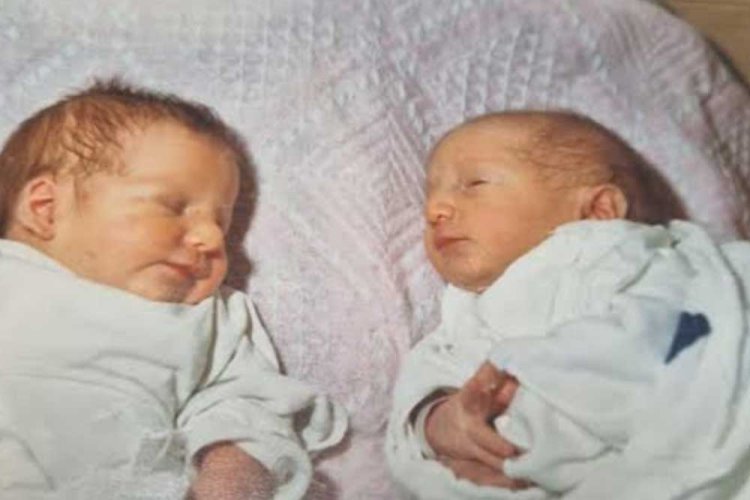 רבקי קליין ואחותה התאומה
A Fight Against Time
Rivki first approached her health fund, which flatly refused to cover the medication. Its monthly cost was 100,000 shekels.
“I realized I didn’t have the luxury of giving up,” she says. She went public with her story in a major newspaper.
A few days later, she received a phone call from the head of the organization Chaim Layeled. “I read the article, and I think I know how to help you get the medication.”
Within a very short window, Rivki needed a visa and a passport. Her parents were born in France, and “within a few hours, by sheer miracles, my mother managed to get me a French passport.”
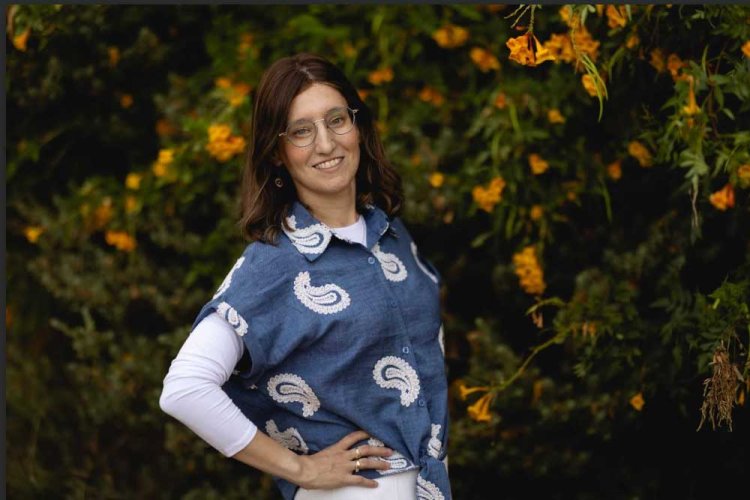 רבקי קליין. צילום: מלכי ארנסט
The Canceled Flight — and the Hidden Miracle
The day before the long-awaited flight, with her suitcase already packed, Rivki’s sister came to visit.
“She saw how weak I was and immediately called my doctor, who sent me for urgent blood tests. A few hours before the flight, they told me I had a severe infection and had to go to the ER immediately.”
Doctors refused to let her fly. “They said there was no way I’d survive a ten-hour flight in that condition.”
The flight was canceled. It was the days leading up to Purim, and Rivki was hospitalized over the holiday. Right after Purim, the doctor discharged her — on one condition: that she fly and receive the medication.
That same week, news began spreading about a strange new virus: corona.
“In retrospect, it was a huge miracle that I didn’t fly before Purim. The Purim meal in the Jewish community where I was supposed to stay turned into a massive COVID outbreak. My lungs were already in terrible shape — infection would have been life-threatening.”
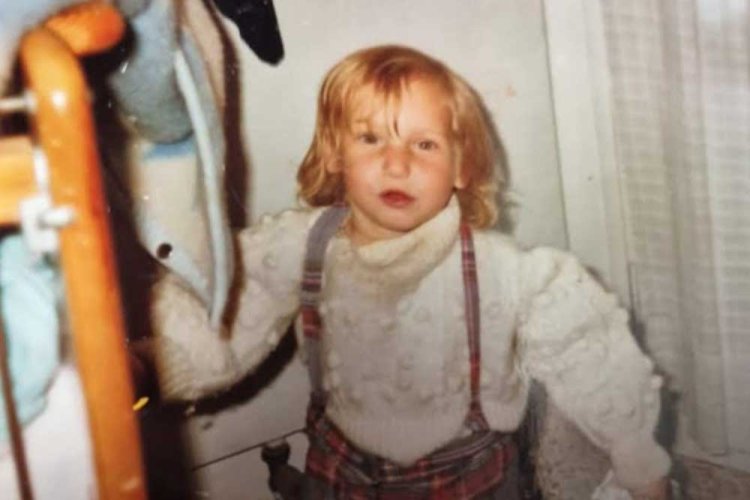 רבקי קליין בילדותה
A Door That Finally Opened
Even after arriving in the U.S., challenges continued. “Everything was shut down because of COVID. No doctor was willing to see us, which was a prerequisite for receiving the medication.”
They stayed with a relative who hosted them with extraordinary dedication — even though everyone else in the household was sick with COVID.
As Passover approached, Rivki realized she wouldn’t receive the medication in time and would have to return to Israel. Flights were rapidly disappearing.
On Thursday, they heard that the last flight before Passover would leave on Sunday. They booked seats immediately.
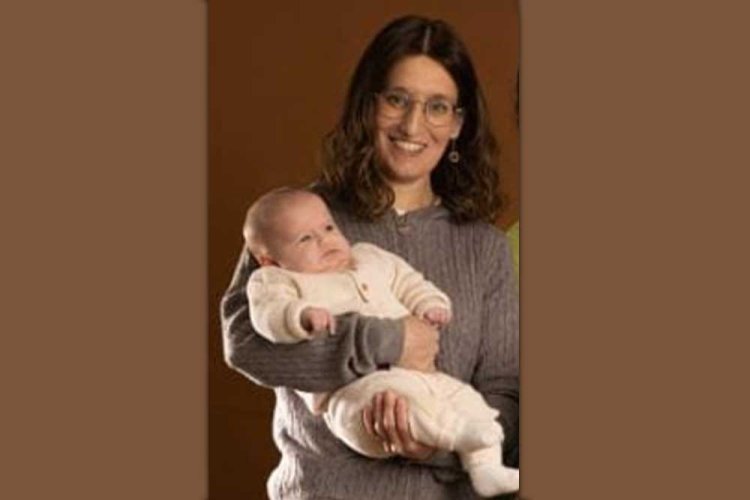 רבקי קליין עם אחת מבנותיה
Gifts From Heaven
Rivki insists on praising their extraordinary host. “She refused to accept that I would return empty-handed. That Thursday, she called the pharmaceutical company and used every ounce of persuasion she had. She told them there was no way I was leaving without the drug.”
A few hours before the flight, a courier arrived with the life-saving medication.
Upon returning to Israel, Rivki and her mother entered quarantine. Neighbors stepped in to help. “There was a shortage of eggs and butter at the time, but our fridge was full of butter from the neighbors,” she laughs.
Did the Drug Help?
“Immensely. Unbelievably so. Within days, my lung function increased dramatically. It’s truly a miracle drug.”
After some time, Rivki held a large thanksgiving celebration.
“I had imagined that celebration, together with a friend, during my darkest moments. When things felt hopeless, she would encourage me and say: ‘I already bought the peonies for your thanksgiving meal.’”
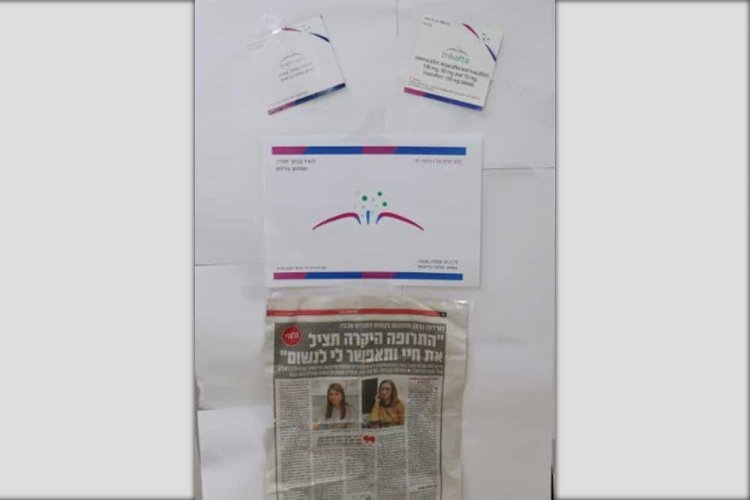 לוח שהוכן למסיבת ההודיה
 Turning Medicine Into Gratitude
Rivki designed the event inspired by the medication itself.
“We created boxes resembling the medicine packaging. Where it usually says ‘take twice daily, morning and evening,’ we wrote the verse: ‘To declare Your kindness in the morning and Your faithfulness at night.’ Instead of ingredients, we wrote: Faith, Trust, and Joy. Inside the ‘medicine,’ we placed the prayer Nishmat Kol Chai.”
Her devoted medical team, who had accompanied her for years, were invited as guests of honor.
“I told them: Not only did I receive a medicine — you received a medicine too. You merited seeing faith and miracles. I received a life-saving drug, but you merited being part of this great miracle.”
In the years that followed, Rivki gave birth to two more daughters.
“Both pregnancies were significantly better than the earlier ones, and they were born at healthy weights. After those incredibly difficult pregnancies, I felt that this time we received two gifts from God.

