The Holocaust
How Heroes Are Made: The Extraordinary Story of Irena Gut
A 17-year-old girl, the Holocaust, and the quiet courage that saved Jewish lives
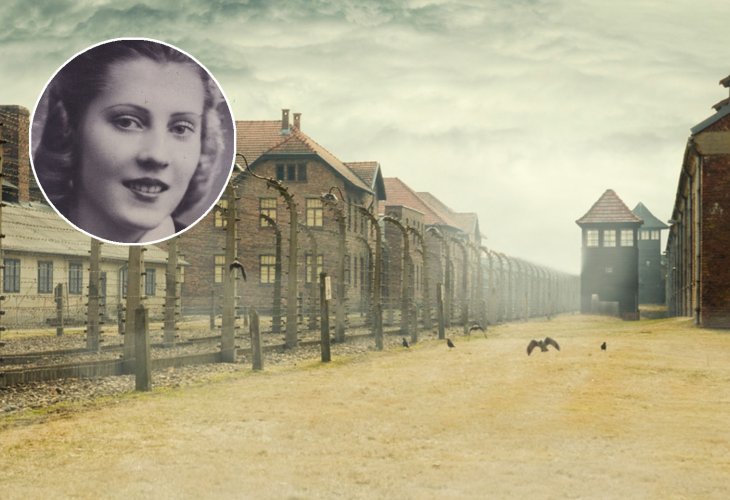 (In the circle: Irena, 17, nursing student, 1939, Radom)
When Irena Gut, one of the Righteous Among the Nations, describes what she went through during World War II in her book In My Hands, she emphasizes that she was not born a hero — and when the bombs whistled over Poland, she was very much afraid. Yet, as can be seen throughout the book, which became an international bestseller, even a 17-year-old girl had something she could do in the face of the Nazi monster that had conquered her homeland.
When Irena describes the creative and daring ways in which she personally risked her life to save Jews she did not even know, she repeats one thing again and again: “I didn’t ask myself whether I should do it; I asked myself how I would do it.”
Irena can no longer be interviewed about her life story. She passed away in 2003, shortly after being recognized by Yad Vashem as Righteous Among the Nations. However, it is very much possible to speak with Yael Shalmon-Barnea, the translator of the Hebrew edition of the book, and to hear from her about the fascinating work of translation — and about the bold, almost unimaginable story of a 17-year-old girl during the darkest days of the war.
“I Could Not Do Nothing”
“The book was written in English by Jennifer Armstrong, and I translated it,” Yael emphasizes at the outset. “I first read it more than a decade ago, after my aunt from New York recommended it to me, and I immediately thought it had to be in Hebrew. In practice, things were delayed until I began the work about three years ago. I spent nearly two years translating the book, and then it was delayed for another year because of COVID and other constraints, until it finally came out recently.”
Irena’s story is almost inconceivable. “It seems that from a very young age she wanted to be a ‘good person,’” Yael explains. “That’s what led her to study nursing. When the war broke out, instead of returning to her parents’ home, she found herself moving with the Polish army toward the Soviet Union. She went through many upheavals, journeys, and hardships, until she eventually began working in the officers’ kitchen of the Nazi army in the city of Ternopil.”
Yael goes on to explain that while working in the kitchen of a building that had become a Nazi hotel, Irena repeatedly heard senior officers discussing “the Jewish problem,” but still did not grasp the full scale of the tragedy. Only one day, when she was sent to set tables on the upper floor, did she look out one of the windows and see what was happening in the ghetto.
“Suddenly, gunfire shattered the quiet of the ballroom,” Irena describes in the book. “I ran to the window to see what was happening. The scene below looked like an anthill being crushed — men, women, and children running through the streets, SS men pouring out of trucks and shooting the fleeing Jews. The white snow turned red with blood. It wasn’t real. It couldn’t be real.”
Irena goes on to describe how, until then, she had seen the cruelty and brutality directed at the Polish people, but had no idea how much worse the situation of the Jews truly was.
“In the afternoon, while cleaning up after the meal, I found myself alone in the kitchen,” Irena continues. “This was the opportunity I had been waiting for. I grabbed a garbage pail from the floor beside me and headed toward the ghetto. I cast a quick glance toward the street, approached the fence, took a large cooking spoon and knelt down, scraping away dirt until I made a small hole beneath the fence, about the size of a loaf of bread. From the bucket I took a layer of potato peels and a tin I had filled with cheese and apples, pushed them through the hole, and hurried back to the kitchen.
“‘Anyone who helps a Jew will be punished by death’ was the warning I heard over and over again. It was written on posters and announced over loudspeakers throughout the city. Despite that, every day I found an opportunity to slip out and leave food beneath the fence. I knew it was a drop in the ocean, but I could not do nothing.”
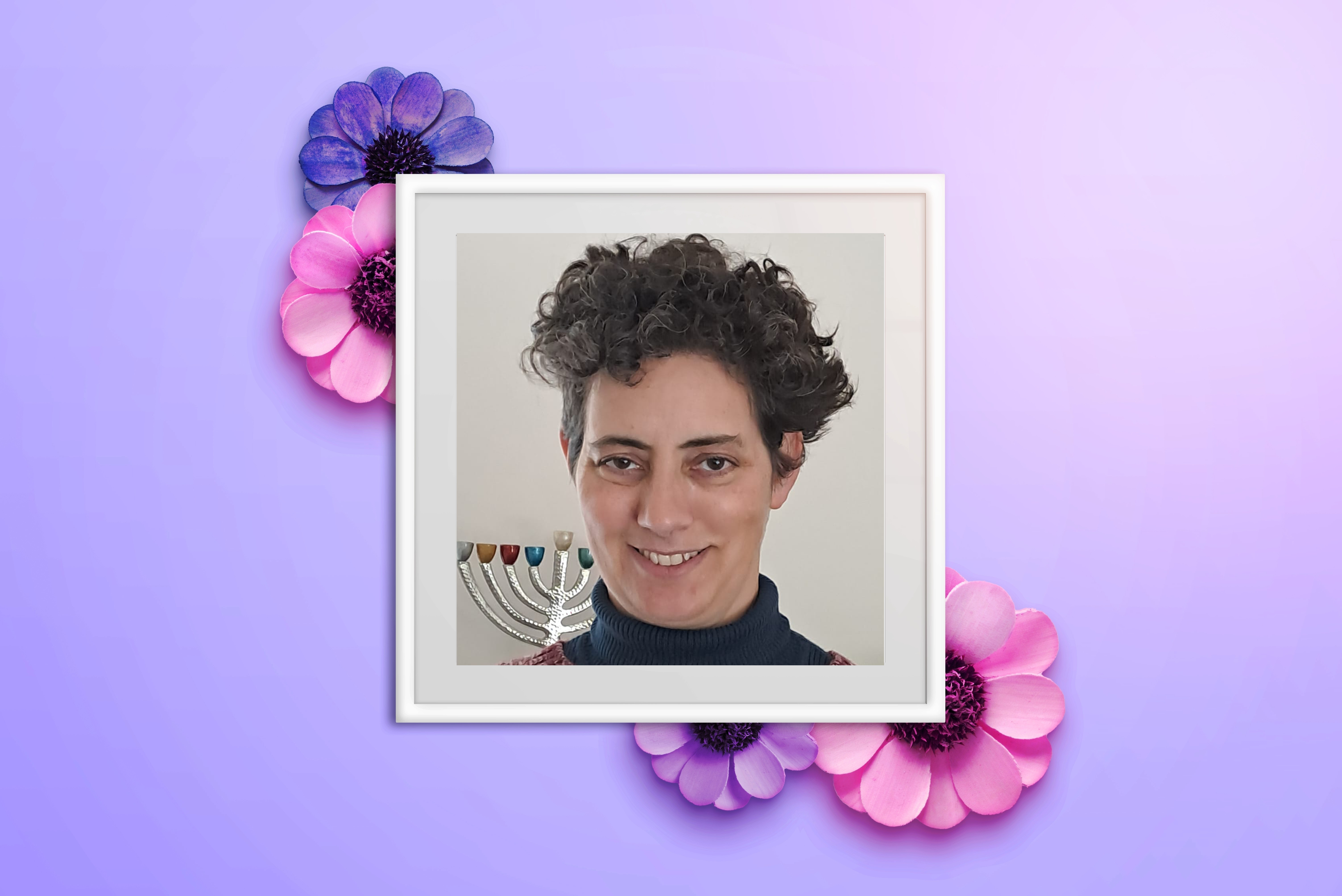 Yael Shalmon Barnea, the translator of the book into Hebrew
In the Nazi Commander’s Basement
One of the most powerful elements of Irena’s story is that she continues to help Jews even while serving as an assistant to a German army commander — and right under the noses of the SS leadership, she manages to rescue Jews from hell.
Later in the book, she describes how she took advantage of her proximity to the tables of the two Nazi leaders responsible for the entire region — the army commander and the SS commander. They often sat together to eat, and Irena would serve them, listening to everything they said. Every time she heard that an Aktion was imminent, she would jump on her bicycle, ride to the ghetto, and warn the Jews she encountered: “Run — it’s coming!”
At all hours, she smuggled Jews into the nearby forest using a wagon she hired for them, repeatedly risking her life as she passed through inspections and checkpoints along the way.
In addition to her work in the officers’ kitchen, Irena was also in charge of the laundry, where Jews worked under her supervision. She mobilized herself for them as well. Even on the final night — when she knew that, according to Nazi plans, there would be no Jews left in Ternopil the next day, she told them: “You are not returning to the ghetto tomorrow. You’re staying here.”
Then she carried out the most daring and unimaginable act possible: she moved them into the Nazi officer’s own house, smuggling them into his basement, where they hid until the war ended.
Twelve people hid in the basement. During their stay, it was discovered that one of the women was pregnant. Irena describes her agonizing dilemma over whether to bring tools to perform an abortion, out of fear that the baby’s cries would reveal their hiding place. She writes that she could not bring herself to do it. In the end, the newborn survived — together with all the others hidden in the basement.
Toward the end of the book, a kind of closing circle emerges. After the war ends, the Jews whom Irena saved are the ones who ultimately save her in return. Yael quotes emotionally from Irena’s conversation with her Jewish rescuers: “God blessed you with a family. Now help me find mine,” I begged. “They lived in Kozlova Góra, in Upper Silesia. Can you help me? I can’t move freely if the Russians—”
“Whatever you need, Irena. We’ll find them.” Ida kissed me again, and then Phoenix carried me back upstairs, through the door and into the back seat of a car, where he covered me with a blanket.
For two weeks, Moishe Lipschitz and his wife Paula cared for me until I recovered. They told me they had been in the Ternopil ghetto and had escaped thanks to one of my early warnings. Now they were eager to repay me. Rumors from Katowice said that I was a dangerous criminal, wanted by the Soviets, who were trying to hunt me down in the area.
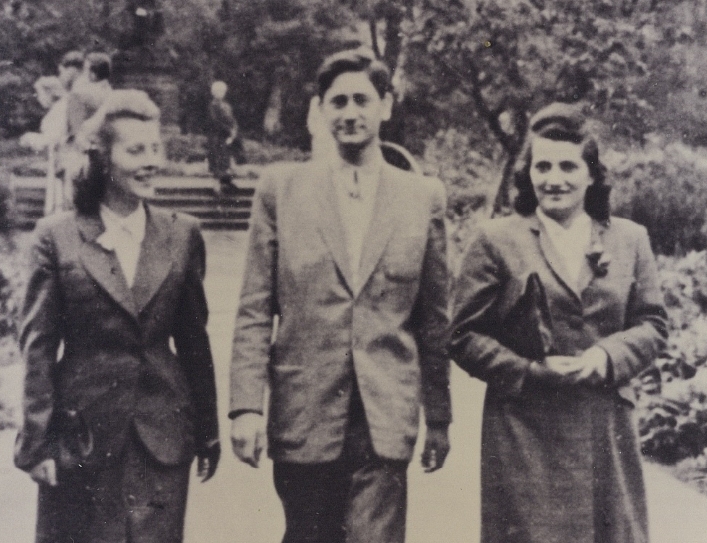 1945, Krakow. Irene, Hershl, and Paula Morris. Irene in the suit tailored by Hershl (Credit: Courtesy of the family)
Simply Saying Thank You
Yael has been working in translation and editing for years, but translating this book was far from easy for her. “Ultimately, it’s a painful story about a horrific period marked by the greatest atrocities humanity has ever known,” she explains. “While translating, every time I went over the words I cried in the same places again and again — sometimes even in advance, because as a translator I knew what was coming. It completely drained me emotionally.”
Why, when there are so many unpublished stories of Jewish Holocaust survivors, do you think it’s important to commemorate the Holocaust through the eyes of a non-Jew?
“I think there is great hope in seeing that there are good people from all religions,” Yael says. “Personally, I was deeply moved reading on the Yad Vashem website about Muslim Righteous Among the Nations. That was very important to me — both so we don’t create another Holocaust through ignorance, and so that we ourselves know how to preserve our humanity if we ever find ourselves in a position to help. Both survivor stories and the stories of the Righteous Among the Nations are essential to gaining a fuller picture of the power of the human spirit — to show us that such things are possible, and that miracles can happen.”
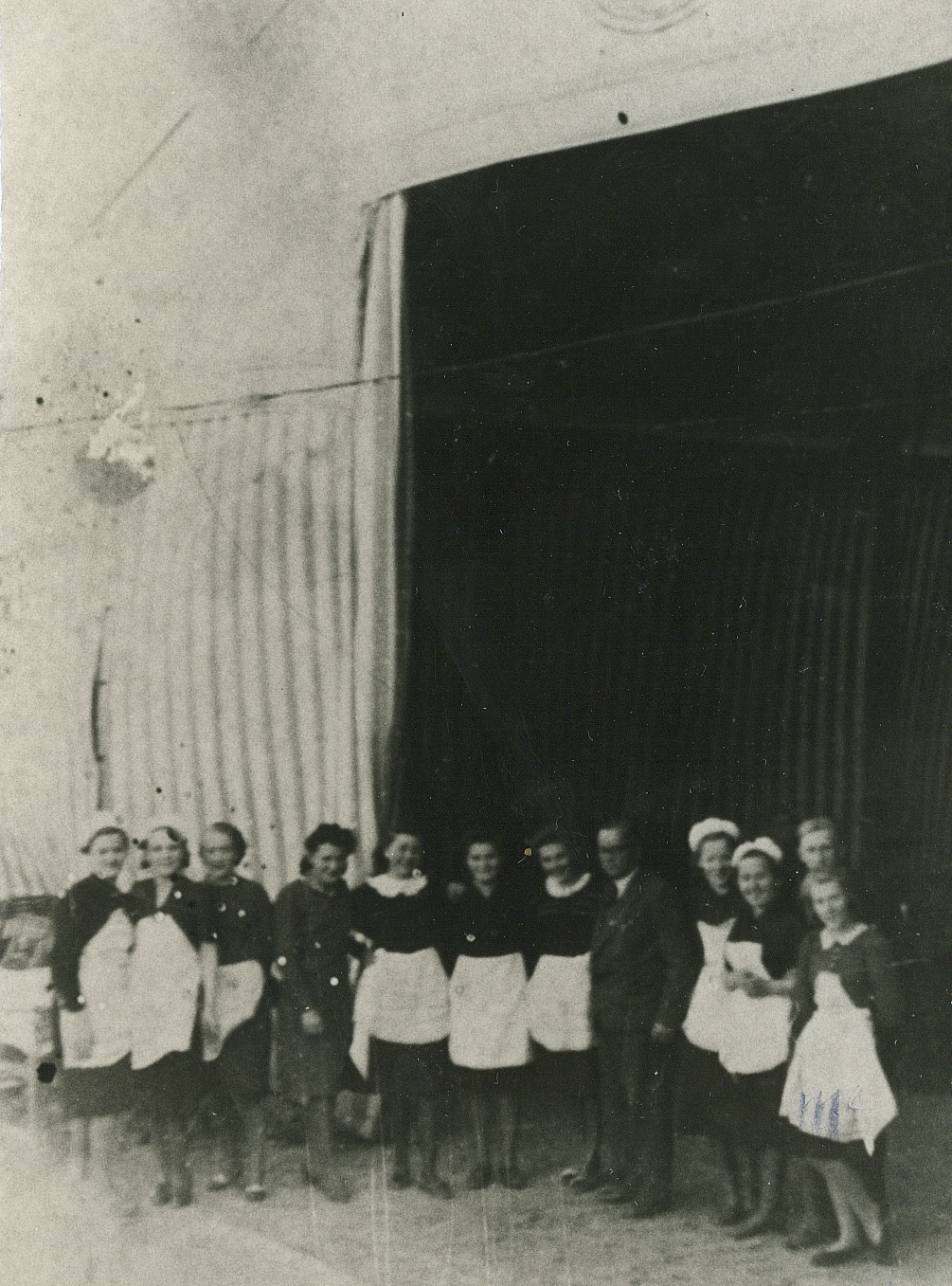 Irena (first from the right) at the nursing school (Credit: Courtesy of the family)
Do you think Irena was so exceptional, or are there others like her whose stories we simply don’t know?
“Can I say both?” Yael smiles. “There’s no doubt Irena was very special. I believe readers can’t help but fall in love with her — I certainly did. But are there other similar stories? I have no doubt there are. We just don’t have testimony for all of them. The people who helped during the Holocaust didn’t do it for recognition, reward, or honor. They simply did what they felt they had to do in that moment, and no one really knows where they found the courage and strength.
“Irena herself never sought gratitude afterward. In fact, from what I understand, the reason she eventually began telling her story was because she started hearing about Holocaust deniers emerging around the world. She couldn’t bear it. That’s when she began visiting schools, synagogues — speaking to non-Jews and Jews alike, to tell her story and share what happened.”
If you could have met Irena, what would you have said to her?
“I never got to meet her — she passed away before I read the book. At first, when I realized she was no longer alive, I felt a sense of loss, because I had so much I wanted to say and ask. But the truth is, I think that if I had met Irena, I would have simply hugged her. To me, she is a figure of immense inspiration. I wish I could have simply said: thank you.”