
Torah Personalities
The Life Lessons of Rabbi Yaakov Edelstein: Small Commitments, Deep Faith, and Heavenly Assistance
How the beloved Rav of Ramat HaSharon transformed lives through prayer, consistent growth, and practical spiritual guidance
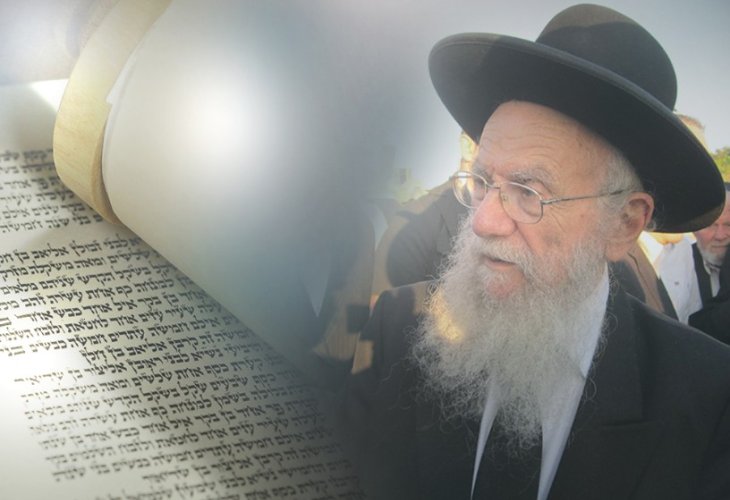 Rabbi Yaakov Edelstein זצ’’ל
Rabbi Yaakov Edelstein (April 22, 1924 – February 23, 2017) was the chief rabbi of Ramat Hasharon and a counselor and guide to many. Before answering any question, he would always pause and quietly ask for Heavenly help. He would whisper the verse: “Hashem, save! May the King answer us on the day we call” (Tehillim 20:10). Only after this short heartfelt prayer would he begin to offer guidance.
Small but Consistent Commitments
After his passing, many people shared the small “kabbalot” (spiritual commitments) he asked them to accept — tiny steps of improvement, one drop at a time.
A secular young man who came for a blessing said that the Rav asked him: “Don’t smoke publicly on Shabbat.”
An older single religious woman said he suggested: “Add something small that honors Shabbat.” When she looked worried about accepting Shabbat earlier, he reassured her: “If taking in Shabbat early will stress you, choose something else — perhaps buy special Shabbat shoes. Designate them only for the holiness of Shabbat.”
The Power of Keeping a Commitment
Rav Edelstein explained why he encouraged people to accept small commitments: “Those who come for blessings usually want to bring a merit with them. I place the entire salvation on the merit of the improvement the person accepts. When someone takes upon himself a commitment and keeps it consistently — this creates a merit that opens the gates of Heaven.”
Praying That Hashem Will Do What Is Truly Best
The Rav once shared: “People ask me to pray for donors and for others in need. When praying for the sick or for anyone requesting assistance, the custom is to say the Alef-Bet of Tehillim 119 according to the letters of each person’s name. But I cannot recite the alphabet for every single person.”
Instead he said: “I recite the entire chapter and ask the angels to gather from within it all the letters of the names of those who need salvation. Then I ask Hashem to do what is best. If someone asks for something that is not good for him, I ask Hashem to give him what is good: ‘If wealth is good for them — let them become wealthy. If poverty is better for them — let them remain poor.’”
Lighting a Candle for the Soul of a Tzadik
Rav Edelstein also instructed people to:
accept a small spiritual commitment,
recite several chapters of Tehillim, and
light a candle for the elevation of a righteous person’s soul.
He explained that when praying at the grave of a great Torah figure, one does not ask the tzadik to grant salvation; rather, “You mention his name, and because he is a ‘man d’amar’ — a soul of great spiritual stature, he can advocate favorably in the World of Truth on behalf of the person praying.”
A Commitment to Fulfill After the Salvation
Tovi Zeitlin, who waited many years for her shidduch, described entering the Rav’s room with tears, asking: “What else can I do so that I will finally merit salvation?”
The Rav answered: “Show Hashem that it is worthwhile for you to receive salvation. Accept upon yourself that the home you build will always have a bed for guests.”
Tovi added that the Rav encouraged her to accept additional future practices to implement once she established her home.
His Work and Legacy
the Rabbi of Ramat HaSharon for nearly 70 years,
a senior dayan in the Beit Din of Rav Nissim Karelitz,
the rabbi of the Neot Yosef neighborhood in Bnei Brak,
and a leader of several yeshivot including Yeshivat HaSharon and Keter Yisrael–Ruzhin.
He was also deeply involved in the study and guidance of Kabbalah, and was known for his warmth, humility, deep spiritual insight, and simple yet powerful approach to helping Jews grow.

