
Judaism
Rabbi Shimon bar Yochai: Life, Miracles, Teachings, and the Legacy of Lag B'Omer
Explore the life of Rabbi Shimon bar Yochai, the cave miracle, and the origins of Lag B'Omer celebrations
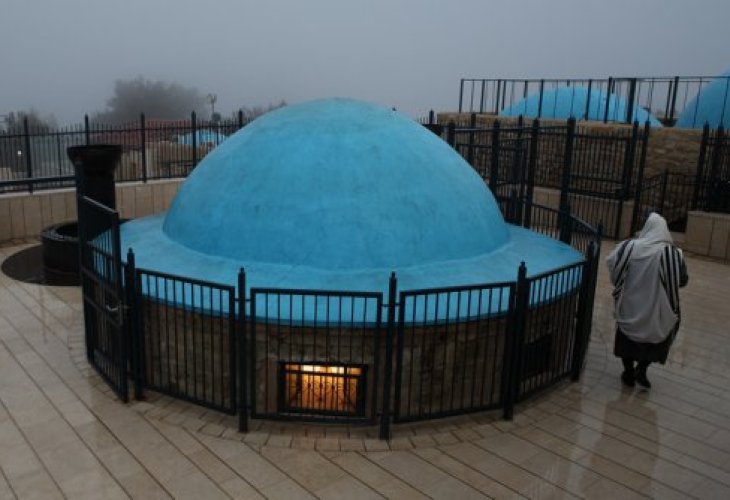
Rabbi Shimon ben Yochai — known by the acronym Rashbi, was a divine Tanna who lived in the second generation after the destruction of the Second Temple. He was born in the Galilee and, according to tradition, passed away on the 18th of Iyar (Lag BaOmer).
His Place in the Talmud and His Teachers
In the Baraita and Gemara, he is referred to as Rabbi Shimon ben Yochai, R’ Shimon ben Yochai, or simply R’ Shimon. In the Mishnah, he is called “Rabbi Shimon.”
He was a prime student of Rabbi Akiva and was formally ordained by him. When Rabbi Akiva was imprisoned, Rashbi came to learn from him even there. Rashbi is counted among the five remaining students Rabbi Akiva taught after the plague that took the lives of his 24,000 earlier disciples.
The Famous Story of the Cave
The well-known story of Rashbi’s hiding in a cave during Roman persecution appears in multiple Talmudic sources.
A year or two after Rabbi Akiva’s death, several sages gathered in the vineyards of Yavne. Present were R’ Yehuda ben Ilai, R’ Yossi, Rashbi, and also Yehuda ben Gerim.
The Gemara recounts:
R’ Yehuda praised the Romans for building markets, bridges, and bathhouses.
R’ Yossi remained silent.
Rashbi replied: “Everything they built, they built only for themselves… bathhouses to pamper themselves, bridges to collect tolls.”
Yehuda ben Gerim reported their words to the authorities. The Romans responded:
R’ Yehuda, who praised them — “shall be elevated.”
R’ Yossi, who was silent — “shall be exiled to Tzippori.”
Rashbi, who criticized — “shall be killed.”
Rashbi and his son fled and hid in a cave. A miracle occurred: a carob tree and spring of water appeared, sustaining them as they studied Torah day and night for 13 years. After Emperor Hadrian died, Elijah the Prophet appeared and told them they could leave.
Sources: Jerusalem Talmud Shevi’it 9; Shabbat 33b.
Author of the Zohar
According to Kabbalistic tradition, during the years in the cave, Rashbi composed the Zohar, the foundational text of Kabbalah.
He also authored the Mekhilta of Rabbi Shimon bar Yochai on Sefer Shemot, fragments of which have survived.
The Miracle of the Gold Valley
Midrash describes a student of Rashbi who became wealthy abroad. His classmates grew jealous. Rashbi brought them to a valley near Meron and prayed: “Valley, valley — fill with gold coins!”
The valley began to pour out gold. He told them: “If it is gold you seek—take gold. But know this: whoever takes now is taking his portion of the World to Come, for the reward of Torah is only granted in the next world.” (Shemot Rabbah 52:3)
Rashbi Purifies Tiberias
A liturgical poem about Rashbi states, “He purified the city of Tiberias — he made it clean, and heaven praised him.” The Talmud explains that Rashbi planted lupines throughout Tiberias. Wherever they grew, he knew the land was pure; where they did not grow, he dug and found graves beneath, thereby purifying the city from ritual impurity. (Shabbat 33b)
His Mission to Rome
Rashbi traveled with R’ Elazar ben R’ Yossi to Rome to annul oppressive decrees. He was chosen because he was accustomed to miracles, and indeed, he miraculously exorcised an evil spirit from the emperor’s daughter. (Me’ilah 17)
Teachings of Rashbi
Among Rashbi’s many profound sayings:
“There are three crowns: the crown of Torah, the crown of priesthood, and the crown of kingship — but the crown of a good name rises above them all.” (Avot 4:12)
“Three good gifts Hashem gave Israel, and all were given only through suffering: Torah, Eretz Yisrael, and the World to Come.” (Berachot 5)
“Even a completely righteous man who sins at the end loses all his earlier merits; and even a total sinner who repents at the end is not remembered for his wickedness.” (Kiddushin 40)
“One who embarrasses another in public — it is better for him to fall into a fiery furnace.” (Berachot 43)
“Work is great, for it honors the one who performs it.” (Nedarim 49b)
“Verbal abuse is worse than monetary abuse.”
“When is the time of Divine favor? When the community prays.”
And many more teachings found throughout the Talmud and Midrash.
Lag BaOmer in Meron
Rashbi’s yahrzeit on Lag BaOmer is celebrated with enormous crowds at his tomb in Meron. Every year:
Hundreds of thousands gather, making it Israel’s second most visited religious site after the Western Wall.
The central bonfire lighting is led by the Boyaner Rebbe.
The traditional chalaka (first haircut for 3-year-old boys) is performed there.
According to tradition, on this day, a great heavenly fire ascended and Rashbi completed teaching the secrets of Kabbalah.
The tomb of Rabbi Shimon bar Yochai on Mount Meron is one of the most famous and visited holy sites in Israel — second only to the Western Wall in annual visitors.

