
Jewish Law
When Can a Boy Begin Wearing Tefillin? And Can He Count for a Minyan Before His Bar Mitzvah?
A practical halachic guide explaining when a boy may start tefillin, and why he cannot yet complete a minyan until age thirteen
- Rabbi Shai Amar
- |Updated
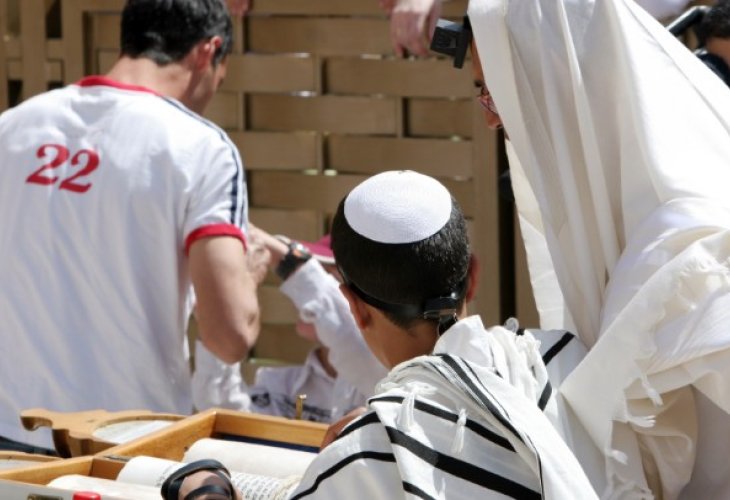
“Shalom, Rabbi. My eldest son will be celebrating his Bar Mitzvah in the coming months. Can he already begin putting on tefillin now? And if our synagogue is short one person for a minyan, can he be counted as the tenth, even though he’s not yet Bar Mitzvah?”
* * *
Before addressing the question, it’s important to clarify that the halachic age — thirteen years and one day, is always determined by the Hebrew date, not the secular (Gregorian) date.
The Gemara (Sukkah 42a) teaches: “A minor who knows how to guard the sanctity of his tefillin — his father is obligated to buy him tefillin.”
Rashi explains: This means that the child knows how to keep them pure, not to sleep while wearing them, and not to act carelessly. The same appears in the Sefer Mitzvot Katan (SeMaK), quoted by the Beit Yosef (Orach Chaim).
The Shulchan Aruch (Orach Chaim 37:3) rules accordingly: “A minor who knows how to maintain his tefillin in purity — not to sleep or relieve himself while wearing them — his father is obligated to buy him tefillin in order to train him in the mitzvah.”
From the Gemara and the Shulchan Aruch, it’s clear that this law applies even to a child under thirteen, as long as he understands the holiness of tefillin and keeps his body and mind pure while wearing them. This is the key condition for starting early — not age, but maturity and self-control.
Some rabbis wrote strong words of criticism against those who wait several days or even months after the Bar Mitzvah before giving their son tefillin — delaying only so that they can hold a festive meal later. They wrote that this is improper, and that the mitzvah of tefillin should begin as soon as possible.
Among Sephardic authorities, we follow the ruling of the Shulchan Aruch, that one may begin putting on tefillin even before thirteen, provided the boy can guard their holiness.
One Moroccan sage wrote: “I myself remember putting on tefillin at the age of nine, and thank God, I kept them pure as required. This was the custom throughout Morocco — to train boys in tefillin one, two, or even three years before their Bar Mitzvah.”
Similarly, the Magen Avraham notes that the common custom is to begin putting on tefillin two or three months before the Bar Mitzvah, to ensure the boy learns how to wear them properly by the time he becomes obligated.
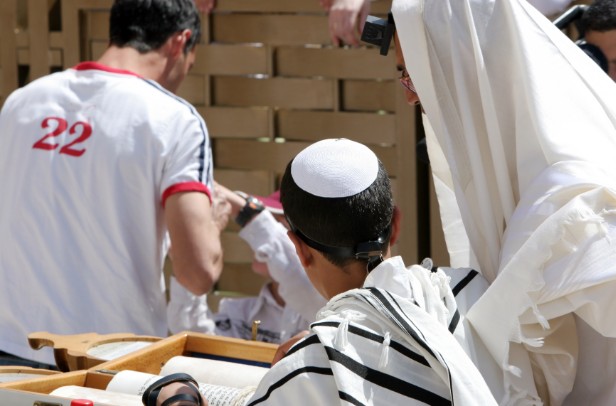
Counting a Minor for a Minyan
The Shulchan Aruch (Orach Chaim 55:4) rules: “Some permit counting a minor over six years old who understands to Whom we pray — but this opinion is not accepted by the great authorities.”
From this, it is clear that even in pressing circumstances, a child may not be counted as part of a minyan. The Rema adds that some communities do count a minor in great need, but the Levush writes that he never saw anyone actually follow this practice. The Bach and Nachalat Yaakov agree that this is not to be done, and some explain that even the Rema only reported that such a practice exists, but did not endorse it.
The Kaf HaChaim (42) quotes several later authorities who conclude that a minor cannot be counted in a minyan, unless he has reached thirteen years and one day.
Practical Ruling
When to Begin Wearing Tefillin:
A boy who has reached the maturity to keep his body pure and handle the tefillin respectfully should begin wearing them, even before turning thirteen, in order to be trained in the mitzvah.Reciting the Blessing:
He may recite the blessing on tefillin like any other mitzvah from which he is being educated, saying the blessing before putting them on.Counting for a Minyan:
Even if he wears tefillin and prays regularly, he cannot be counted for a minyan for Kaddish or Kedushah, until he reaches thirteen years and one day according to the Hebrew calendar.
This is also the clear ruling of Rabbi Ovadia Yosef in Yechaveh Da’at vol. 2, 4.


