
Personal Stories
From the Streets to the Soul: Aviner’s Musical Journey Back to Faith and Meaning
The powerful story of a young Israeli music producer who fell, searched, and rose again — finding God, purpose, and healing through music, family, and gratitude
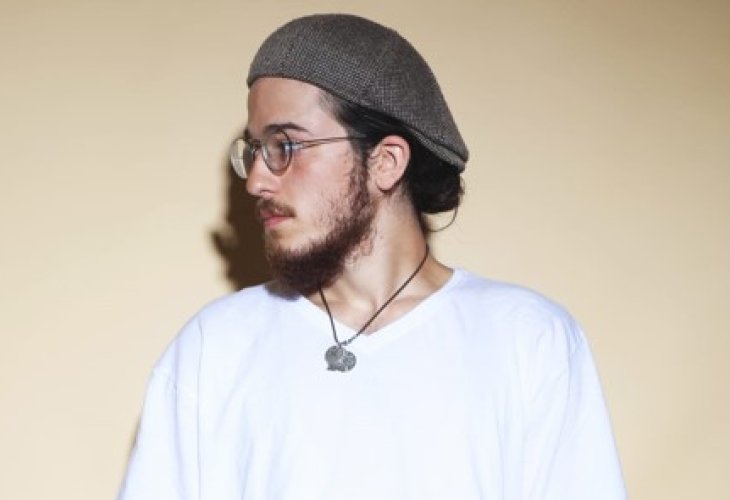 (Photo: Dikla Shai)
“When I was three, my parents went on a shlichut mission in Brazil and Colombia, and it had a huge impact on me,” says Aviner, married and a father, who lives in Tirat Yehuda. He is a music producer and creator. “I was born into a Religious Zionist family. I have an older sister, and after me there are five more siblings. Altogether we lived in South America for four years, and I remember feeling truly foreign there. It’s true that I lived there from the earliest point I can remember, but inside I somehow knew it wasn’t my place. When we came back to Israel, suddenly I felt like I had started living.”
A Fall for the Sake of Rising
Aviner continues: “When we returned to Israel, we lived in the Shomron, in the community of Tzufim, and very quickly I connected to music. I sang in the school choirs, and I was usually also the lead actor in the plays. Alongside that, my musical side developed pretty fast into dancing. Already at age 12 I was dancing and heavily influenced by American hip-hop and pop. At 15 I started getting interested in DJ’ing — I downloaded a program onto my computer and began making music that way too. A year later I moved to a boarding school because I wanted to be more independent. They had a music track there, and of course I signed up. For three years I studied music, played piano and guitar, and also learned sound and production.
“Three years earlier, when I was 13, I left Torah and mitzvot. It was hard for me and didn’t fit me then, so I threw off the yoke. I looked for pleasures. I didn’t even fast on Yom Kippur. A year later, at 14, I started using drugs and alcohol. At a later stage I even got to using very hard substances. My parents were pained by what happened to me, but there wasn’t much they could do. Thank God, relatively speaking, I got out of that dangerous use fairly quickly.
“And still — even with all my distance, I always felt connected to Hashem somewhere inside. I never doubted that there is a Creator of the world, and that there is general and personal Divine providence. In the end, I think that’s also what brought me back. I didn’t lose the place inside me that wants a connection with the Creator.”
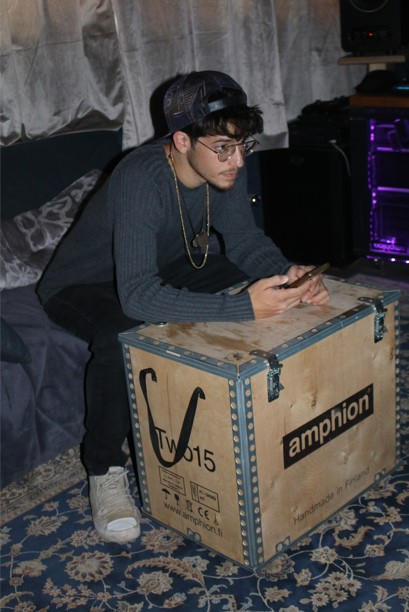 (Photo: Reut Ora Kaufman)
A Spark of Godliness
According to Aviner, the spiritual search kept burning within him and slowly drew him back toward a life of Torah and mitzvot. “At 17 I started learning Kabbalah, and it was very powerful for me. That was the first time I understood that there is content and value behind the practical mitzvot. Today I know that Hashem brought me to low places in order to lift me high. I understand that I needed to go through what I went through in order to understand what I understand today.”
After you understood that, what did you do to strengthen yourself in Torah and mitzvot?
“Right after I finished high school, I entered a yeshiva in Tel Aviv. I wanted to immerse myself in Torah and also stay close to the world of music. I had a strong desire to gain stage experience, and I really did perform and record quite a bit that year. I started in a hesder yeshiva, but it didn’t work out, because after nine months in yeshiva I got married and received an exemption from the army. I wasn’t afraid to get married young. Marriage was simple for me, because I didn’t feel complete without a wife. My wife is eight years older than me, but it doesn’t bother us — and it never did.”
I assume there were still challenges in getting married at such a young age.
“The decision to marry was easy for me, and I’m extremely happy with it. My family brings me tremendous joy — on levels that are hard to describe. My family members are the most important thing in the world to me, and I thank Hashem for them every day. But at the same time, after the wedding it wasn’t always simple. Getting married early brought a lot of challenges into my life. Today I think maybe it really was too early for me. I had so many desires, and suddenly there are responsibilities in life that come first. I wanted to invest in music, but family life took a lot of strength from me. Alongside the blessing that marriage brought, of course there was also financial pressure, because I had to provide for the home.”
 (Photo: Nevo Arama)
Street Performances, Big Dreams
“Back then — and until today, I make most of my living from street performances. I go to crowded places in central cities at busy hours, take out my guitar, and start playing. After a few hours I usually make a few hundred shekels. In those performances I don’t sing — I only play. I really pour my soul into the playing. The guitar speaks when I play it. Sometimes it screams, sometimes it cries, sometimes it smiles. I get a strong sense that people enjoy it, and I also see it in the money they put in. I come with an amplifier that gives me accompaniment and rhythm, and I flow with it.
“Beyond that, I also perform in other places. In the future, with God’s help, I’ll have bigger shows, with my own original material. It’s important to me that my songs go far, because my music focuses on four important things: a person’s connection to himself, to his spouse, to the world, and to his Creator. In general, I’m someone who looks for meaning in everything.
“I can also say that thank God I’ve already performed abroad too, including with famous singers. We performed together on a fundraising tour for the network where I studied. They introduced me as someone who learned in their institutions and as an inspiration. I really was in places that weren’t simple, but I took myself in hand, and thank God I made it out.”
 (Photo: Nevo Arama)
Giving Back — and Creating
“In addition, music has many influences in my life. A few years ago I worked as the musical director of a band made up of at-risk teens. I’ve been there, so I really understand their place. Later on, Hashem helped me and brought me together with excellent producers. At a certain point, after I learned properly how to produce songs, I also built my own studio. Half a year ago I released ‘A Little of the Good’ — an album with 11 original songs. Some of the songs I produced myself, and some with the help of other producers.”
 (Photo: Reut Ora Kaufman)
After the change you went through, how do you connect your musical work to serving Hashem?
“Serving Hashem is everything in life. I think every person’s work is to be with Hashem 24/7 — literally like your closest friend. Hashem is the closest there is, for every person — closer than any human being who could ever know you. You can always speak to Hashem about anything. And in general, I really believe in the power of speech and letters. Chazal teach us that the world was created with ten utterances.
“Beyond that, I work from a spiritual place of truly feeling. I’m not acting — I’m not doing it because I ‘have to.’ When I was in yeshiva, I felt thirsty to learn more and more — that there’s no end to this holy wisdom — and that feeling stays with me until today.
“And at a certain stage in my life I understood how significant I am to the world, and that also brought me closer to Hashem. I understood how much power I have through which I can change reality. Torah encourages a person to act; Hashem gives us kingship here in this world. A person has endless strengths, and our role is to use them.
“Within all of that, I also try to connect to Hashem through certain mitzvot. For example, I’m very connected to the mitzvah of tzedakah. Giving is above nature. When a baby is born, he nurses and takes for himself — that’s nature. But when a person gives, he connects to the Divine within him. Hashem gives, and if you give too, that’s how you draw close to Him and become more like Him. I hope I’ll keep giving, keep growing, and bring blessing to the world through my songs, and in general.”

