
Magazine
After 32 Years of Waiting: The Incredible Journey of Sigalit Asraf
A story of illness, resilience, surrogacy, and unbroken faith inspires women everywhere who refuse to stop believing
- Shira Daboosh (Kohen)
- |Updated
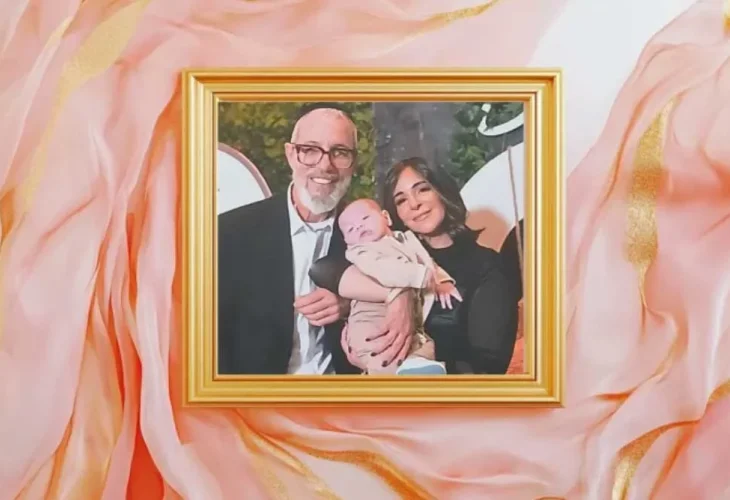 Sigalit Asraf, overjoyed at the birth of her son, Shneur Meir.
There are stories that, when you hear them, time seems to stop — and all you can focus on is that single moment. That was how I felt when I spoke with Sigalit Asraf (55), who recently merited to become a mother in an extraordinary display of Divine Providence — after 32 years of waiting, and despite a severe intestinal illness that nearly shattered her faith.
Sigalit and her husband, Chaim Asraf from Nesher, married 32 years ago, after both returned to religious observance and studied in Torah institutions in Jerusalem. When they married at age 23, Sigalit never imagined what awaited them.
“Who could have imagined that I wouldn’t be fertile?” she says. “In my family, everyone is naturally fertile — I had no reason to suspect otherwise.”
Both came from deeply believing homes, but the long journey of waiting for children shaped in them a completely different kind of faith.
“I was born into a traditional Mizrachi home — we always kept Shabbat and holidays. My father always went to synagogue, my grandparents were very religious. We grew up with faith and Jewish values,” she recalls.
Even during the painful years of childlessness, there was faith — but also many moments of collapse.
During the first year, she wasn’t particularly anxious yet — she “went with the flow.” In the second year, the struggle began.
“I became pregnant naturally, but it didn’t last. That’s when a long cycle of fertility treatments began — each time in a different hospital, with a different doctor.”
She became pregnant four times during treatment cycles — but each time she experienced bleeding in the early weeks.
“After so many disappointments, I was afraid to even take pregnancy tests. When I saw blood, I assumed it was just my normal cycle and didn’t bother to check further. I was sure the pregnancy failed again — it never occurred to me that sometimes there can be bleeding and the pregnancy still continues.”
Two years after the wedding, Sigalit was diagnosed with Crohn’s disease, a severe intestinal illness that caused intense abdominal pain and required several surgeries.
“I had such extreme adhesions in my abdomen that the doctors doing my ultrasound scans during pregnancy couldn’t believe I could carry a pregnancy at all. Anyone who heard what I went through, can’t understand how I still believed that one day I would have children, even though there were so many breaking points along the way.”
After 15 years, the disease began to flare up aggressively. “I went through at least four surgeries to remove intestinal inflammation. At the same time, I continued fertility treatments, but nothing worked. In the last treatment, we decided to freeze embryos — and then the illness worsened.”
After the embryos were frozen, her health deteriorated so severely that children were the last thing on her mind. “Everything just stopped,” she says.
“On Rosh Hashanah five years ago, I was seriously ill — sedated and on a ventilator. Having children wasn’t even a thought anymore.”
“Suddenly the doctor called: ‘You remember you still have embryos, right?’”
Another year passed — and then, shortly before this past Rosh Hashanah, after she had recovered, she received a phone call she never expected.
It was her fertility doctor. “He asked me: ‘You remember you still have frozen embryos, right?’ — and I froze. I felt joy mixed with sorrow, because after everything I’d been through — I had completely forgotten about them.
It was a huge miracle that the call came right before Rosh Hashanah — it was like a circle closing.
When I hung up, I cried. I realized what Divine Providence this was. Who even remembered them? I had already recovered, I was functioning again — and suddenly the doctor calls. Isn’t that a miracle?
I had already accepted that I wouldn’t do treatments anymore. I began to make peace with not having children.”
How did your marriage survive the years of pain?
“To my husband’s credit, he never once thought of leaving because we had no children. He always supported me, always encouraged me, always took care of me — even when I was very sick.
At one point, when we realized that pregnancy endangered my life, he said: ‘That’s it, we’re stopping treatment. If God didn’t give me children, I thank Him for that too.’
The rabbis we were connected to never discouraged us. Every time my husband went to Rabbi David Abuchatzeira, he would calm him and say: ‘Don’t be afraid. Don’t lose faith. Everything will be fine — you will have children.’
I collapsed many times in my faith, but my husband never lost his.”
Sigalit herself, however, was a fighter. Even when hope faded, she refused to abandon the dream of motherhood — even at the huge emotional and financial cost of overseas surrogacy.
“We had no idea how we would pay for it,” she says. “But every time we needed money, suddenly God sent it. I still don’t know how. Each time — large sums appeared: 10,000 shekels, 20,000, 30,000. It was only from God.”
“For 30 years I tried to accept that I would never have children”
In the religious communities of Rechasim, where she grew up, people knew her story and prayed for her. Thanks to her warm and joyful personality, everyone believed her day would come.
“I would go to brit milah ceremonies smiling and happy — and quietly tell myself: ‘You’ll have one too.’
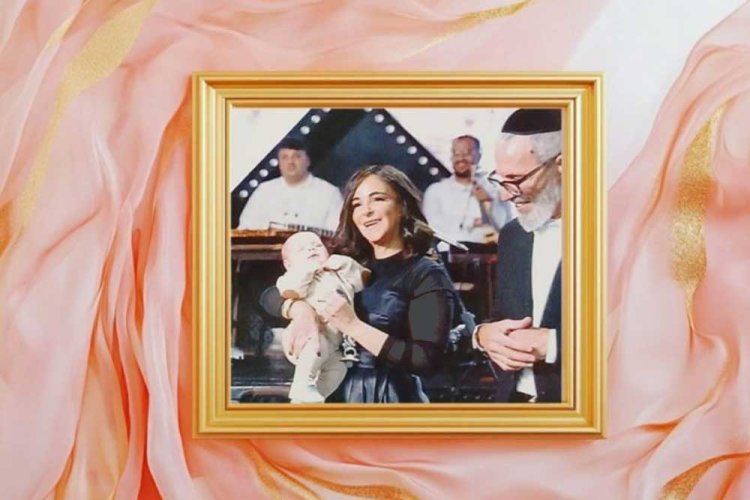
I imagined my husband holding our baby at our own brit — and that is exactly what happened.”
But 32 years is still a lifetime of waiting.
“For 30 years, I told myself: ‘Okay, there won’t be children.’
I cried endless tears — at holy sites, at the graves of tzaddikim — doing every possible spiritual remedy.
Of course it hurt. Of course I wanted it more than anything. People always told me: ‘You deserve to be a mother more than anyone.’
I raised all my nieces and nephews, I was always the one caring for everyone’s children.
When people said ‘Soon by you’ — I felt embarrassed. I would tell myself: ‘Why did they say that? Am I even at an age where I can still have children?’”
Like Sarah our Matriarch, she no longer believed such a miracle was possible. But God had other plans.
“I asked God to let me light Chanukah candles next year with our child”
“Last Chanukah, I wrote a letter asking God to let me become a mother — to see a child, maybe even twins, from the embryos we froze — and I asked that next Chanukah, we would light the menorah with our son.
And this week, after we merited to have a baby boy through surrogacy and returned home — I went to buy a menorah together with our baby, Shneor Meir.
It still makes me cry to say it.
In that same letter, I also asked to move to a new home — and just recently we moved to Nesher. And in that home, we received our son.”
Choosing the name
The name came to her through guidance from above.
“I always wanted to name a son after Rabbi Meir Baal HaNes. And I am very connected to the Alter Rebbe — Rabbi Shneur Zalman — so we added the name Shneor.
Both names come from the root ‘Or’ — light. And when does light shine? On Chanukah.
It was clear that this would be his name.”
The surrogacy journey
The surrogacy process took place in Georgia and concluded about a month ago. “For nine months, they sent me live ultrasound videos every month. I cried every time.
We flew there a week before Rosh Hashanah and stayed for two months. Our son was born the day before Yom Kippur.
Last week we landed back in Israel — and a week later we held a huge thanksgiving celebration. The entire city of Nesher was on its feet from excitement.”
How did it feel to hold him for the first time?
“I looked at him and couldn’t believe he was mine. There are no words to describe that moment. I held him like you hold a dream.
The entire medical team there was emotional — they couldn’t believe that at my age, I still hadn’t given up on becoming a mother.”
What is your message to other women who are still waiting?
I tell every woman still waiting: ‘If Sigalit merited — anyone can.’
Even if you’re older, age does not decide your fate. It is important to hold onto joy — even after 40, when many women give up hope.
The body ages — but when the soul stays young and joyful, and meets faith, nothing in the world can defeat it.”


