
Magazine
From France to Gush Katif: The Life Journey and Unshaken Faith of Chana Pekar
After tragedy, aliyah, settlement life, and forced evacuation, she reflects on love of the land, loss, community, and the faith that helped her rebuild
- Moriah Luz
- |Updated
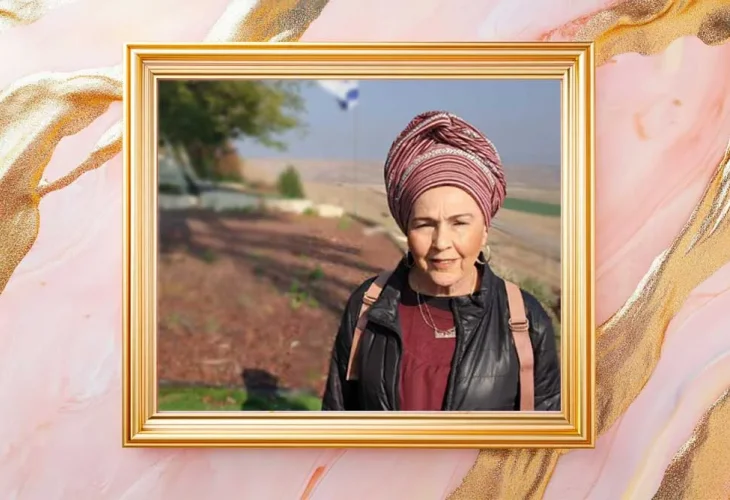 Hanna Picar
The story of Chana Pekar is a story of an unending love for the Land of Israel — beginning with aliyah, continuing with life in Gush Katif, and later with the establishment of a new community on the Gaza coast.
Pekar was born in France to a father who became religious and a mother who had grown up observant. “My father searched through many religions and spiritual paths until he eventually found his way to Judaism,” she begins. “When he first started out, he only knew fragments of Jewish law, and he was strict about whatever he managed to learn. He had no one to teach him in an organized way.
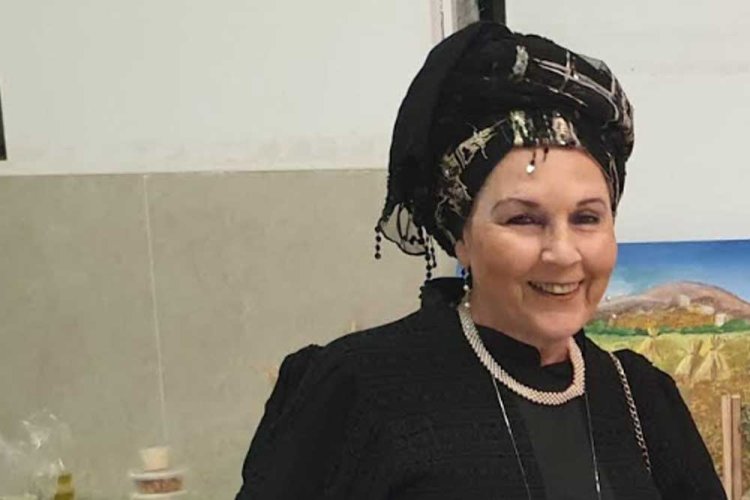
“One Friday night he came home late and heard noises in the apartment — but since he knew that turning on the light was forbidden on Shabbat, he didn’t turn it on and simply went to sleep. The next morning he woke up to a completely ransacked home. It turned out that a group of burglars had gotten there right before he arrived. Apparently, when they heard the door open but saw that the light didn’t go on, they thought it was a police ambush and fled. That story strengthened my father’s conviction that he was on the right path. Later on he met my mother, and they married. She was the one who taught him Hebrew and Rashi script.”
“Love at first sight”
“My father spent his entire life learning and seeking truth. I inherited that quality from him. As a teenager I would ask him very difficult questions. He would sit with me for hours, answering calmly and thoughtfully. Those conversations shaped me.”
Israel was always present in their home, but the family remained in France for years in order to care for Chana’s elderly grandmother who lived with them. When Chana was ten and her grandmother passed away, her parents decided the time had come. They packed their home and sailed to Israel with five of their ten children — the rest were already married, studying, or in yeshiva.
“About two years after we made aliyah, my father became involved in the settlement movement. We spent a lot of time visiting communities, and in the last ten years of his life my father was known as ‘the doctor of the settlements.’”
Chana grew up, married her husband Michael, and the couple had several children.
“One Friday afternoon, my parents were on their way to visit my sister who lived in Gush Katif. Just before they arrived, they were killed in a fatal car accident. An Arab truck driver crashed into their car at the Netzarim Junction. They were evacuated to an Arab hospital, and only after Shabbat did the news reach me. I was in the early months of pregnancy with my fifth child.”
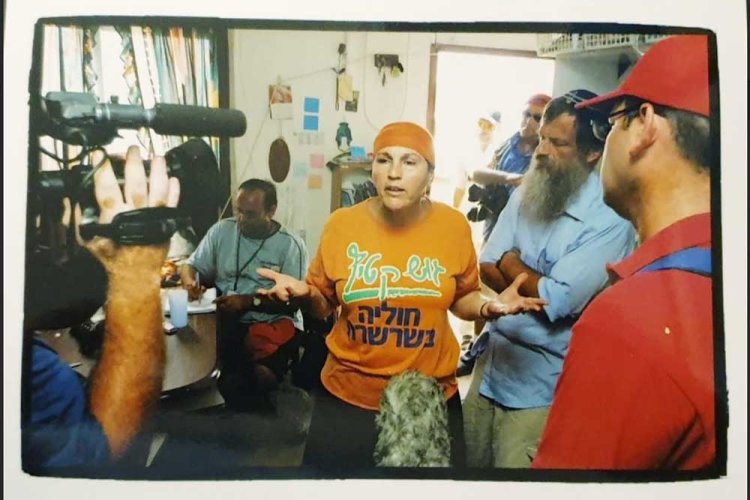 Hanna Picar in the struggle before the expulsion. Credit: Nathan Dvir
![Hanna Picar by her home in Shirat Hayam]() Hanna Picar by her home in Shirat Hayam
Hanna Picar by her home in Shirat Hayam
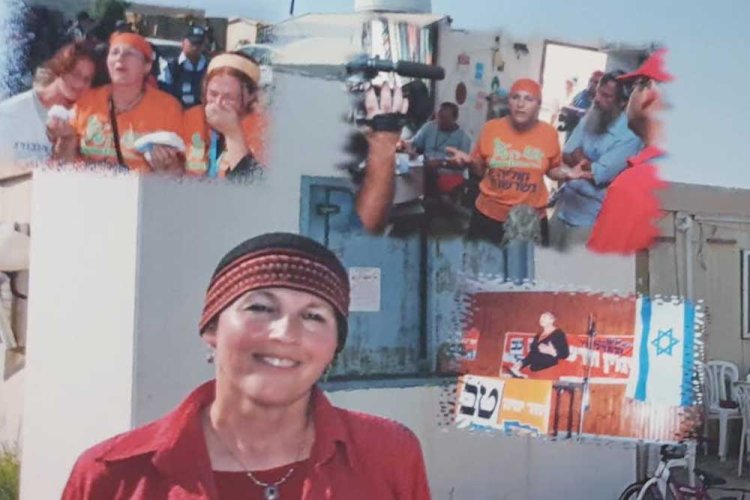 Hanna Picar by her home in Shirat Hayam
How does one get up after such a tragedy?
“It was extremely difficult. I think it was mainly faith that helped us stand on our feet again. A few months later I gave birth to a baby girl and named her after my mother — and at that moment I felt that something inside me began to heal. We also knew that my parents were now in a good place, after all the good they had done in their lives. That knowledge brought us comfort.”
After her parents’ passing, Chana and her husband spent two years on shlichut (educational mission) in Paris. “During the last month of the mission we came to Israel to look for our next home. We visited many communities and couldn’t find a place that felt right. On the Shabbat before our return to France, we planned to spend Shabbat with my sister in Gush Katif — and decided to arrive a day early so we could tour the area.
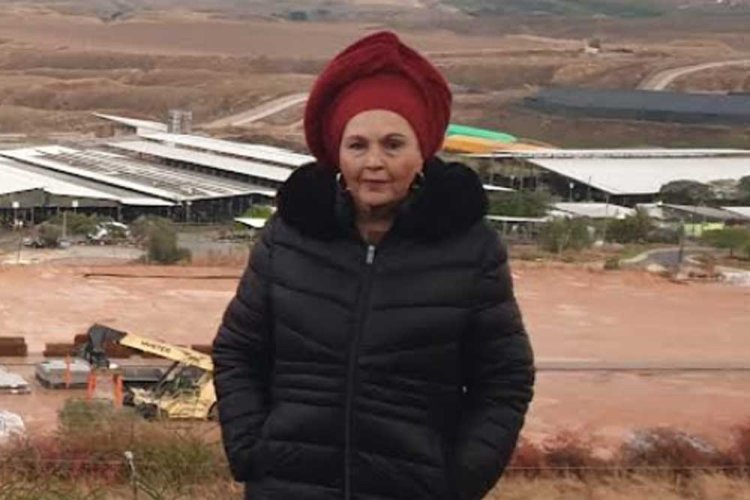
“I remember the feeling that spread through my heart when we entered the gates of Gush Katif: a feeling that I had come home. We were struck by the calmness and warmth of the people. The scenery was breathtaking — the sea stretched out before us, surrounded by clean dunes and palm trees. It was love at first sight.”
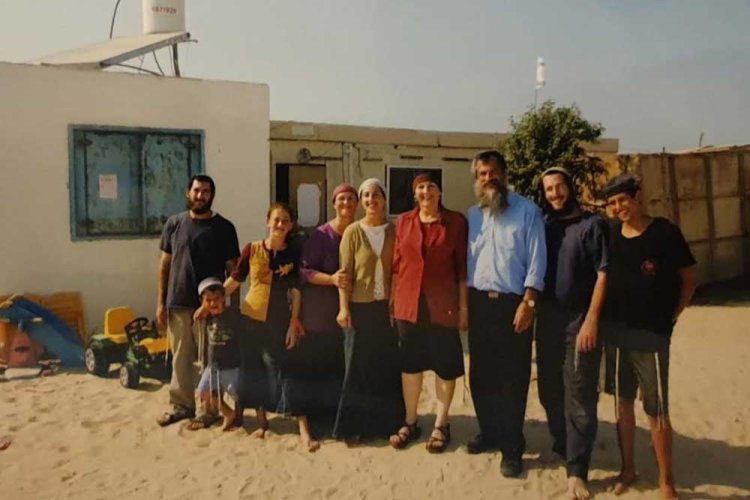 The Picar family at Shirat Hayam. Credit: Nathan Dvir
A life of mission and community
Chana recalls that when they arrived at the community office, the secretary was surprised to hear that they wanted to move straight from big-city Paris to distant Gush Katif.
“But that was exactly what we were missing. In Paris everyone lives for themselves — but in Gush Katif there was warmth like nowhere else. People of every kind lived there together — religious, secular, Chassidic, Chabad, and everyone smiled at one another in the grocery store and genuinely cared. Beyond the people themselves, it was important to us to raise our children with a sense of mission and purpose. We weren’t looking for comfort — we were looking for values. Gush Katif embodied that completely.”
![The Picar family by their home in Shirat Hayam. Credit: Nathan Dvir]() The Picar family by their home in Shirat Hayam. Credit: Nathan Dvir
The Picar family by their home in Shirat Hayam. Credit: Nathan Dvir
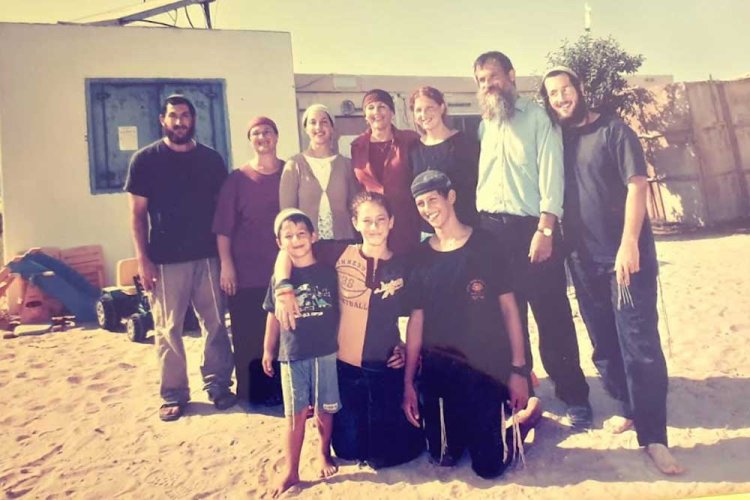 The Picar family by their home in Shirat Hayam. Credit: Nathan Dvir
Did the security situation deter you?
“You’re asking the wrong person,” she smiles. “I’m simply not a fearful person. When precautions were necessary, we followed instructions — but not out of fear or anxiety.”
The Pekar family lived in Neve Dekalim for 11 years. They arrived with five children, and over the years three more were born.
In 2001, there was a devastating terror attack near Kfar Darom. Terrorists fired a shell at a school bus filled with children. Two residents were killed and several children were seriously injured, some losing limbs.
“We felt that such an attack needed a meaningful response. For some time we had occasionally walked to a nearby beach — but because an Arab village separated us from the coast, most residents were hesitant to go there.
“After the attack, we decided to establish a new community on the beach. We called it Shirat HaYam (‘Song of the Sea’). At first there were no utilities — just caravans and sand. Since I had a newborn baby, we waited until at least one caravan was ready, and then we moved. We began with just three families.”
Slowly the community grew to twenty families.
“God cries together with us”
Two years later came the announcement of the Disengagement Plan.
“There had been rumors, but we never believed it would really happen.” During the year before the evacuation, Chana worked tirelessly to try to prevent it — including forming a lobbying group in the Knesset with several other women, traveling to Jerusalem three times a week.
A month and a half before the evacuation, her son reached bar mitzvah age.
“It was clear to me that the bar mitzvah would be celebrated in our community — even though we had no hall, not even a synagogue. We brought tables, arranged everything, and even organized protected buses for the guests. It was an incredibly joyful celebration — hundreds of people from all over the country came.”
The day they were forced to leave their home remains etched in her heart.
“It was unbearable. I couldn’t walk out on my own — the soldiers pushed me, and my daughters supported me on each side. As we were being taken out, I told the soldiers through tears: ‘The day I buried my parents was terrible — but today is even harder. Then I cried from longing, from missing them. But today I am crying for the uprooting of the Jewish people from the Land of Israel. What will God say about this? God cries with us, because we are giving away parts of our land.’”
After the evacuation, the family spent six months living in the “Shalom” Hotel in Jerusalem with other Gush Katif families — a period Chana describes as dark and difficult.
“There was no privacy, no real home. My young son refused to eat the hotel food — he just wanted one thing: an omelet made by his mother.”
She fell into depression, and the family leaned on her husband for stability until, months later, they moved into a temporary caravan home in Nitzan.
Years later, after many years of work in education and therapy, the couple retired and eventually moved to Jerusalem.
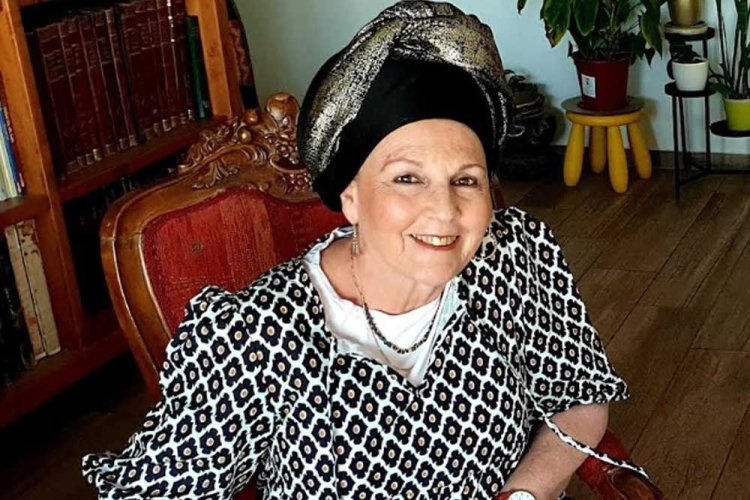
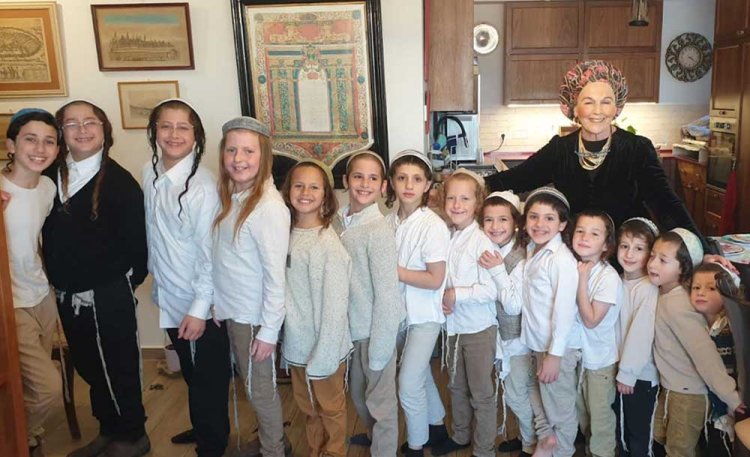 Hanna Picar with some of her grandchildren
Faith that heals
When asked what insight she carries from her life’s journey, Chana replies: “I learned that only God can help — and that to understand His ways, you must learn. Over the years I drew close to the teachings of Rabbi Nachman of Breslov. His Torah strengthened my faith and guided me. I learned how to trust God even when things happen that I don’t understand — events that shake the soul and destabilize life.”
Today, much of her family is deeply connected to Chassidic thought. “The Baal Shem Tov taught that when the wellsprings of Torah spread outward, redemption will come. In our family, most of us feel that the answers we seek — spiritually and emotionally, are found in Chassidut and the inner dimension of Torah. Thank God, my children are strong in spirit, and walking in the way of God.”


