
Magazine
Aharon Cohen: A Life of Quiet Kindness, Faith, and Devotion to Family
The heartbreaking day of the attack, the hidden acts of generosity, and the enduring legacy of compassion he left to his children and community
- Hidabroot
- |Updated
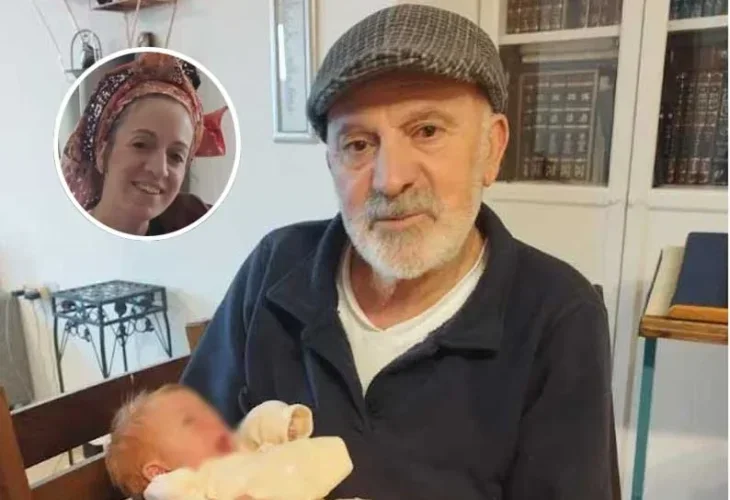 Aaron Cohen of blessed memory with one of his granddaughters. (Inset: His daughter, Avishag Beck)
Every Tuesday, late in the morning, Aharon Cohen would load his shopping bags and leave his home in Kiryat Arba for the bus stop. His weekly destination was the Rami Levy supermarket at the Gush Etzion junction, where he liked to choose the groceries himself — for his home and for his grandchildren. By early afternoon, his daughter, Avishag Beck, learned that there had been a terror attack at the junction.
“Dad, where are you?”
Avishag, a mother of seven who lives in Kiryat Arba and works as a middle-school teacher, recalls the difficult day:
“My sister called and said that my brother — who was serving in the reserves — sent her a message asking us to check what was going on with Dad, because there had been an attack and he wasn’t answering his phone. I tried to calm her down and said he was probably in the middle of shopping and didn’t hear it, and that we’d try again soon.”
Repeated calls went unanswered.
Two and a half hours had passed since the attack. The news reported that a 30-year-old had been killed — but none of the children were able to reach their father.
“My brother Shlomi, who teaches at a nearby yeshiva, would bring Dad home every week with the groceries. He drove to the junction, went into Rami Levy, and told us there was no one there.”
Shlomi didn’t give up. While his sisters continued making calls, he walked around the area and met a familiar face from Kiryat Arba — a man of kindness they deeply respect.
“My brother asked him, ‘Do you maybe know where my father is? We’re looking for him.’
“He answered: ‘What, they didn’t tell you? Your father was killed.’”
“I ran up the stairs — and the children were crying, ‘Grandpa is gone’”
“When my brother went to identify the body, he stopped answering our calls,” Avishag says.
Meanwhile, her sister waited at their parents’ home in case their father returned. “Suddenly she saw through the window police officers and the community crisis response team.
“She called me immediately and said, ‘Avishag, police are on the way to Mom and Dad’s house — come now.’ I rushed there, saying Tehillim during the two- or three-minute drive, whispering, ‘Dad, where are you? What’s happening with you?’
“I reached the building, ran up the stairs, and saw the door open. In the entrance were my nieces and nephews — little ones — crying and shouting, ‘Grandpa is gone, Grandpa is gone.’”
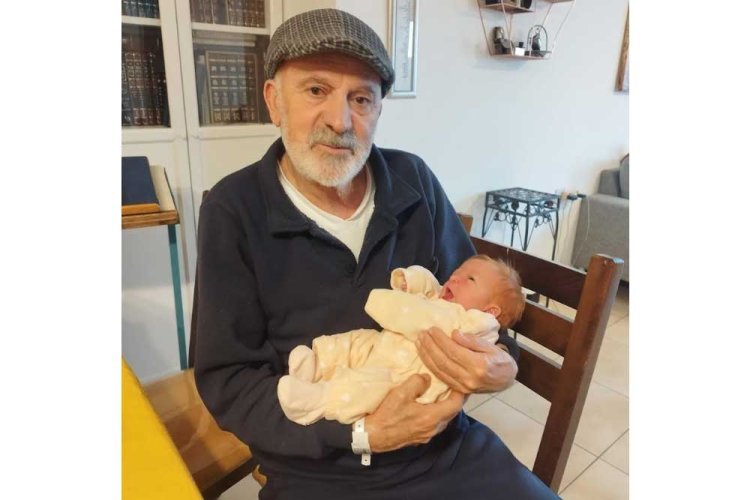 Aaron Cohen of blessed memory with one of his granddaughters
Tell us about your father.
“My parents moved to Kiryat Arba about 43 years ago. They weren’t among the very first residents — but they’re considered veteran members of the community,” she says. Her parents had six children, four of whom also live in Kiryat Arba.
“My mother passed away from cancer about five years ago. She worked in a daycare — an educator through and through, and was very loved. Many of the town’s children grew up with her.
“My father was a quiet person, but very well-known. He had a fixed daily routine — early-morning prayers at sunrise, followed by Torah learning at the kollel. It was important to him to fill himself spiritually.
“I would ask him, ‘Dad, why do you need to get up for the sunrise minyan? You’re not rushing anywhere — maybe pray a little later?’
“And he would be surprised and reply, ‘What do you mean? This is how you start the day — with holiness.’”
He was a person of exceptional kindness, she continues. “He always helped everyone. He wanted people to be happy. He worked as an electrician. Whenever something broke in my kids’ toys, I’d bring it to him.
“I’d say, ‘Dad, let’s just tell the kids it can’t be fixed.’ And he’d answer, ‘No — leave it. I’ll work on it.’
“He would quietly sit for hours dismantling and repairing things — and later call me to say, ‘You can tell the kids they’ll have their lamp back. Nothing to worry about.’”
Everyone was “a good friend” — someone he had helped or fixed something for.
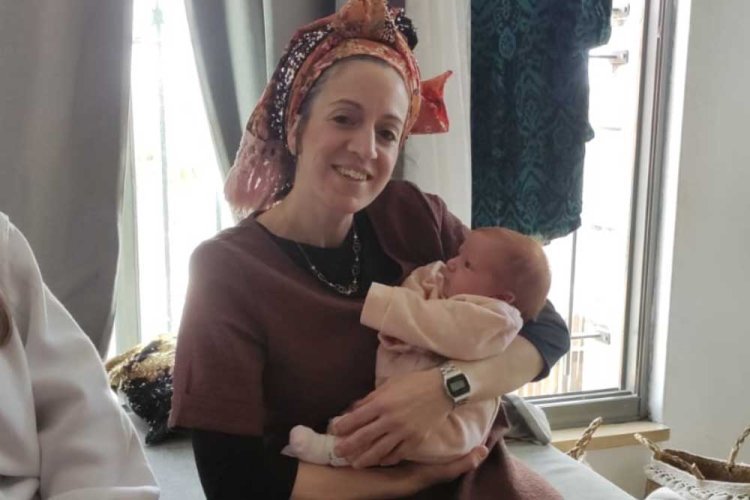 Avishag Beck
“A kindness from Heaven”
He had worked in electrical systems at factories in Jerusalem and later at the Hebron winery. When the winery closed, his wife’s illness had just been discovered, and he dedicated himself to being by her side throughout the treatments.
“After she passed away, it wasn’t easy for him,” Avishag says. The family made sure to spend Shabbat with him in turns, and over time he regained strength.
“A few months ago he had a major medical test — and thank God it came out fine. From that moment until the day he died, he was so joyful and full of gratitude.”
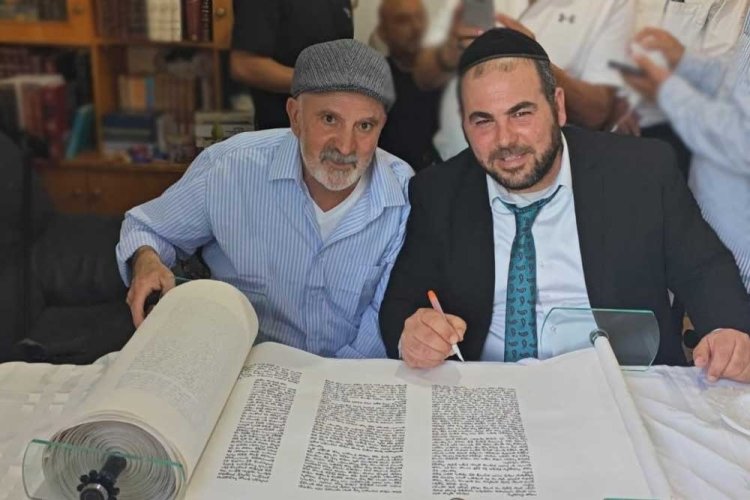 Cohen of blessed memory escorting a Torah scroll in memory of his parents
Place of burial
“Our rabbi explained that there is great spiritual significance in burying the deceased as close as possible to the time of passing,” she says. “So we immediately said: the funeral will be today.”
Because he was a Kohen, he needed to be buried in the Kohanim section of the cemetery. The ancient Jewish cemetery in Hebron is small, and it is very hard to find space — especially there.
“After my mother died, my father asked us to try to ensure he would be buried next to her. But we were told that in that cemetery, graves cannot be reserved in advance.
“When the rabbi came to us, he told us there was one available place left in the Kohanim section — exactly next to my mother’s grave.
“To me, that felt like a kindness from God,” says Avishag.
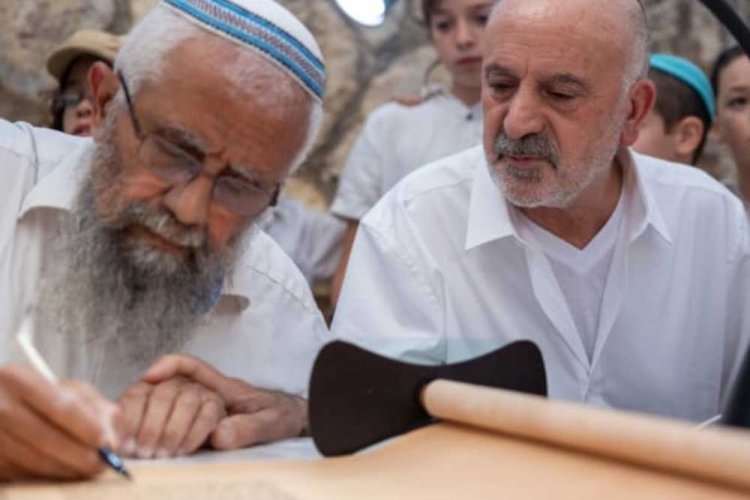 Accompanying a Torah scroll in memory of his wife (Credit: Amichai Matuv)
Hidden acts of kindness revealed
During the shiva, the family learned things about their father they had never known.
“In our town there’s an organization called ‘Chasdei Avot,’ which prepares packages for families in need and for elderly residents.
“During the shiva, the coordinator came and said, ‘Do you know your father was one of our volunteers?’
“We all looked at him and asked, ‘When?’
“And he said, ‘You know how your father used to go on walks? On his way, he would stop at our storage center, shake hands, and start working — packing, sorting groceries, doing whatever was needed — and when he finished, he would continue his walk.’ We were stunned.”
“To give of yourself — simply and quietly”
After the attack, a well-known writer — herself an orphan who lost both parents in a terror attack — wrote a post about their building, which had lost several residents over the years.
“I read it during the shiva and thought to myself: what a profound, holy perspective,” says Avishag.
“But then I saw how the media twisted it, calling the building names like ‘the house of tragedy.’ They took it to a completely wrong place, and that saddened me. What I connected to was the idea that these are holy people — chosen as a public sacrifice of Am Yisrael. I’m certain that was also her intention.”
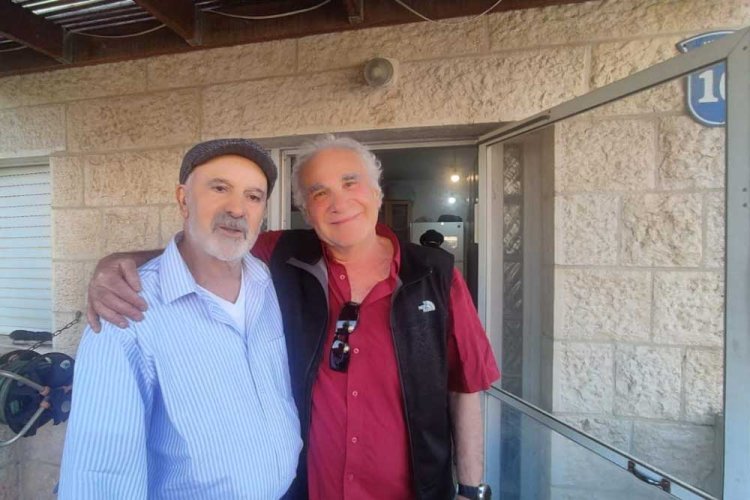 Aaron of blessed memory meeting a childhood friend
Where do you feel your father’s absence most?
“After my mother died, my father tried in his own way to fill part of her role — to care for us, to check in, to help wherever he could. What I miss most now are the deep conversations with him.”
What would you want your children to carry forward from him?
“That they remember his kindness, his quiet generosity, his giving without seeking attention — the desire simply to be a good person and to give of yourself.
“We were blessed with amazing parents. I believe that God gives such tests only to those who have the strength to endure them — and I pray that He will give us the strength and guidance to rebuild ourselves.”


