
Magazine
From Fighter Pilot and POW to Chabad Chassid: The Spiritual Journey of Gideon Sharon
A former Israeli Air Force pilot shares how discovering Jewish identity, Chassidut, and a life of mitzvot transformed his purpose, family, and outlook on faith and unity
- Hidabroot
- |Updated
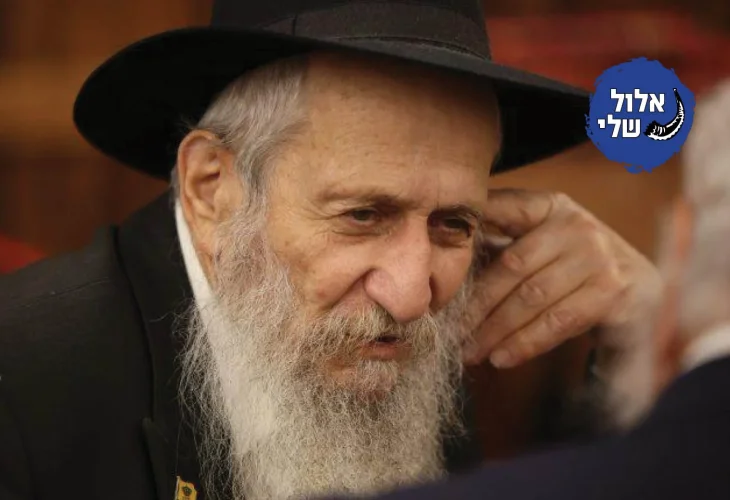
“My name is Gideon Sharon. I grew up in Kiryat Tivon. In our environment there were no religious or observant Jews — not in the neighborhood, not in my class, not in elementary school and not in high school. I enlisted in the Air Force Flight Academy and graduated as a fighter pilot. I fought in the Yom Kippur War, my plane was hit over Egyptian territory, and I was taken prisoner of war.
“After my release, I worked for over 20 years as an agricultural crop-dusting pilot in the yellow planes of the ‘Chem-Air’ company. Later, with the blessing and guidance of the Lubavitcher Rebbe, I entered the field of computers. My main area of specialization is an innovative, multi-dimensional approach to knowledge preservation and sharing.
“Today I still live in Kiryat Tivon, thank God, together with my wife Libi. We are Chabad Chassidim. We have married off our ten children, and they are engaged in the Rebbe’s shlichut (Jewish outreach) in Israel and abroad — two of our daughters are overseas: one in London, and one in Quito, Ecuador. Recently, thank God, we had the privilege of attending the wedding of our first grandchild.”
What is the main thing that changed in your life since becoming religious?
“I remained the same person, but my entire life changed from one extreme to the other. I became aware of the meaning of my Jewish identity, of the Jewish way of life, and of my personal commitment to living my daily life according to Torah, mitzvot, and a Jewish lifestyle — because only in that way can I truly be at peace with myself, and in my view, there is nothing greater than that.
“So this became the central axis of my life, thank God, day by day and hour by hour.”
What are the biggest challenges faced by people who return to religious observance?
“The two main challenges are expressed in the phrases ‘Turn away from evil’ and ‘Do good.’
“Turn away from evil — disconnecting from habits and worldviews that we lived by for many years. Do good — not stopping halfway up the ladder, because if one stops in the middle, there is a danger of becoming stuck.
“It is always important to keep moving forward — in observing mitzvot, in Torah study, and especially in learning the inner spiritual dimension of the Torah, namely Chassidut, which illuminates our path and enables us to walk securely in daily life, without having to ‘grope in the dark’ — even when one lives outside of a strong religious community, whether in Kiryat Tivon, Ramat Aviv, London, or Ecuador in South America.”
What was your first Elul like after becoming religious?
“Our first Elul was amazing. After our wedding we lived for two years in Afula, and there we drew closer to Judaism. Two days before the month of Elul our son Boaz was born, and we moved to an apartment next door to the Moroccan synagogue in Kiryat Tivon.
“At that time I was working as a crop-dusting pilot and would wake up before dawn so that I could reach the airstrip before first light. As I was getting ready to leave, I would hear knocking on the shutters and the familiar calls, just like in the stories: ‘David… Meir… Shimon… Selichot…’ And then later I would hear the sound of the shofar from the synagogue — loud and clear — because in those days there were no air conditioners, the windows of our house were open, and so were the synagogue’s windows.
“In short — the entire day was filled with the atmosphere of the month of mercy and forgiveness, and that’s how it was throughout the whole month of Elul.”
Is there a prayer or piyyut from the High Holidays that especially moves you?
“‘Ya’aleh Tachanuneinu Me’erev’ — ‘May our supplications rise up from evening.’ Why? Simply… that’s how it is. I am especially moved when I hear the melody sung by our grandson Yosef Yitzchak, the son of our daughter Chana and our son-in-law Rabbi David Katz. They live in London and run the Chabad House in West Hampstead.”
When was the last time you asked someone for forgiveness?
“It is not simple or easy to ask forgiveness in the truest way — but I am aware of this, and I try…”
A meaningful insight you took from the past year?
“We all know the slogan: ‘Together we will win.’ My insight from the past year is that strengthening, deepening, and empowering our connection to our heritage and to the values of our people — the eternal nation — is what will bring about that sense of ‘togetherness,’ the feeling of unity and love of Israel, which is the key. As it is said: through Ahavat Yisrael (love of one another), we will bring the redemption.”


