
Magazine
Thirteen Years After the Itamar Massacre: The Grandmother Who Became a Mother Again
Rebbetzin Tali Ben Yishai shares her journey of raising the Fogel children, living with unimaginable grief, and finding unshakable faith and hope for Am Yisrael
- Efrat Talia Cohen
- |Updated
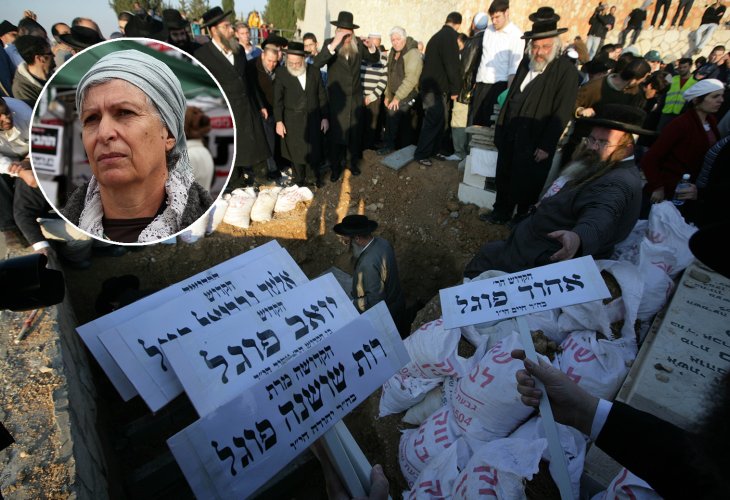 Inset: Tali Ben Yishai (Photos: Abir Sultan, Hadas Parush / Flash 90)
It happened almost 13 years ago, and despite all the years that have passed, it seems this story will never be erased from our collective memory: Rabbi Ehud Fogel and his wife Ruti were murdered on Friday night in their home in the community of Itamar, stabbed and shot to death by two terrorists, together with three of their children: 11-year-old Yoav, 4-year-old Elad, and little Hadas, who was only 4 months old.
Within this terrible tragedy, there were also miracles and survivors: three of the children – Yishai, who was only two years old; Roi, who was eight; and Tamar, who was twelve and was not at home when the attack took place. Tamar discovered the horror herself when she returned home from a Bnei Akiva youth group meeting.
When I try to bring these memories back up with Rebbetzin Tali Ben Yishai, Ruti Fogel’s mother and the one who overnight went from being a loving grandmother to the one raising her grandchildren as their mother, she goes quiet and very clearly marks the limits of what she can bear.
“I don’t want to talk about what exactly happened there,” she tells me. “I also don’t know all the details.”
We’re speaking almost a week before Ruti’s birthday, a date they make sure to mark and celebrate every year. Between her words, you can almost feel as if, for her, this is the birthday of someone entirely present. And if you ask her, since the tragedy she really does feel her daughter’s close presence and feels that they are raising the grandchildren-children together – the ones Ruti left behind.
Tali, looking back, do you remember how they told you about the attack?
“The truth is, we got the news in a non-official way, it somehow fell between the cracks. We didn’t know anything. We weren’t home that Shabbat, we were at our oldest son’s house in the north, and I personally had no bad feeling or anything different at that time. In the Shabbat prayer in Birkat HaMazon we say ‘Retzei ve’hachalitzenu,’ which means that He shouldn’t bring us sorrow or distress on the day of rest, and looking back I know that He gave us rest and joy that entire Shabbat.
“Only at the end of Shabbat, our son who was in the army updated us that something had happened in Itamar. He already knew what it was because he had heard, but I didn’t know anything, and I only somehow understood that it was something very big in scale.
“On the day they told me, I understood nothing. At first I thought they had all been killed. I was in a kind of black pit where I couldn’t grasp the implications. I was in one big nightmare. Only the next day did I understand there were three children left alone, and it was clear to me that we wanted to raise them – there was absolutely no question about it. We called the Fogel family, and all of us, thank God, were of one mind that the children should be with us.
“At the beginning we didn’t know what to do – maybe we should go live in Itamar? After all, the kids went to school there. But very quickly we understood that the children needed a change of life, and we needed our stability. In hindsight, it was a very good decision, even though at first they strongly protested that they wanted to go back home. But my husband was very firm that they were staying here, with us in Jerusalem. Slowly they understood that we were the responsible adults, and we built new lives around a completely different framework – we rebuilt everything.”
How do you survive such a tragedy, and then go on to raise grandchildren from scratch, when you’re already a grandmother and your youngest child is 18?
“I always say that what gave me the ability to live was them, and what gave them the ability to live was me. It was absolutely clear to me that after such a huge disaster I wouldn’t have been able to lift my head if not for them. We had to be here and put aside the deepest pain, and I said: ‘For them.’ It wasn’t an intellectual decision; I just felt for them, and I knew that this is what my Ruti would want – that the children would continue to grow up with us, and together we helped each other to get up again. When you have someone to get up for – you find the strength. And really, they were a very central factor in that rising up.
“Our children too, Ruti’s siblings, were very present. We have a married daughter with three kids, and within two months she moved to live right near us, right next door, and moved apartments just for this – to help us take care of the little ones. After her, more children moved closer. Today we no longer have children living near us, but then it was very significant. The way the family mobilized was very meaningful and gave us a lot of strength to hold on, and we became different people.”
In what way do you feel you’ve changed since the tragedy?
“I always say: I gave birth to my daughter, and she gave birth to me. Truly. I felt that at the moment she physically left this world, she caused a new kind of revelation – I suddenly became someone else because of them. Because after such suffering, we don’t stay the same; life makes us bigger. We wanted very much to live on their scale – we knew they were very great people, and we kept saying, ‘We can’t not be big; we are the parents of great people.’”
It seems that since the attack, Tali’s life changed beyond recognition, in a single moment, including the professional work she gave up. “We have nine children and most of the years I was a stay-at-home mom, because I saw it as an ideal to raise the children. A few years before this happened, they asked me to join a program at a midrasha (seminary) for French girls, and I served as assistant head of the midrasha, for girls who come for a year of study in Israel. All the time I was a mother but also a rebbetzin, because my husband is a rabbi, and that really suited my personality – both giving love and teaching some of the Torah I had learned. I worked there for a few years. I was very happy, because I felt I had something to give, and the children were already older and getting married. But the day after the tragedy, I left everything and decided to dedicate myself to raising the grandchildren. That was completely clear to me. Today, years later, I’ve gone back to work at a different midrasha for French girls.”
How do you raise those who are supposed to be your grandchildren?
“First of all, I asked myself how I could raise three children, who are technically my grandchildren but have lost everything – their mother, their father, three siblings, and their familiar environment. How can you go on? That question was always there, but at the same time it was absolutely clear to me that I would succeed and that the children would be okay. Something inside me told me that it would be okay. Not that the difficulties are easy – but that I would manage to withstand them.
“I told myself that basically I know how to give two things which, according to Rav Kook, are the two greatest values in life: love and faith. If you have those, you can talk about many things. I kept repeating to myself that I have a lot of love, because love grows all the time when you have nine children, and also faith. I felt full of faith and I said: ‘These two things I will manage to give my grandchildren, who are suffering from such a huge lack.’ That’s what gave me strength – to understand that I was chosen. It’s not random; if the children really came to me, then I was chosen. Divine providence is very precise; it’s not by chance, so Hashem will give me the strength.”
“I screamed to Him silently”
“Over time I felt that He really did give me the strength, even from very hard places. I spoke to Him. I didn’t even just speak – I screamed to Him silently, I turned to Him. I felt that only He could help me. Really only Him. From those very difficult places I constantly felt that I was getting an answer. Our communication with the Creator is very intimate, and suddenly I felt that I managed to breathe a bit more easily, or that something opened, something calmed in my heart, or that the children were a bit calmer – and that this was because of my request, my prayer. This very tangible sense that I’m not alone – that of course there is family and people, and so much love, but inside I felt that only Hashem could help, only Him.
“Because really, only He understands my pain, my sorrow. I would constantly say to Him: ‘You hurt and suffer with me, I know. And only You can give me the strength to grow and move forward and care for the children and hold on with a big family, with children and grandchildren, not to fall apart, not to collapse,’ because at the end of the day it’s a huge responsibility. My connection with the Creator and my faith went up another level; I felt that He was literally at my side, and I also felt that my Ruti was simply accompanying me, and that she’s always with me. That’s what I tell bereaved families: ‘You won’t see your child physically, but you’ll feel him.’”
How do you feel Ruti – in what moments?
“Ruti is with me all the time. She gives me strength; she is probably praying that I’ll have strength; and in the fact that I’m raising her children, there is some kind of symbiotic bond between us, because these are her children, she is supposed to raise them. Of course I’m not her, that’s obvious, but there is something of her in me. She was a very powerful woman. I wasn’t like that, but out of the great pain, strengths are revealed in me, and faith and a feeling that she accompanies me.
“There’s something about holy people – you can’t be small next to them; we have a responsibility to continue their greatness. That’s one of the things that most helped me – to understand that I belong to a great people, who have gone through so many hardships and held on throughout their entire history, and it’s not over and far from over, and with God’s help mercifully. I ask myself: ‘How do we keep going despite all the pain? How did Am Yisrael, after the Holocaust, come back to the Land, wounded, almost dead, and suddenly find the strength to establish a state?’ If within Am Yisrael these strengths exist, then I am a daughter of Israel, so apparently they exist in me too. When the individual is connected to something big – when a divine revelation passes through the nation – he gets a lot of strength from that greatness.”
During this period you’ve gone quite a bit to comfort bereaved families. With everything that happened on Simchat Torah (October 7), is it hard for you to face it? Does it trigger anything from your personal tragedy?
“No, because I’m in pain anyway, all the time. It’s 13 years that I’ve been living this pain,” she cries. “They asked me, ‘You’re still crying after 13 years?’ The tears are always in my throat; it’s not that I went far away from it and now this brings me back. Of course it’s shocking, but it doesn’t bring me back to ‘my’ very painful place, because that place is there anyway. I feel that my life is built from everything – from the terrible pain, and also from hope, and also from strength, and it all goes together. When people used to tell me, ‘Put it aside a bit,’ I would think to myself: How can you put aside something that is part of me? It hurts me. It hurts me for the families, for the honor of the nation.
“At the same time, there are also good things that I live; I’m not only in pain. The pain is the background of my life, but on that background there are also other good things. And I feel that our nation also lives both of these – we are a people of life. We live the pain in a terrible way, and we also live joy in a very big way. It’s not that we live two separate tracks; we live everything with intensity, and that’s what makes us a very special people – because it’s a lot of life, in the Land of Life, in the People of Life, with a living God.”
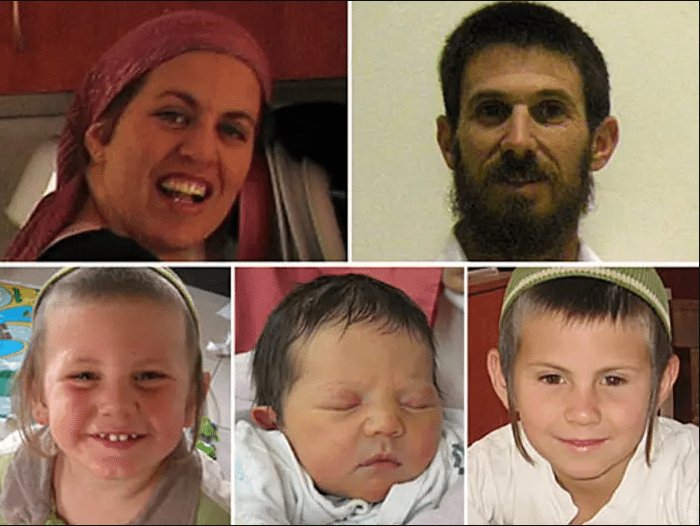 (בני משפחת פוגל הי"ד (צילום: באדיבות המשפחה
Honestly – wasn’t there, or isn’t there, anger in you after everything that happened?
“Of course, there was anger… terrible anger. At the beginning – I don’t remember how long it lasted – but I was very angry. I spoke to Him and said: ‘What do You want? What are these proportions? You took five limbs from my body? How? How could You do something like this?’ It took me time to calm down. And along with the anger, I would tell Him: ‘You know I’m angry, and You understand my anger. You’re my Father.’
“There were times when the daughter who lived next to me would say: ‘Imma, aren’t you afraid you’ll go crazy from the anger or from the pain?’ And I answered her: ‘I have to live what I’m experiencing to the full; I’m not putting anything aside.’
“It took me a very long time to go back to praying, even though I was regularly saying Tehillim. I couldn’t. How can I say ‘We thank You’? I can’t be not authentic. There was a very long period of anger, but it calmed down and shifted into other feelings. Apparently I needed to go through that phase of anger. I am very much in favor of living whatever we’re given to live, not pushing it aside. If I feel anger now – then I’m angry. What will be later? It’ll be okay. And that’s how it was. I felt that everything I really went through were the right processes.”
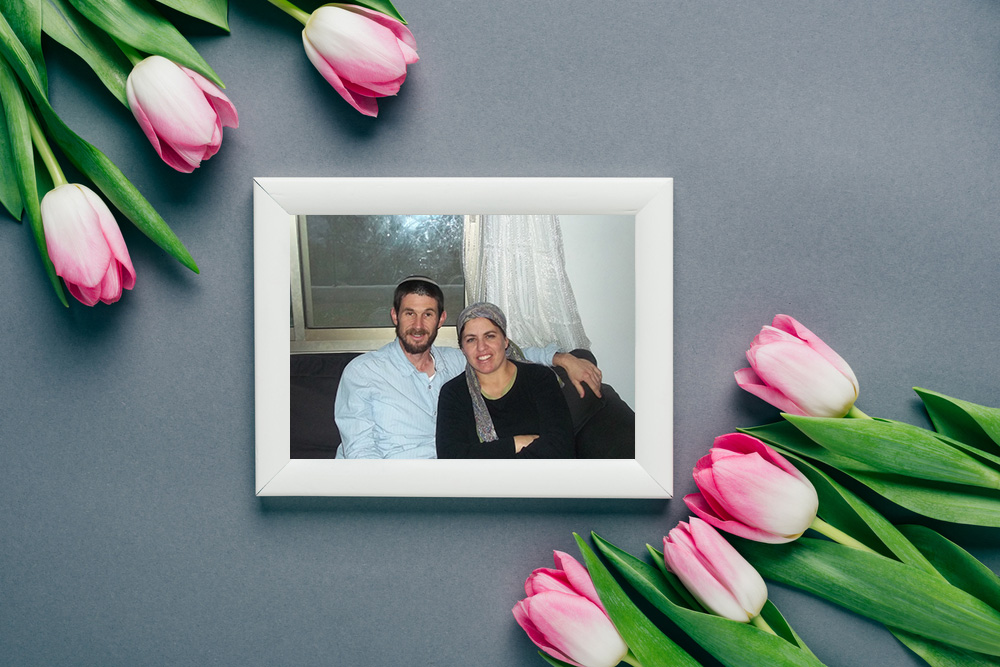 בני הזוג פוגל הי"ד
You travel now quite a bit to comfort families. What do you say to the mourners you meet – what words do you use to comfort them?
“I cry with them. Truly cry with them, because I hurt so much, and I say to them, to the mother: ‘Know that he will never leave you, he will always be with you.’ And they ask me: ‘Really?’ and I answer them: ‘Yes, he will never leave you.’ I deeply believe that, and I also believe that there is some kind of connection of worlds. I became, in a way, a bit in the world above, because parents are connected to their children, so I’m a little bit “up there,” and they (the children) are a bit “down here,” because they’re connected to us, their parents – and then another kind of world opens up, the World to Come opens. And they won’t leave. They don’t leave.
“Not long ago I went to meet a widow whose husband was killed in the war. She lives near us, she understood who I am, and she asked: ‘How do you go on? I’m going to be so alone.’ And I said: ‘Really, it’s hard; it’s terribly hard, it’s impossible to believe that anyone can get out of something like this. But they continue to accompany us. They don’t leave us. And they, the holy ones, are in such a high place that no creature can stand in their presence, so in the place where they are, they pray very much for us, they don’t leave. They are next to the Patriarchs, and they channel strength into us.’
“The pain is enormous, I miss them; you can’t say anything else. But I don’t feel that I have fewer strengths than I had before – I feel I have more. Within very great suffering, that’s the journey that was placed upon us.”
How are the children-grandchildren today, in the years since the loss?
“There are many waves, and we pray it will really calm down. There are easier times and harder times. The children carry a lot of pain inside, and it hurts, and it has to be expressed somehow. But they also say that they constantly feel their parents with them. And we accompany, and Hashem is there and doesn’t leave us. Every day I pray and say: ‘To bring a person into the world, You allowed us to be partners with You – Father, Mother, and Hashem – and You took their father and mother, so You are their Father and Mother; please guard them, guide them.’ I feel that it’s different – that He really is the Father of orphans. It’s not like children who grow up with parents. We give what we can give, but how can we fill that lack? It’s too big for us. So we worry like a mother should worry, on the physical level, but we say to Him: ‘The rest You have to take responsibility for – they are Your children, and only You can fill that void for them.’”
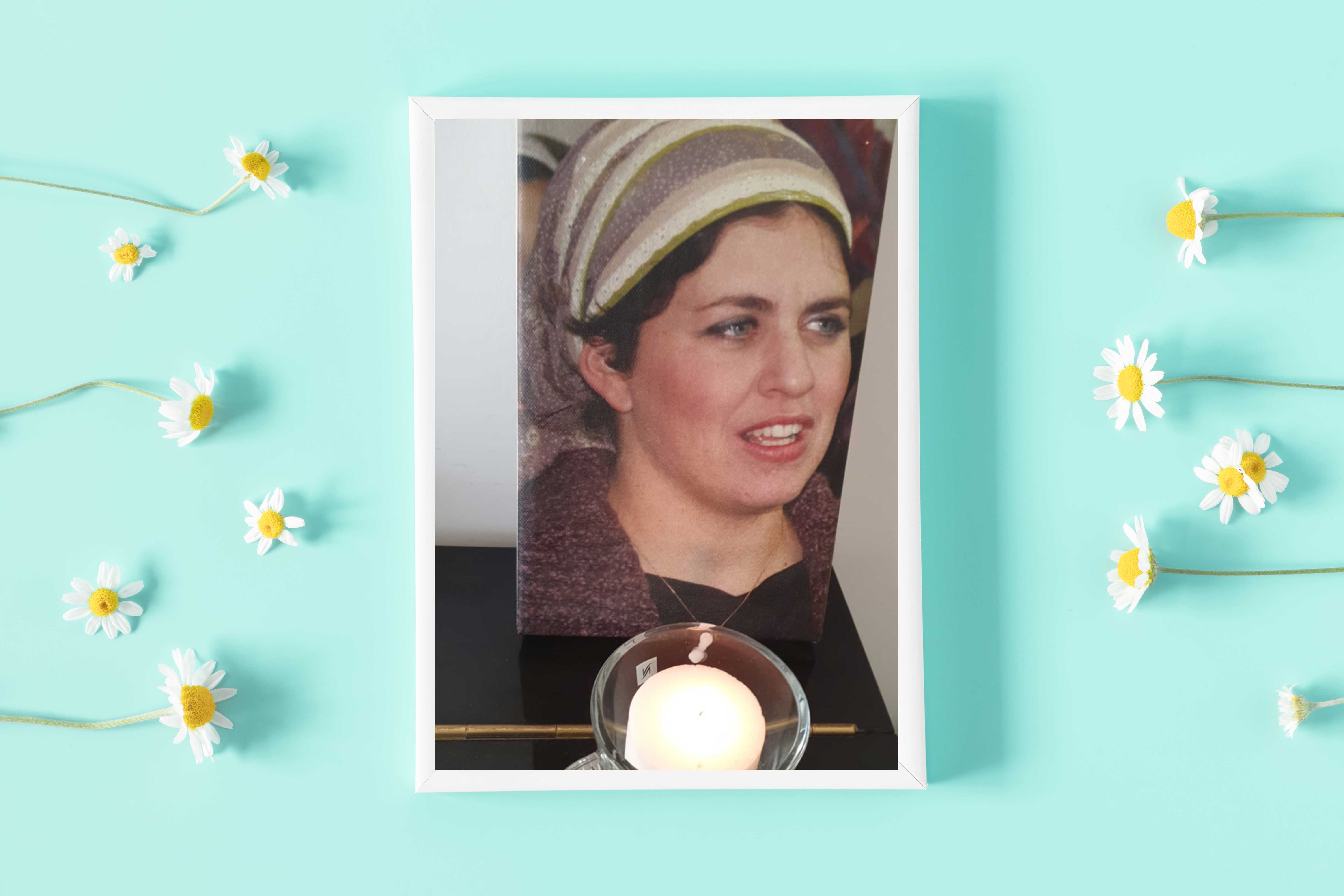 רותי פוגל הי''ד
Speaking of the grandchildren, and the connection between pain and joy – your granddaughter Tamar, the oldest daughter of the Fogel family, who was 12 at the time of the murder, recently got married. How was that for you?
“I had enormous joy that came out of a huge lack, and together with it I also felt connection – that there is no separation, that there is unity of worlds. I felt in a very tangible way a connection between worlds – the upper world and the lower world joined together, and that became a tremendous force. She was in tremendous joy; I didn’t see any sadness in her at all. Either she was acting very well, or she really was very happy. My husband spoke under the chuppah about her parents, and she shed a few tears, but that’s it. There was only joy. We felt that Above they are happy, and we are happy in their joy, thank God.
“We are so looking for unity, and we need to know that there are worlds that unite; and unfortunately we sense it through pain. And when there is unity – there is wholeness.”
Is there a message that’s important for you to share with Am Yisrael, especially in this time?
“Many times you can be in despair; you can ask yourself: ‘Wait, where are we going? So many sacrifices and so much pain, with this Hamas and all the enemies who want to wipe out Am Yisrael.’ And I know these are terrible pains, but they are birth pains. There is blood and there are screams, but whoever looks inside, on the ultrasound, sees that there is a whole baby inside. You have to look far. All this pain is for the sake of great light. I don’t know when, how long it will take, whether in our generation, or in the children’s, the grandchildren’s – I don’t know anything – but I know that this pain is meant to bring a very great light.
“And the holy ones, who are willing to give up their lives, do so so they can continue to act for Am Yisrael, and they do act. They join the ‘special forces’ of holy souls above – those who gave their lives in the Holocaust, the Ten Martyrs, all those who gave their lives for Am Yisrael – and they pump a lot of strength into us. Lately I say to Hashem: ‘Enough, the special unit is full; there are too many soldiers there, enough,’ but I know they’re also fighting. We fight down here, and they fight up there.
“I know this, I feel it. We need to be able to see beyond – also from the past, and to learn from it. Not only what we see here on the news and what they tell us. There were times when Am Yisrael faced horrible enemies, and we succeeded, and we continued. Yes, we took very harsh blows, but we will go on. That’s clear, that’s obvious, and each person has their own soul story; no one knows what is placed upon them. We just pray that it will be with good things, with God’s help. But we will rise from these terrible sufferings. We are already becoming different people, not the people we were before Simchat Torah. Suddenly we have more of a tendency to turn upward. We used to have security in turning to a big, strong army – but above the army we have Hashem, and it is really to Him, and toward Him, that we need to direct our whole gaze.”


