
Magazine
From Fear to Miracle: A High-Risk Pregnancy, and a Mother Who Refused to Give Up
After doctors urged her to end the pregnancy due to medical risks and severe complications, Shirli chose faith, courage, and determination
- Hidabroot
- |Updated
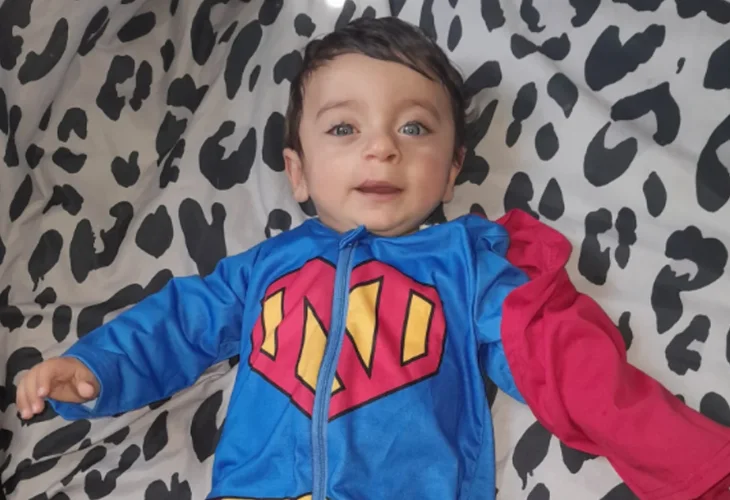
“Ever since I was twenty years old, I dreamed of becoming a mother,” says Shirli Drazi. “It was a dream that grew with me over the years — always there, always accompanying me.”
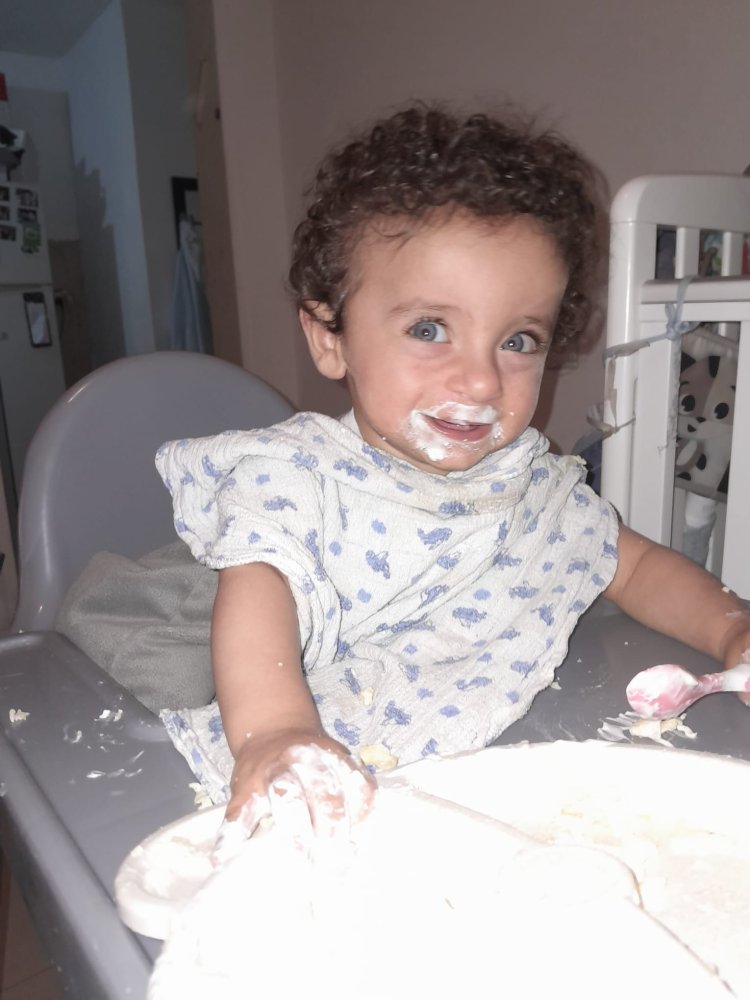
As she speaks, the soft murmuring of her baby can be heard in the background — her son, Benaya Moshe, who recently celebrated his first birthday. “The dream really did come true,” she says. “But the road to get there was very long — and there were moments when I truly thought that neither I nor Benaya would make it out alive.
“I decided: I’m not giving up”
Shirli takes a deep breath as she recalls the beginning of the pregnancy.
“I was already getting close to forty,” she explains, “and I began to realize that my biological clock was running out. That pushed me to start fertility treatments. There were a few pregnancies that began, but ended early in miscarriages. Even in Benaya's pregnancy, they told me it was high-risk, and right from the start the doctors said he would not survive. But another week passed, and another — and it seemed maybe there was room for cautious optimism.”
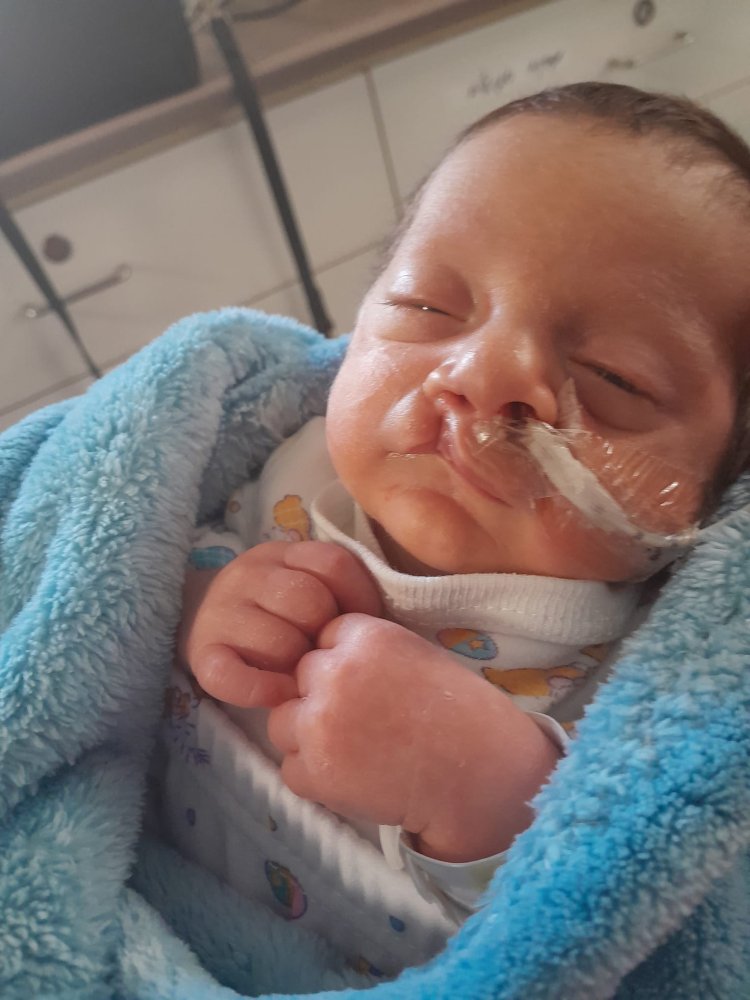
Then, during one of the scans, she was told that the baby had a cleft lip.
“The doctor didn’t suggest it as a concern — he stated it as a fact,” she says. “And in the same breath, he recommended terminating the pregnancy. I couldn’t understand why. A cleft lip can be repaired — why give up on a pregnancy because of that? But the doctor explained that cleft lips are often accompanied by additional defects, and he said, ‘Why take the risk? There will be another pregnancy.’ But I knew I was not giving up.”
Shirli continued the pregnancy, and in the fourth month, she was hospitalized due to risk of premature labor.
“This wasn’t connected to the baby’s condition,” she clarifies, “but once the doctors saw that I was at risk — and that the baby might also be born with severe issues, they continued recommending termination.”
Later, she underwent more tests, and the warnings grew harsher.
“They spoke about possible intellectual disability, autism, a child I would ‘not be able to raise,’ and said that most women in my situation would have already ended the pregnancy.”
How did you feel hearing all of that?
“Of course I was stressed — I’m only human, and I was very afraid. But stronger than the fear was my deep desire to bring life into the world. Over the past few years I’ve become stronger in my faith and returned to religious observance — and I felt that there was simply no way I could stop a life that was already beating and breathing inside me.”
During that time, Shirli also turned to the Hidabroot Support Division, where she received emotional guidance, encouragement, and close support.
“They were truly my source of strength against everything the doctors were saying. They calmed me, they showed me many similar cases that ended differently, and they helped me internalize something important — that if something was meant to happen in this pregnancy, it would happen — but I did not need to be the one to cause it.”
A life-threatening delivery — and a miracle
The pregnancy continued, but Shirli found herself hospitalized frequently, receiving multiple steroid injections to help mature the baby’s lungs in case of early delivery.
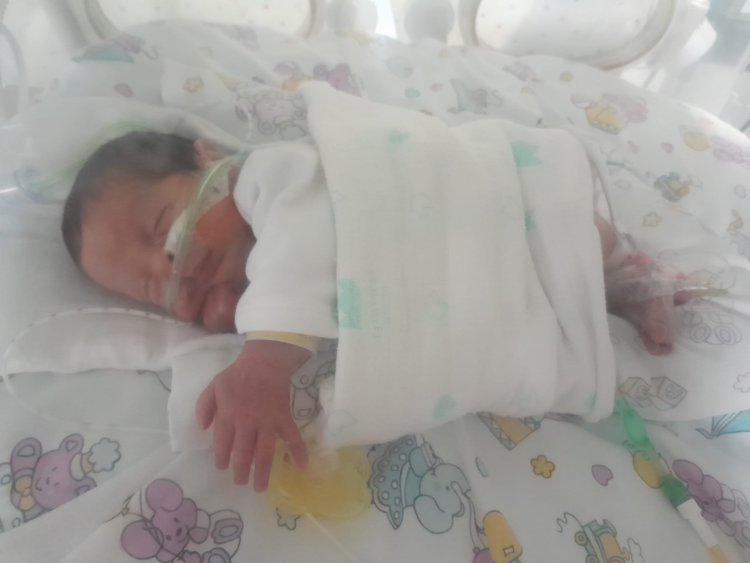
Ultimately, that is exactly what happened — an emergency birth at 32 weeks.
“During the delivery, both me and the baby went through resuscitation,” she recalls. “Afterward the doctors told me they had almost lost us. Even now when I think about those hours, I tremble. There was such clear divine providence — there is no natural explanation for how we survived.”
What was the baby’s condition?
“Beyond the fact that he was very small, he did indeed have a cleft lip. He had his first corrective surgery at six months old, and soon he’ll undergo surgery to correct the cleft palate. While in the NICU he also contracted several dangerous infections and again needed resuscitations. We went through that time with pounding hearts, but with a lot of faith. In the end he was released healthy, with follow-ups and precautions — but thank God, he is a miracle child. I often call him ‘my little Superman.’”
Your story is extraordinary. Where did you find the strength to insist on continuing? You didn’t know things would end well…
“I’ll be honest — as I mentioned, I grew stronger spiritually in recent years. Throughout the pregnancy I prayed, did challah-separation, and said special prayers. Even during the birth I asked tto listen to Tikkun HaKlali — I felt it was protecting me.”
But there was something else — a deeply personal experience: Three years ago, my brother-in-law passed away from cancer. From the time his illness was discovered until he died, only three months passed. He passed away on the third night of Chanukah.
Shortly afterward, my sister gave birth to a baby boy, and I became very close to him and helped care for him. Around that time, I was pregnant for the first time — but sadly that pregnancy ended.
One night, I saw my brother-in-law in a dream. He said to me: ‘Dedicate a Torah scroll in my memory — and I promise you it will be to your merit too. You will yet bring a child into the world.’
I told my sister, and together we decided to fulfill it. We raised funds, and we brought in a new Torah scroll.
Exactly one year later — on the very same date the Torah scroll was dedicated, I discovered this pregnancy.
It felt heavenly and I felt protected from Above. The sense that someone was helping me from the next world, and that my job was to keep praying and believing, gave me unbelievable strength.”
She pauses, and her voice softens. “I prayed for this child endlessly. I begged God to protect him. I closed my ears to everything the doctors were saying. And even now I continue praying — knowing that this child was given to me as a complete gift. That’s also why I chose his name Benaya Moshe — because it contains the words ‘Ben Hashem’ — ‘God’s child’.”
“If this is my mission, I accept it with love”
Since giving birth, Shirli has taken upon herself a sense of mission — to support and encourage other parents facing similar diagnoses.
“I accompanied a couple whose unborn baby was diagnosed with a cleft lip. I spoke to the father, explained everything, and showed him pictures of my Benaya. He was very moved — and later his wife told me: ‘You should know — you were the only one who convinced him not to end the pregnancy. He wouldn’t listen to anyone else.’
If this is my mission in life, I accept it with love. I pray that I will merit to help as many families as possible — because in cases like these, it is truly a matter of saving lives.”


