
Magazine
Survivor From Kibbutz Be’eri: A Father Who Lost His Wife and Son on October 7 Shares His Story
Avida Bachar reflects on grief, resilience, returning home, and the hard lessons he believes Israel must learn
- Moriah Luz
- |Updated
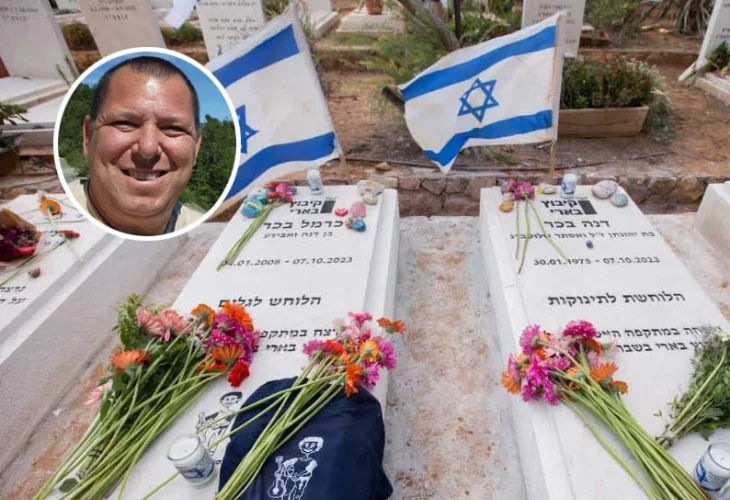 The graves of Dana and Carmel Becher z"l (inset: Aviyad Becher)
“Did you once believe in coexistence?” I ask at the beginning of my conversation with Avida Bachar, who served as the head of agriculture at Kibbutz Be’eri. He answers immediately: “Of course. I even employed workers from Beit Lahia in Gaza in our orchards. Until October 6, I believed that if we gave them good lives, opportunities, and the ability to earn a respectable living, they would have no desire to harm us. On October 7, everything flipped — for us and for all the surrounding kibbutzim, in the most devastating way.”
During the Simchat Torah massacre, Bachar hid in the safe room with his wife Dana, his son Carmel, and his daughter Hadar. Their two other children were not in the area at that critical time. Four people entered the safe room — and only two came out.
Dana and 15-year-old Carmel were killed before his and his daughter’s eyes. Avida lost his leg, and Hadar, age 13, was injured.
![דנה בכר הי"ד בעבודתה כמטפלת תינוקות בקיבוץ בארי]() דנה בכר הי"ד בעבודתה כמטפלת תינוקות בקיבוץ בארי
דנה בכר הי"ד בעבודתה כמטפלת תינוקות בקיבוץ בארי
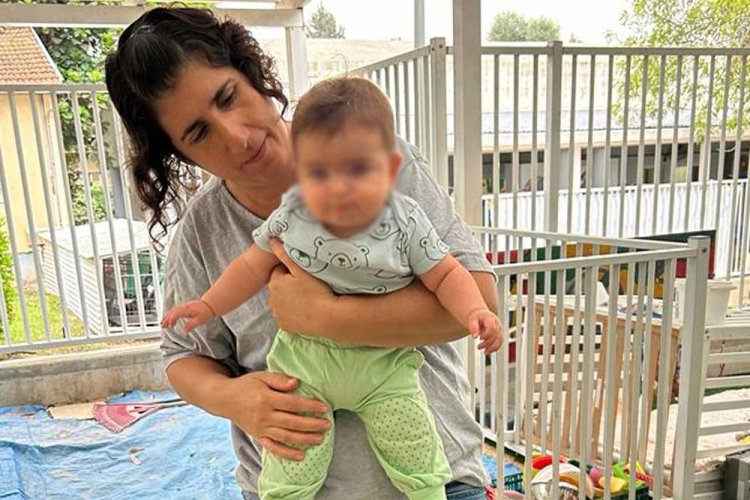 דנה בכר הי"ד בעבודתה כמטפלת תינוקות בקיבוץ בארי
“A Choice — Not a Fate”
“My mission today is to tell the world about the catastrophe we experienced,” Bachar says. “In 1942 there was a Holocaust in Europe. In 2023 we experienced a new Holocaust in the Gaza Envelope — and in Be’eri in particular. We have a mission, for the State of Israel and for the Jewish people, to say that we will never forget what happened here.
“I say this to anyone willing to listen — on every media platform, in every interview. I say it during the tours I lead through my home, and in the lectures I give in companies and abroad. I’m not ashamed to say it as directly as possible.”
He explains that after the attack, he reached several conclusions.
“First of all — the Arabs don’t want to live like we do,” he says. “What matters to them isn’t money — it’s land. If the State of Israel thinks it can solve the problem with the Arabs of Gaza through money and kindness, it is fundamentally mistaken.”
He calls this a Western way of thinking that does not match the Middle East. “In my view, the only solution is simple: if they want to take your land — you take the land from them, all the way to the Mediterranean Sea, so that our border runs along the water. Transfer them into sovereign states and create a situation where Israel’s borders are only with four sovereign countries: Egypt, Lebanon, Syria, and Jordan. If we want to live, we can’t have them living inside our territory — not in Gaza and not in Judea and Samaria.”
He speaks with hard emotional conviction: “Even when I see hungry children in Gaza, I remember that these are the same people who handed out candy on October 7 while we were being slaughtered. These are the same youths I saw in videos kicking the bodies of kidnapped soldiers. I no longer feel compassion toward them — it disappeared completely.”
He continues: “When nature destroys you — a tsunami, snowstorm, or wildfire, a person usually accepts it as an unavoidable fate. But when a person destroys you — that is not fate. That is a choice. You can choose to be slaughtered by him, or you can choose to defend yourself and kill him first. Both choices are in your hands. Once you understand that, you become clear-eyed. Don’t say afterward, ‘I didn’t know.’”
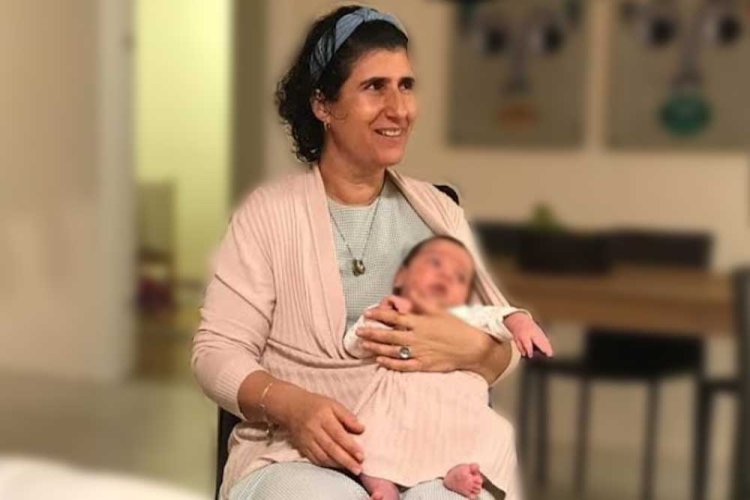 דנה בכר הי"ד עם אחד התינוקות בקיבוץ
We mark this week 20 years since the evacuation of Gush Katif. Did you support the disengagement?”
“Absolutely,” Bachar replies. “I couldn’t bear seeing the settlers sitting there and being murdered again and again. Even today, I oppose returning to Gush Katif in its former structure — an isolated enclave inside a massive Arab population. Living among them is the worst option. The status must be clear — yes or no, black or white. Either we’re there, or we’re not there.”
“After the massacre, I understood that only one of us will remain here — either us or them. I prefer that it be us. But if we choose otherwise, at least let’s say it honestly instead of hiding behind empty slogans.”
He adds: “When the Arabs burst into our communities on October 7, it didn’t come out of nowhere. For 20 years, Israel fed and nurtured this monster and failed to respond. The rockets on Be’eri began in 2001 — this did not begin yesterday. Our weakness is what eventually led to October 7.”
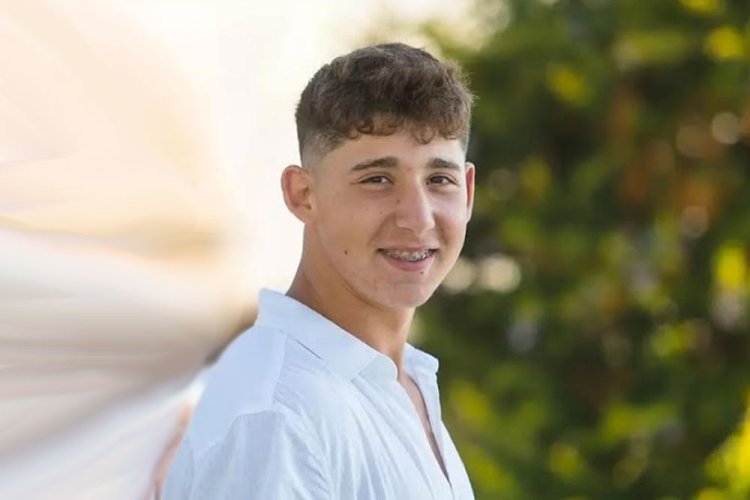 כרמל בכר הי"ד
“My Heart and My Life Are There”
Recently, Bachar warned publicly that the next massacre could happen in Judea and Samaria.
“I believe the Arabs in Gaza, Judea, and Samaria are the same people,” he says. “The villages of Yatta and Dura in South Hebron are identical to the villages in Gaza. I’m sure that beneath hospitals in Jenin there are tunnels — just like those under Shifa Hospital in Gaza.”
“And if there are tunnels — then there are cages as well, waiting for the next massacre. Waiting to trap you and me inside. I know it, and the army knows it. Everyone knows it. The question is whether we close our eyes and tell ourselves ‘they won’t do anything,’ or whether we choose to deal with the threat beforehand.”
He believes Israel avoids defining “absolute victory,” because society struggles to confront the cost and reality of war.
What needs to be done?
“In my view, the answer is conquest and annexation,” he says. “Conquer Gaza and relocate the population into Egypt and other sovereign states. In the empty territory, build agriculture and settlements.”
“For me, I want to farm Be’eri’s potato fields all the way to the waves of Gaza’s shoreline. If we are not there, our fate is to be slaughtered. There is no middle ground.”
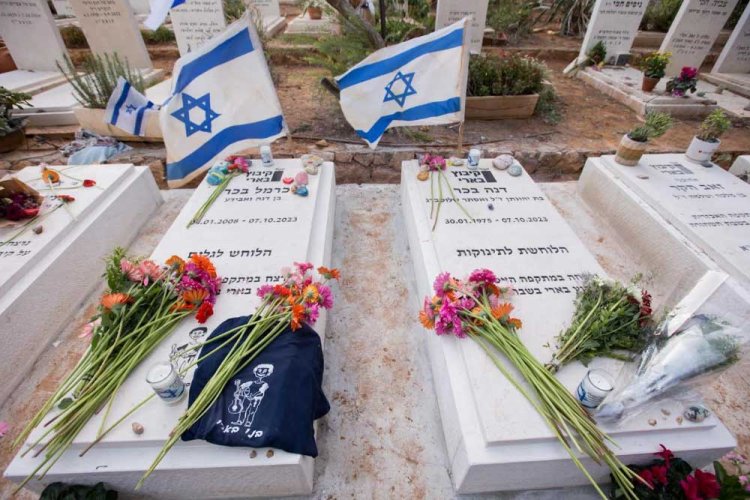 מצבות הקברים של דנה וכרמל בכר הי"ד
Returning to Be’eri
“During the first two days after the massacre, I told everyone I would never return to Be’eri as long as it bordered Gaza,” he recalls. “Two days were enough for me to realize that I would definitely return.”
He describes farmers he once met around the world — people whose fields lay at the base of active volcanoes. Even after eruptions destroyed everything, they returned and replanted.
“When I was lying in the hospital, I asked myself: ‘Avida, who are you?’ And the answer was, I’m a farmer. A man who drinks strong black coffee without sugar. That’s who I am. So I am returning to the foot of the volcano called Gaza, to rebuild my home. That is where my heart is. That is where my life is.”
Two weeks after the massacre, he returned to Be’eri with his daughter Hadar — who survived alongside him in the safe room. “In the hospital she said to me: ‘Dad, we’re going home, right?’ I told her, ‘Let’s go,’ and we went.”
Today they live in a temporary residential neighborhood for Be’eri evacuees. The kibbutz is undergoing a long process of rebuilding, which is expected to take more than a year until their home and community institutions are restored.
“Hazerrim is my temporary home,” he emphasizes. “My real home is Be’eri — not just my four walls, but the landscape — the valleys I ran through as a child, the places I rode horses. A home is not cement. It is the place where your life story grew.”
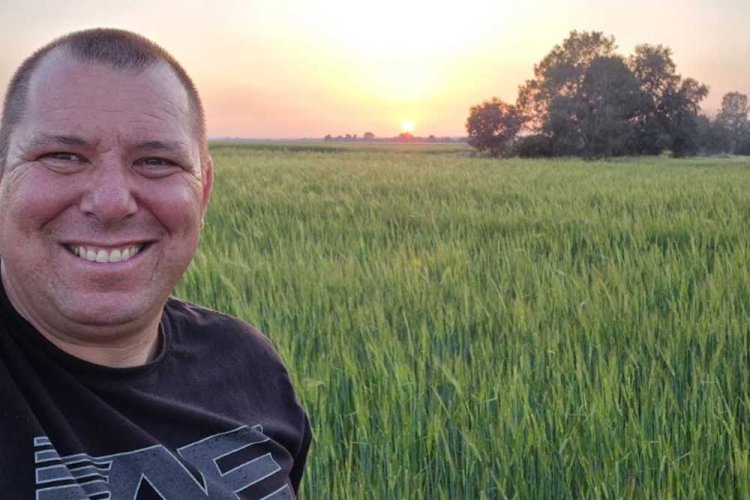 אבידע בכר
Lessons From the Tragedy
“One lesson,” he says, “is to never postpone meaningful personal moments. I’m not talking about work tasks — those can sometimes wait. I’m talking about family. If your child calls you during a work meeting and asks you to take him to the pool — leave the meeting and take him.”
“When a person is gone, we don’t cry only over the person. We cry over the time that could have been spent together.”
Another insight came from a fellow patient he met in the hospital — Rabbi Eliyahu Dachbash from Netivot, who was also injured.
“Whenever the nurses changed his bandages, he would cry out in pain, and thank God at the same time. I asked him how he could thank God after everything that happened. And he told me: ‘When I thank Him, it makes the pain lighter.’ Over time I realized that it is a method. Gratitude shifts your focus to what still remains.”
Bachar now practices that outlook. He expresses gratitude for his son Carmel, even through the grief: “I saw children in the hospital fighting terrible illnesses who never reached the age my son did. I had an incredible son, and I am grateful for the 15 years I had with him.”
He is also grateful for his wife Dana and the 32 years they shared together. “There are people who tragically lost their spouse just days after their wedding. I received the greatest gift in the world — decades of love and partnership. I can only give thanks for the years we shared. I know she wanted me to live a good life, and I am fulfilling her wish. I will make my life the best and most meaningful I can.”


