
In Search of God
Beyond the Brain: The Study That Reveals the Soul
Groundbreaking research on patients with severe brain damage suggests that consciousness and awareness can exist independently of the brain, providing compelling evidence for the soul.
- Yosef Yabece
- |Updated
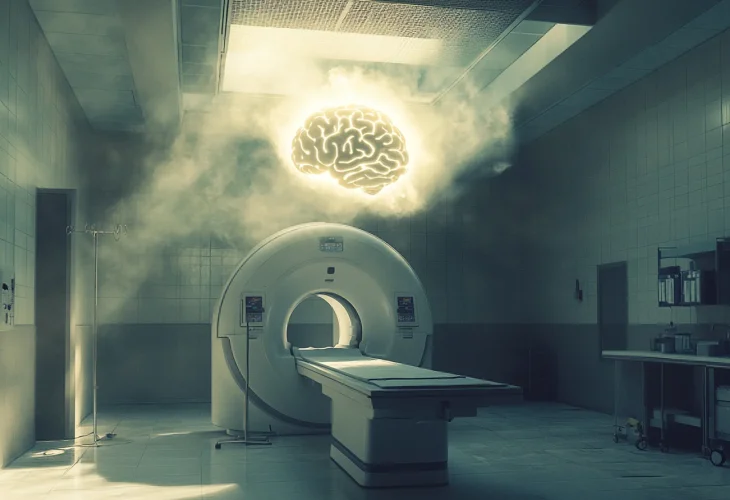
For years, scientists have debated whether we can truly see the soul, or if there is nothing to see at all. These debates often arise from differing perspectives: those willing to look beyond physical reality versus those who insist everything is purely material.
Michael Egnor, a neurosurgery professor at New York University, argues that this is not merely theoretical. He believes there is experimental evidence supporting spirituality. Along with his colleague, award-winning brain surgeon Dennis O'Leary, he authored the book The Eternal Brain: Evidence for the Soul's Existence. The book is still in print and set to be released this June.
In a recent preview article, Egnor describes one experiment that he claims affirms spirituality.
Understanding the Persistent Vegetative State
The most extreme form of brain damage is called Persistent Vegetative State, or PVS. As the term vegetative suggests, medical professionals often treat it as a body without a functioning brain. In this condition, the brain appears unable to function continuously or stably.
But in 2006, neuroscientist Adrian Owen and his team at Cambridge published groundbreaking research in Science titled Detecting Consciousness in a Vegetative State. Owen reported a case of a young woman who had been in a vegetative state for several years after a car accident. Like other PVS patients, she seemed unresponsive. She did not speak, follow commands, or use her limbs intentionally.
Owen recognized that her brain damage affected not only her physical abilities but also her ability to communicate. He wondered: if she could not interact with the outside world, how could he be certain she was devoid of thought?
A Functional MRI Reveals Awareness
To investigate, he placed her in a functional MRI, or fMRI, machine. This type of MRI detects localized changes in blood flow in the brain, which are often associated with mental activity.
While she was in the machine, Owen asked her to imagine performing specific tasks, such as playing tennis or walking around her house. Remarkably, areas of her brain thought to be inactive lit up, indicating activity. This suggested she might be aware and contemplating his questions. To confirm the results, he performed the same tests on healthy volunteers, who displayed identical brain responses when imagining the same activities.
To further verify that the patient was genuinely responding and understanding, Owen scrambled the words of his questions, turning them into nonsensical statements such as "Tennis can you think whether." Her brain showed no activity in response, proving she comprehended the original question but could not process meaningless words.
Awareness Beyond the Brain
Since Owen’s pioneering work, many neuroscientists have examined PVS patients for signs of consciousness. A 2015 review of their research found that 37 to 43 percent of PVS-diagnosed patients retained awareness.
The most important lesson from these studies is that we should not consider these individuals as lacking intelligence. They hear, understand, and caring for them with dedication is an act of profound kindness, potentially aiding recovery in some cases.
Philosophically, these findings challenge those who deny spirituality. Previously, awareness and thought were thought to reside entirely in the brain. But in PVS patients, the brain is damaged, deprived of oxygen, and incapable of functioning or directing the body. Thoughts, emotions, and consciousness are not purely brain functions. They continue to exist independently of the damaged material brain. The consciousness may attempt to operate the brain, lighting up regions, yet the brain itself cannot respond.
Evidence for the Non-Physical Nature of Consciousness
These observations provide strong scientific evidence that thoughts, emotions, and consciousness are non-physical and exist outside the physical realm. Just as the soul is believed to persist after the body dies, consciousness continues even when the brain ceases to function.
Of course, materialist scientists offer alternative explanations, questioning whether the brain is truly damaged. Yet one way to distinguish hypotheses is through experimentation and testing. Materialists predicted that a brain deprived of oxygen and severely damaged cannot function or produce consciousness. Reality, however, has shown this prediction to be inaccurate.
A Lesson in Humility and the Human Spirit
This research is also a lesson in humility, revealing the wonders of the human spirit beyond what can be explained as mere material. Artificial intelligence is purely material: if a computer breaks, intelligence disappears with it. Human intelligence, however, is more than material. Even if the body or brain is damaged, the consciousness or soul lives on, existing independently of the physical form.


