
In Search of God
Are We Really Discovering Life on a Distant Planet?
Reports of life on a distant planet made global headlines, but the scientific findings tell a far more cautious story about chemical signals, assumptions, and the limits of discovery.
- Yosef Yabece
- |Updated
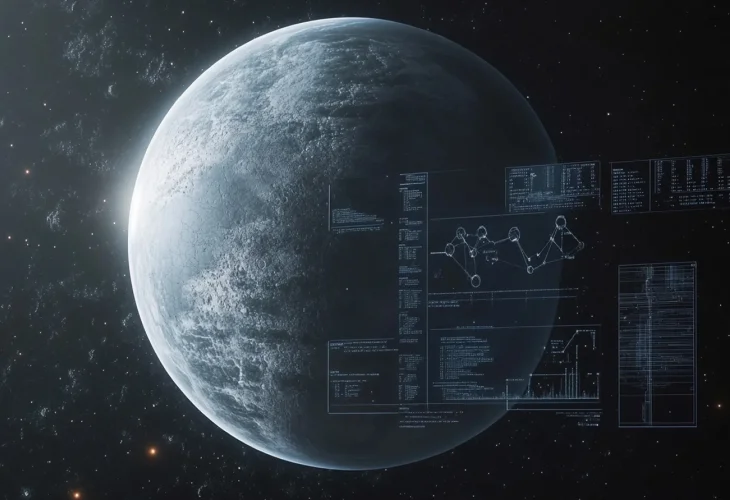
Over the past month, headlines across news outlets have proclaimed: “Signs of life discovered on a distant planet,” and even “Undeniable proof!” But is that really the case?
The planet in question is the exoplanet K2-18b, located about 124 light years from Earth. The reports have been presented as groundbreaking, particularly due to chemical compounds detected in the planet’s atmosphere that are often described as possible indicators of life. However, the gap between these headlines and the actual scientific findings is vast, measured not in inches, but in light years.
What Was Actually Discovered on K2-18b?
Scientists from the University of Cambridge used the James Webb Space Telescope, one of the most advanced instruments in space exploration, to analyze the atmosphere of K2-18b. Their analysis identified two chemical compounds: dimethyl sulfide (DMS) and dimethyl disulfide (DMDS).
On Earth, these substances are commonly found in ocean systems and are primarily produced by living organisms such as marine phytoplankton. For this reason, they are considered potential biosignatures, meaning compounds that might be associated with life. Logically, discovering them on a distant planet raises the possibility, though not the certainty, of life there.
Why This Is Not Proof of Life
Despite the interest this finding has generated, it is crucial to emphasize that it does not constitute definitive evidence of life.
First, the statistical confidence of the data does not exceed the 3 sigma threshold, which is generally required to rule out random noise. At this level, there remains about a 0.3 percent chance that the signal is not real. When dealing with signals captured across immense cosmic distances, even minor deviations can create the appearance of chemical structures that may not actually be present. Simply identifying a signal is not enough.
Missing Supporting Evidence
Second, no additional chemical compounds were detected, compounds that would normally be expected if DMS were truly present as part of a biological process. On Earth, DMS is usually accompanied by other substances tied to biological cycles. The absence of these related compounds casts further doubt on the conclusions that can be drawn from the current data.
What the Researchers Themselves Say
Contrary to media portrayals, the researchers are careful in their conclusions. They explicitly state that the findings do not provide conclusive proof of life. According to the scientists, DMS and DMDS could also be produced through non biological chemical processes unrelated to living organisms. In other words, natural atmospheric chemistry could explain the observations.
Adding to the uncertainty, independent analyses of the data have so far failed to reproduce the same results, raising additional concerns about reliability.
Hypothesis, Not Discovery
In summary, the public claims of signs of life on K2-18b remain a hypothesis without proof. The researchers themselves stress that further observations and more advanced technology will be required to confirm or refute these findings. For now, the detection of these chemical compounds is intriguing, but it does not amount to evidence of life beyond Earth.
Why the Idea of Extraterrestrial Life Spreads So Easily
The ease with which discussions about extraterrestrial life take hold stems from the belief that the universe and life itself came into existence by chance. If life is accidental, then there seems to be no reason it should exist only in one place. As a result, any hint of a potentially habitable environment quickly becomes a headline about signs of life or a possibility of life.
Yet the wonder of life on Earth cannot be adequately explained by random formation alone. There is therefore no reason to expect signs of life anywhere else in the universe unless the Creator chose to create living beings there as well.


