
Magazine
Journey of Strength: From Medical Crises and Loss to Hope and Resilience
A moving life story of a student who survived clinical death, family tragedy, chronic illness — and chose faith, gratitude, and purpose
- Hidabroot
- |Updated
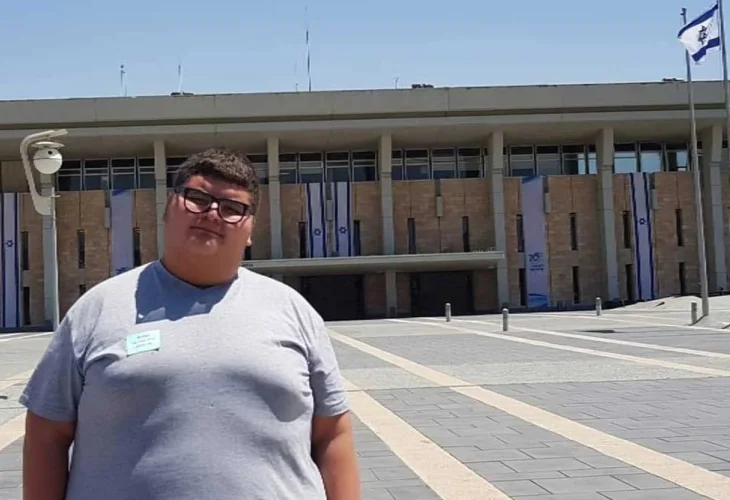 Bar Shemla
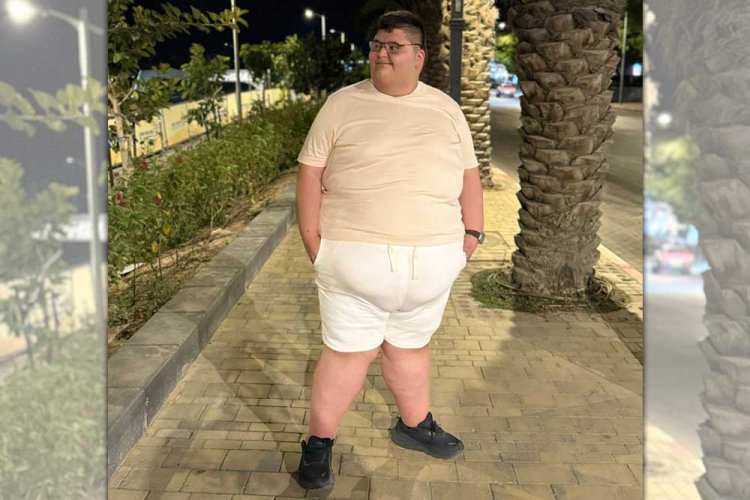
“Although I was born premature at just 700 grams, for as long as I can remember I’ve always struggled with significant excess weight,” says Bar Shemla. He is only 22, a bachelor’s student from the city of Nesher — but when he shares the events of his life, it feels like he's far older. So many challenges and turning points have crossed his path, many of them extremely difficult.
“I’ve been sick and coping since I was a small child. Both of my parents passed away. I have 12 herniated discs, and honestly, there were several situations in life where I could have died. But apparently God wants me to stay here — I have no other explanation,” he says, taking a deep breath before going back to the beginning of his story.
“I was floating above the bed”
“Ever since I was little, I grew up at home with my mother and sister,” Bar begins. “My parents were divorced, and my father was not in the picture at all. My mother ran the home with incredible strength. Even though our financial situation was always very difficult, she worked job after job just to support us.
“Because I was significantly overweight from a young age, it led to frequent asthma attacks, sometimes very severe ones. At age six, right before starting first grade, I had a particularly serious attack involving stridor, during which I swallowed my tongue. For several minutes I lost pulse and stopped breathing. Later the doctors described it as a clinical death.”
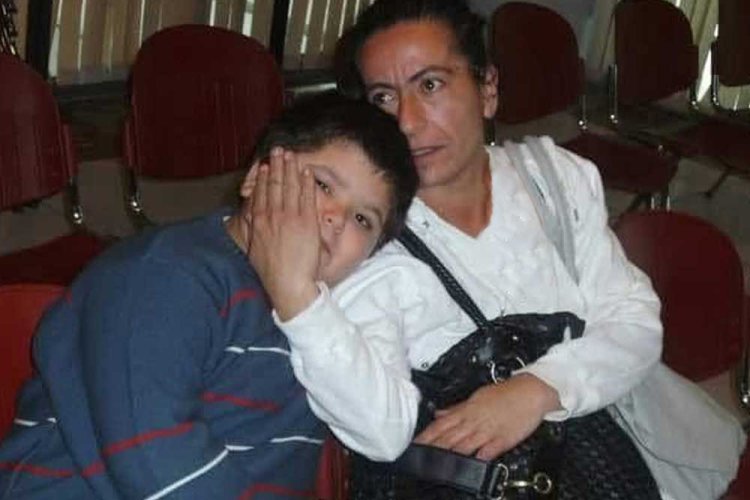 Bar Shemla with his mother during his childhood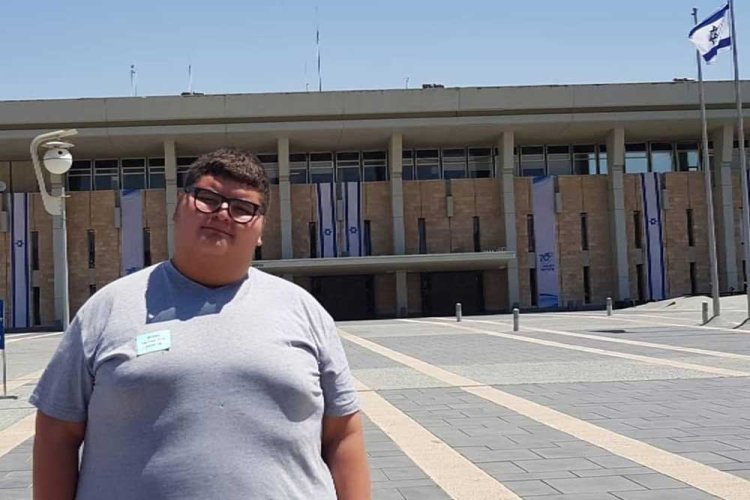
Do you remember those moments?
“Of course — I remember everything. It may sound strange, but from the moment the attack began and throughout the entire month I was hospitalized afterward, I saw everything happening to me as if from above — like I was hovering over everyone. I saw myself sedated and on a ventilator, heard everything, saw my mother crying nonstop, and saw myself lying in the hospital bed connected to tubes. I didn’t feel pain or sadness — but I remember the shock. I had always struggled with my weight, but I never imagined it could bring me to a situation like that.”
After a month, he woke up — something the doctors considered a great miracle.
“At first I couldn’t speak because of the ventilator tubes, but after they were removed and my speech came back, the first thing I asked for was my grandmother’s kubeh,” he laughs. “I know it sounds funny — but I just missed it.”
The doctors soon realized there had been significant neurological impact, and Bar had to relearn everything including walking, speaking, and eating — slowly, through intensive rehabilitation. Some of the rehab was done during his hospitalization, and later through day-therapy programs, while at the same time he tried to join his classmates in first grade until, thank God, he eventually regained full function.
Medically, Bar recovered, but socially he did not find his place. “Because I missed so much school, I became extremely different from everyone else — and of course my weight made that worse. The kids teased me constantly, I went through social exclusion and group rejection, and those were very painful years. That’s why my mother later transferred me to a religious school in Acre — and there things were much better.”
![During his military service]() During his military service
During his military service
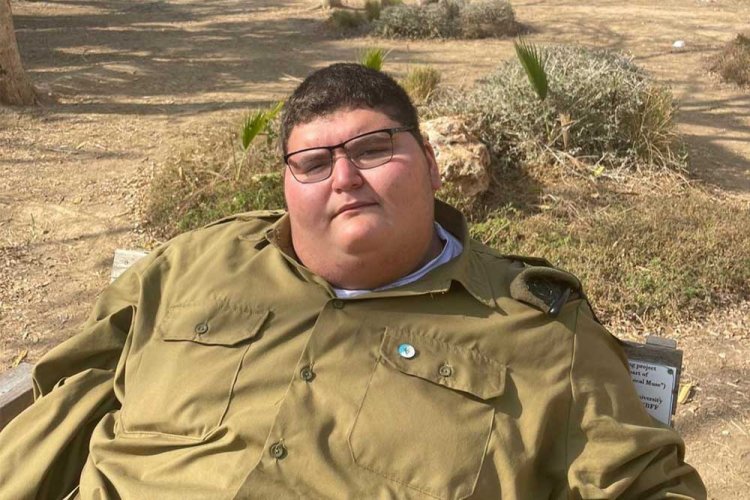 During his military service
Double mourning
The difficulties, however, continued throughout his life. “The biggest daily struggle was our financial situation,” he shares. “My mother’s salary was under seizure by creditors, and she had to find indirect ways to bring in money just so we could have food. She worked so hard and deprived herself of even basic needs so that my sister and I wouldn’t feel the lack — but the sense of pressure at home was constant.”
When he finished middle school, things finally began to stabilize. “Those were actually our best years and life finally became calmer and more routine,” he says. “When I was 16, my father passed away just a few days before Passover. I only sat shiva for three days because the holiday interrupted the mourning period — but it was enough to awaken a lot of emotions and thoughts. After all, a father is always a father.”
Shortly afterward, Bar received his IDF draft notification — but during the medical evaluations he was exempted from service due to his condition.
“I really wanted to serve,” he says. “I fought for it with everything I had. I managed to lose 50 kilos — something I had never succeeded in before, and eventually I did enlist and was accepted to the IDF Spokesperson’s Unit. I even began training there. But then I was injured in a car accident that left me temporarily unable to function.
“At the same time, my mother’s health worsened due to complications after COVID, and diabetes, and I felt I couldn’t leave her. So I stayed home.”
Even before turning 18, Bar took full responsibility not only for caring for his mother, but also for the household finances. “After so many years in which my mother fought for me, I understood it was my turn to take care of her,” he says. He worked in technical support, while also receiving army and national-insurance stipends — enough to assure his mother that things were finally secure.
Then came the tragedy. “It happened suddenly,” he recalls. “In the morning we sat and drank coffee together. Later she went to rest — and when I came to leave for work, I discovered she wasn’t waking up.”
He called emergency services and began CPR until paramedics arrived. “They told me that what I did helped keep her alive for those moments — but eventually her pulse disappeared again, and they had to declare her death at home.”
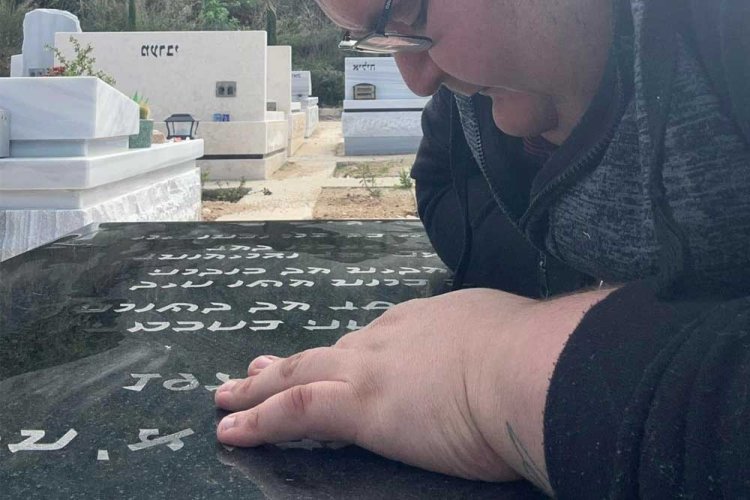 Bar at his mother's grave
How do you continue after such a loss?
“It’s unbelievably hard,” Bar answers honestly. “My mother was my entire world. During the shiva I spent many nights talking to God — crying, asking, ‘Why did this happen to my mother who only ever did good, and not to me?’
“But slowly I remembered what my middle-school teacher once told me: ‘God gives difficult tests only to people who can withstand them.’ Those words strengthened me.”
Today Bar lives with his sister and copes with post-trauma and 12 herniated discs affecting his back and legs. “The pain is unbearable. I hardly sleep — and I can’t work because of it.”
His daily routine depends on how much rest he manages to get. When he can, he studies online toward his final year of a multidisciplinary degree with teaching studies. Alongside that, he travels around the country giving talks in schools and workplaces — sharing his story, offering strength, and reminding people that even in the hardest situations it is possible to rise and move forward.
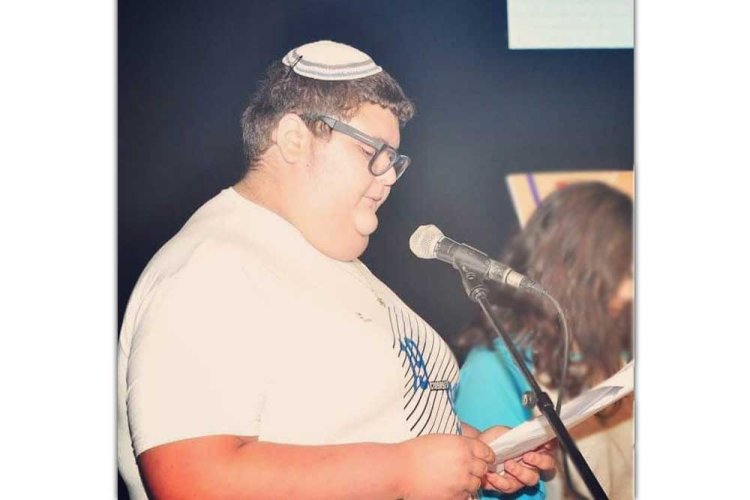
You sound very optimistic — how do you do it?
“First of all, I’m a believer,” he says. “Every morning, even when it’s hard to get up, I say Modeh Ani and thank God for another day of life. My mother always taught me to look at the good.
“I could have been paralyzed — or not alive at all, like some doctors once feared. God chose to keep me here — so there must be a reason.”
Every day he looks at a photo of himself with his mother. “I thank her silently for standing by me all those years. Her constant words were, ‘I’m proud of you and I love you.’ That voice still echoes inside me — and that’s what gives me strength to continue, to study, and to finish my degree, so that she will be proud of me.”
What are your plans for the future?
“My greatest goal is to work in the education system — to be that ‘one adult who believes in a child,’ just like my teacher once was for me. There are so many kids suffering from bullying and emotional pain — and I want to be there for them. Only someone who has lived through these struggles can truly understand and help them with all their heart.”


