
Magazine
Dana Varon Friedman on Faith, Media, and the Price of Speaking Out
Insights into her spiritual journey, social activism, and the storms created by her outspoken public positions
- Avner Shaki
- |Updated
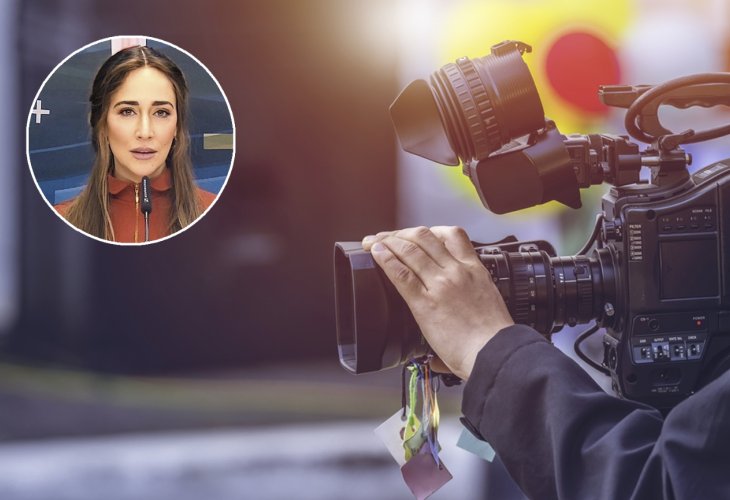 (In circle: Dana Veron)
Dana Varon Friedman is married and a mother of five, resident of Beitar Illit, media personality and opinion writer.
Special Operations
“I was born in Ramat Aviv to secular parents. My mother became religious when I was in second grade, and that was the trigger for my parents’ divorce. When I was in second grade my mother moved to Bnei Brak, and we lived there for two years. After that we returned to Tel Aviv. I studied in religious-Zionist schools, but after school I mostly did whatever I wanted.
“My father wasn’t religious, and when I was with him it was very confusing. In 11th grade I began studying communications and journalism. When I was looking for a midrasha, I met Rabbi Yossi Ginsburgh, the Chabad emissary in Ramat Aviv, and with his help I became much more connected.
“I started learning about Chabad more deeply, and at the same time I met someone who told me he wanted to introduce me to a certain person — and promised that this person would become my husband. His promise indeed came true. I got married at 19, and we moved to Beitar Illit. I was a very young mother, and thank God we brought five wonderful children into the world.
“Over the years I worked in various jobs, and about a decade ago I began returning to my dream of working in media. At first it was through a Chabad women’s conference, then on the ‘Kol Chai’ radio station — first as a substitute host, and later hosting a children’s program, and the rest is history.
A Mother’s Love
“Prayer is a very important part of my life, but I admit it took me time to truly connect to it. As a child I prayed by rote, as something you just do. My turning point came only after I got married.
“Until then, I didn’t really connect to prayer and certainly not to visiting graves of tzaddikim. But shortly after my wedding, a friend took me to Kever Rachel, and there my heart opened. That’s where my renewed connection to prayer — and to visiting the graves of tzaddikim, really began. Today, it feels much less foreign to me, and much closer to my heart.”
A Word Out of Place
“My preparation before filming my videos is usually very short. I see a situation that angers or frustrates me, and I immediately want to respond to it. I sit and write the text in the notes app on my phone — sometimes it takes four or five minutes — then I get into the car and film.
“Often, videos that seem to me ‘not so great’ end up going viral, and I’m surprised by how strongly they take off. And there are also the opposite cases — I’m sure something will blow up, and it doesn’t take off at all.
“Alongside that, there are videos I do spend more time refining, especially where wording is delicate. Every word carries associations. Sometimes I’ll choose a specific word to trigger reaction — and sometimes specifically to calm things down. Even when I write quickly, I always reread the text, because it’s very important to me that things aren’t taken out of context. I simply try to minimize damage.”
 (Photo: shutterstock)
Not a “Sweet Religious Woman”
“I pay a very real personal price for the videos I create. For example, people often take things I’ve said out of context and claim I said things I never meant to say.
“It’s very difficult to take deep ideas and compress them into 200-word clips. There’s something very presumptuous about it. I want to reach wider audiences — but because of certain things I’ve said, or things people think I said, many doors have closed to me.
“There’s a glass ceiling I can’t break through because of my opinions. Sometimes I wonder whether I should have spoken differently or chosen other topics — but overall, I stand behind what I’ve done. My videos spark real public debate, and I believe that if I stay true to my principles, I will continue to succeed. And yes, I’m willing to pay the price for what I say, even though it’s far from easy.”
Lines I Don’t Cross
“As a Haredi woman who is perceived as ‘representing’ Haredim, there are topics I won’t touch. There’s a wide range of things I do talk about — but there are also areas that are off-limits.
“Some issues are too complex for such a short format. Sometimes I feel my own opinion on a subject isn’t fully developed yet. And sometimes modesty, gossip concerns, or risk of hurting others lead me to refrain.
“There have been a few rare cases where I censored myself — but yes, it has happened.”
A Thorny Conversation
“Some people tell me my videos only fuel division in society, but I disagree. The division already exists. The question is whether there will be conversation — and what kind.
“I believe respectful dialogue is better than silence. Even when people disagree — they can still conclude that we’re divided in opinions but not in our hearts. But when one side feels silenced, conflict becomes dangerous.
“I could have chosen to speak only about consensus topics — to be a ‘pleasant token religious figure,’ but I feel there are already enough of those. The media world is controlled by a small, extreme secular leftist minority — and I think someone needs to say what isn’t being said. And of course, respectfully and thoughtfully.”
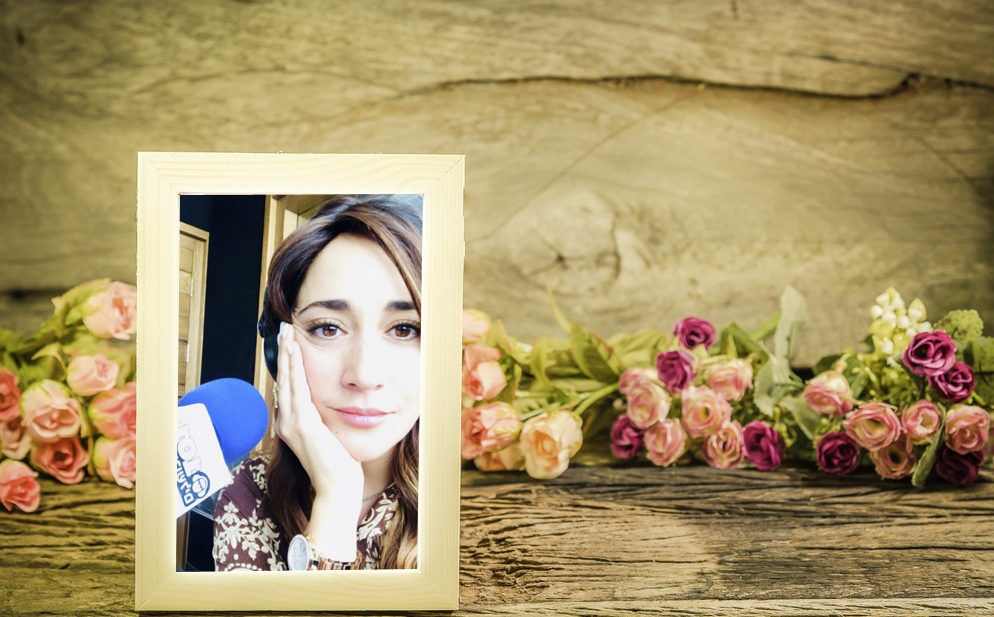 Dana Veron
Small Gifts
“Sometimes I ask myself whether it’s really right for a Haredi woman to be so publicly exposed — or whether it’s simply the reality I was given. God gave me certain talents — and I don’t feel I can just keep them to myself. Within all of this, I try to direct my work toward Kiddush Hashem.
“Before becoming religious, I was headed toward Galei Tzahal radio, then was approached by the Children’s Channel — and in general, I was being guided toward things far less modest.
“Some people today also think what I do isn’t modest enough. There are religious and Haredi people who say: ‘You don’t represent us.’ And I don’t claim to represent anyone. I’m just trying to do the best I can with what God gave me — physically and intellectually, and use it wisely for the sake of Heaven.”
Living Between Worlds
“Many people don’t understand why I share stories, snippets of life, and lighter content on social media — but I do it because I’m trying to bridge worlds.
“The internet attracts many young people who aren’t connected to Torah or mitzvot, and I feel a responsibility to speak their language. I don’t just want to reach them through preaching — but also through humor, day-to-day life, and authenticity.
“When people see that I’m a real person — living, laughing, struggling like everyone else, it opens space for them to also hear my views. If a ‘normal person’ holds opinions like mine — maybe these opinions deserve to be discussed.”
Part of an Empire
“I’ve had a connection with the Hidabroot organization for many years, and I greatly admire them. They were the first and only channel that produced high-quality television content — in holiness.
“Through our collaboration I discovered how vast their activity really is. I didn’t know Hidabroot was such a massive organization in Israel and worldwide — and it truly impresses me. I’m happy to be part of this empire.”


