
Magazine
Meet Rabbi Soli Eliav: The Man Behind the Western Wall’s Modern Revival
A behind-the-scenes conversation on meaning, connection, and making every visitor feel at home
- Moriah Luz
- |Updated
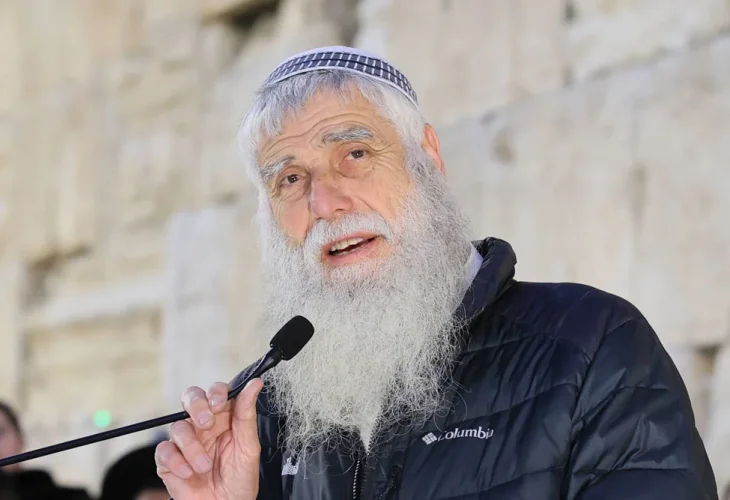 Rabbi Suli Eliav (Credit: Western Wall Heritage Foundation)
Among the 12 million visitors who come to the Western Wall each year, it is impossible to miss the presence of Rabbi Soli Eliav. His beard is long and white, his speech calm and measured. For decades he has served as CEO of the Western Wall Heritage Foundation, an organization whose establishment he himself initiated. Rabbi Soli’s daily schedule includes meetings with department heads, briefings from additional professional teams, participation in discussions regarding government budgets allocated to the site, involvement in developing new ideas, and oversight of public relations and educational outreach. In between, he accompanies official guests of the State of Israel who visit the Western Wall and personally guides tours for some of them.
“But every day, between 3:30 and 6:30 in the afternoon, I enter the ‘Nahar Shalom’ kollel and study Torah.”
What led you to establish the Western Wall Heritage Foundation?
“Thirty-five years ago, I ran an educational institute in the Old City of Jerusalem. Over time, I became aware of the disconnect that parts of our people had from this holy place. Of course, there were always those who came to pray regularly, but certain groups avoided coming altogether, and relatively speaking, in those years there were not many visitors to the Wall.
“I realized that a generation was growing up, some of whom did not understand the value of Jerusalem as a royal sanctuary, a city of kingship. This is our spiritual home, and from here all abundance descends to the world. The deep connection of the entire Jewish people — each person with themselves, each person with another, and the nation as a whole with God, takes place here, at this site which is the Gate of Heaven.
“It was important to us to establish and develop tourism at the Western Wall in order to convey these deep insights to every Jewish heart in the world.”
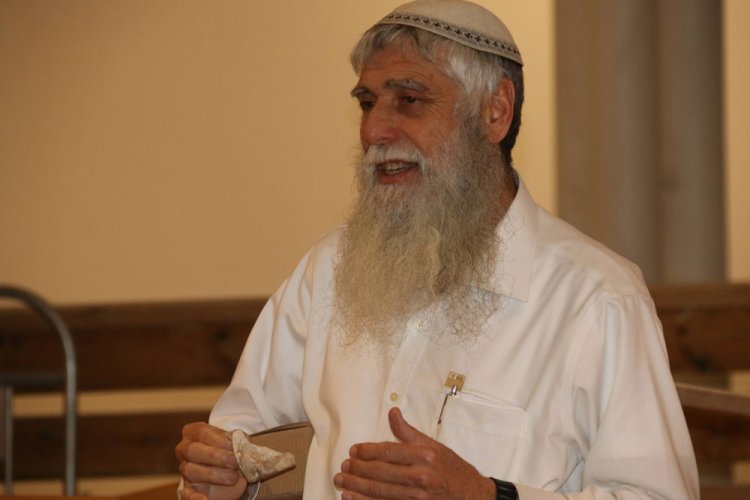 הרב סולי מחזיק ממצא שאותר בחפירות בסמוך לכותל (קרדיט: הקרן למורשת הכותל)
What did the Western Wall plaza look like 35 years ago?
“There were about two million visitors a year, compared to over 12 million today. For certain segments of the public, all a person could do at the Wall was take a photograph. People felt they had nothing to seek here beyond that. As a result, there were those who reached military age without ever having visited the Western Wall even once in their lives.”
Rabbi Soli explains that this realization led him to work on a program that would allow people to experience the Wall in depth and connect to its essence.
“This isn’t like a museum, where people come, look around, and leave. Together with other partners, we began thinking about how to bring the entire public here.
“People avoided coming not because they opposed it, but because they simply hadn’t been exposed to the immense significance of this place. The Western Wall tunnels were already being excavated, but visits by educational institutions, and by the broader Israeli public, were minimal. I tried to find a way to break through this barrier of unfamiliarity with the greatness of the site.”
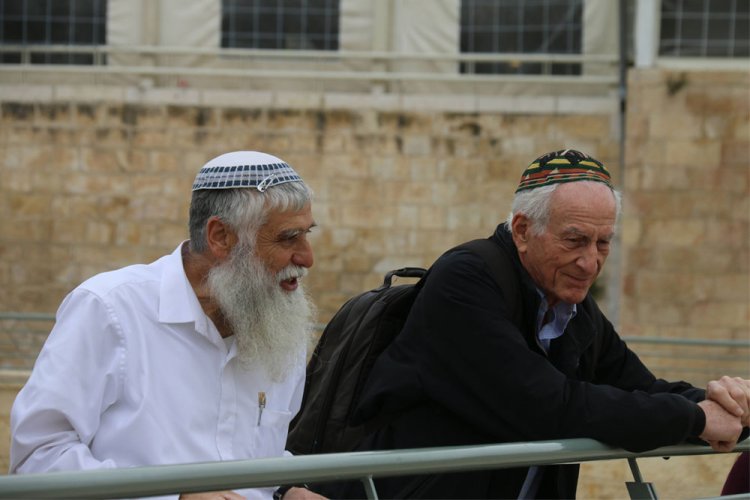 עם האסטרונאוט היהודי ג'פרי הופמן (קרדיט: הקרן למורשת הכותל)
An Airlift to Jerusalem
“We decided to start with bar mitzvah children,” the rabbi recalls. “I contacted the singer Yehoram Gaon and asked him to come with me to Kiryat Shmona. We went to the mayor’s office at the time, and together approached the schools, asking them to bring their students to Jerusalem.
“At that time, Katyusha rockets were falling on northern communities, so we chartered planes from Arkia and brought the bar mitzvah children of Kiryat Shmona by airlift for a full day of touring Jerusalem, including a visit to the Western Wall.”
Rabbi Soli shares a surprising moment of closure: “During the ‘Swords of Iron’ war, we brought evacuated families from the north to the Wall as part of a bar mitzvah program. One of the fathers approached me, introduced his daughter, and told me that he himself had been one of those children from Kiryat Shmona who came to the Wall for the first time when we launched the program.”
 עם הרב אליהו זצוק"ל (קרדיט: הקרן למורשת הכותל)
From Bar Mitzvah Classes to Soldiers and Students
The bar mitzvah classes from Kiryat Shmona were only the beginning. Classes from other parts of the country followed.
“We started with bar mitzvah classes because it was natural and easy to explain to educators and parents why it was important to come to the Wall. From there, we moved to older classes, then high schools, and gradually to the army. Later, we also created programs for discharged soldiers who were already university students.
“We wanted soldiers and students to come for a deep visit — one that raises questions of identity and connection. How did we preserve the chain of generations for so many years? How were we able to say ‘Next year in Jerusalem’ and dream of this place?
“Today, thank God, hundreds of students and soldiers come to the Wall almost every weekend. We also developed special weekend programs for senior military officers in advanced courses. It all started gradually, with great patience and inclusion.”
Rabbi Soli adds with satisfaction: “Today, thank God, the Wall has become a magnet for countless hearts — something that simply was not the case twenty or thirty years ago.”
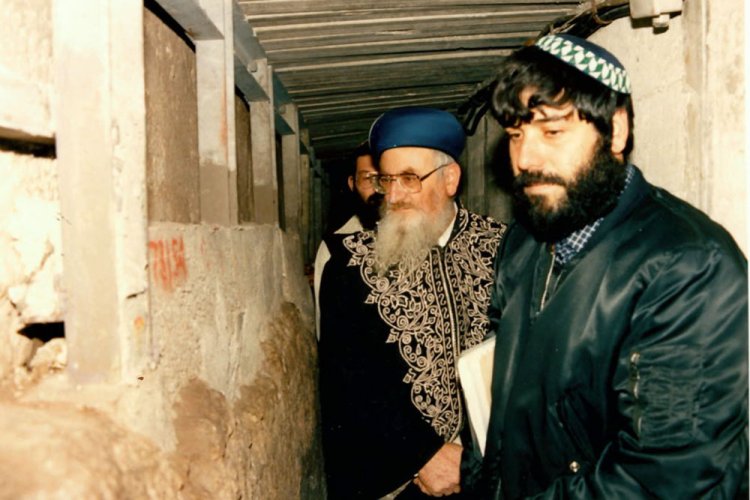
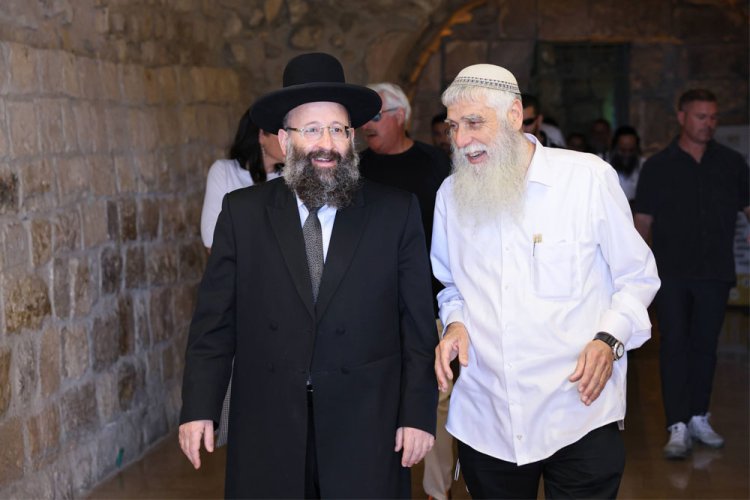 עם הרב שמואל רבינוביץ, רב הכותל והממונה על המקומות הקדושים, במנהרות (קרדיט: הקרן למורשת הכותל)
What challenges occupy you as CEO of the Western Wall Heritage Foundation?
“The central challenge is to bring the Western Wall to every single Jew in the world,” he says. “This is the place about which Yaakov our forefather said, ‘This is none other than the house of God, and this is the gate of heaven.’ Here stands the ladder that connects every person to God. From here, as the Ohr HaChaim and the Kli Yakar explain, all abundance flows into the world.
“The Divine Presence that rests at the Wall is the same Presence that resides within our hearts. And when we draw closer to holiness, we are increasingly revealed to ourselves.”
He then identifies two additional challenges: “One challenge is to give every person who comes to the Wall a sense of home, so that everyone feels that coming to the Wall is also connected to them and that they feel comfortable here. Another, no less important challenge, is that everyone who visits leaves with a sense of depth, feeling that this is a place that quenches their inner thirst, here — near our spiritual home.”
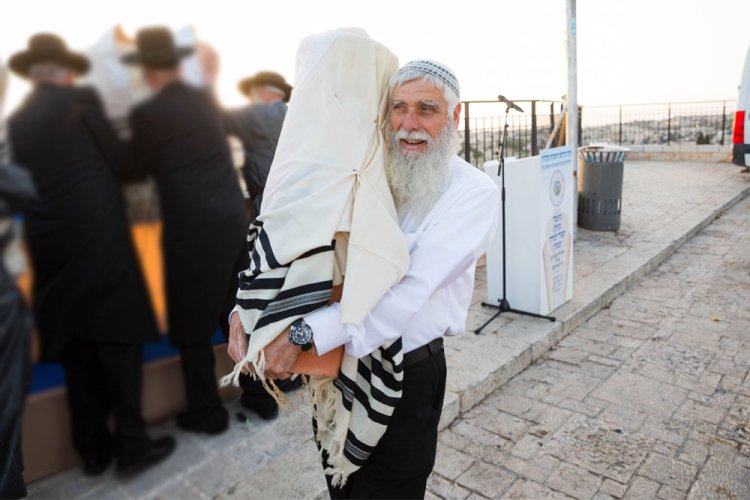 מלווה ספר תורה לגניזה בהר הזיתים (קרדיט: הקרן למורשת הכותל)
Feeling at Home
When I ask whether there are conflicts between different groups who visit the Wall and the desire to give everyone a sense of belonging, Rabbi Soli shares a past incident.
One Shabbat, several years ago, a woman arrived at the Wall dressed in a manner that was clearly inappropriate for a holy site. Western Wall staff asked her to comply with the site’s guidelines, but she refused. Rabbi Soli, who was present at the time, approached her as well.
“I felt that the very fact that I approached her to ask her to dress more modestly already upset her,” he recalls. “I went down to the prayer plaza to pray. When I returned, she was waiting for me in tears and said that this was the last time she would ever come to the Wall.
“I asked her why, and she said: ‘I feel at home at the Wall, but if I can’t come dressed the way I usually do — if I’m asked to dress differently, then I no longer feel at home.’”
“I listened to her,” Rabbi Soli continues, “and I saw that she was speaking sincerely, from the depths of her heart.
“‘Look,’ I said to her. ‘Even within a private family, there are times when siblings think differently or dress differently. But if someone grows up in such a family and wants the parents to enjoy everyone together, they have to try to understand the other and adapt when needed.
“Here at the Wall, there are standards of modesty. On the other hand, we don’t require, for example, that a woman come wearing long sleeves down to her hands, as some segments of the public might prefer. We must find the middle path. We want everyone to be able to come here and feel at home, and it’s important that no one pushes someone else away from this place. That way, the entire Jewish people can feel together and at home here.’”
Rabbi Soli continued speaking with her, and when he finished, the woman not only accepted the explanation — she cried again and said, “No one has ever explained it to me this way.”
“In the end, we celebrated a bar mitzvah here at the Wall together with her. I believe the correct path is to find the right balance so that all of Israel can feel comfortable at the Wall. Of course, everything is done strictly according to the guidance of the rabbis. Everything at the Western Wall must be carried out in sanctity: ‘Your camp shall be holy.’
“When this is explained gently, in a way that makes it clear that we want to be together — and that all our requests come from love of every Jew, wherever they are — I believe everyone can understand.”
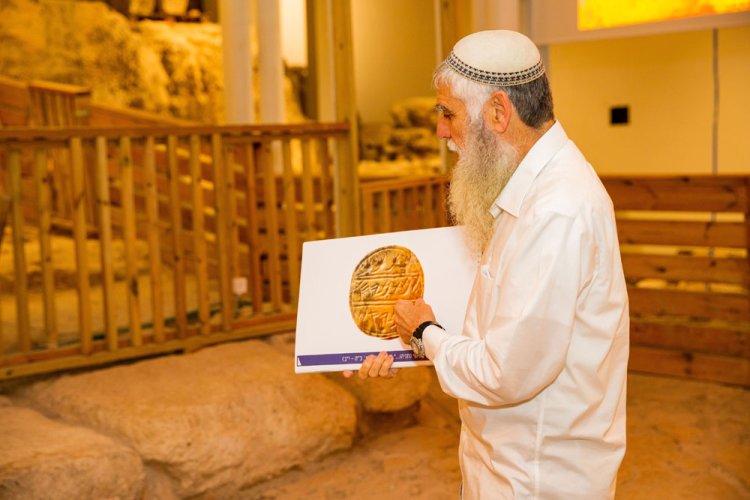 בהדרכה על ממצאים שאותרו בחפירות מתחת לרחבת התפילה (קרדיט: הקרן למורשת הכותל)
Connecting Heaven and Earth
Rabbi Soli shares another aspiration close to his heart: “I want everyone who visits the Western Wall to feel that they become ‘more.’ Once I asked Rabbi Shlomo Aviner: ‘What happens to a person who comes to the Temple after having been there several times already?’ He answered me: ‘Every visit to the Temple makes a person “more.”’
“I asked, ‘More of what?’ And he replied: ‘More of everything good — more joyful, more optimistic, more careful in how they treat others, more inclusive, more aware of the unique strength of the Jewish people, more believing in this nation, and more willing to sacrifice for it.’
“I want everyone who comes to the Wall to leave as ‘more.’ That’s what matters most to me, and we do everything we can to help people truly experience that.”
In closing, Rabbi Soli shares: “The essence of Jerusalem is to be the thread that connects the Divine voice to the human heart. The more a person wants to listen to that Divine voice, remembers that ‘Forever, God, Your word stands in heaven,’ and that God constantly calls out to each of us — ‘Open for Me, My sister, My beloved’ — the more a person seeks closeness to God, comes to Jerusalem, and ‘pours out their heart like water before the presence of God,’ the more they feel the Divine Presence.
“My prayer is that everyone takes from Jerusalem the great strength it has to give us and rises higher. That through Jerusalem, each of us gains clearer vision and sees, eye to eye, the return of God to Zion. And in this way, we will connect — each of us to ourselves, and all of us together to the Jewish people and to the Master of the Universe.”


