
Magazine
The Battle for Jerusalem Through a Paratrooper’s Eyes
From Ammunition Hill to the Western Wall — an eyewitness story of courage, sacrifice, and history
- Hidabroot
- |Updated
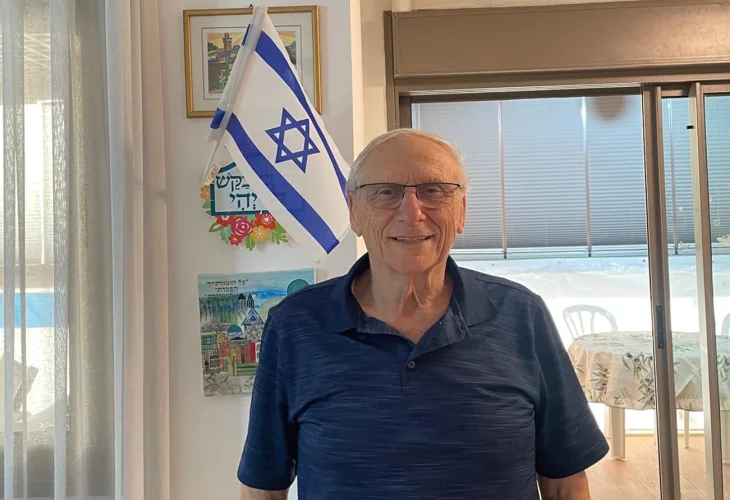 Yehuda Cohen
“This was the most frustrating moment of my life as a paratrooper,” says Lt. Col. (res.) Yehuda Cohen, a veteran of the 55th Paratroopers Brigade, as he recalls June 5, 1967 — the day the Six-Day War broke out. That morning, he and his comrades were informed that plans had changed: instead of parachuting into El Arish and entering direct combat with Egyptian forces, as they had been briefed, they were boarding buses to fight in Jerusalem.
“The disappointment was enormous,” he recalls. “A combat jump is the ultimate moment for any paratrooper. We were so excited by the thought that we were about to fulfill our destiny as paratroopers, and some of the men received the news with actual tears of frustration. But we had no choice — we obeyed orders and boarded the buses that took us to Jerusalem.
“Who could have imagined,” Cohen says today, 58 years later, “that my brigade — Brigade 55 of the Paratroopers Reserve, under the command of Col. Motta Gur, would play such a decisive role in the battles to liberate Jerusalem during the Six-Day War? On that day, when the war broke out, we could not possibly have imagined that we would become partners in one of the most moving and defining moments in the history of the State of Israel.”
“They Shouted: ‘Keep Your Head Down!’”
Lt. Col. Cohen was indeed among the first paratroopers to touch the stones of the Western Wall — those who, through courage and extraordinary divine assistance, liberated and reunited the capital of the Jewish people.
“Before I went to war, I equipped myself with a camera,” he explains. “That’s how I became not only one of the fighters who reached the front lines, but also one of the few who documented the war in photographs. In those days, soldiers didn’t carry personal cameras like they do today, there were no mobile phones with cameras, and even military photographers had not yet taken on the prominent role they have now.”
How did you even have a camera?
“A few days before the war, I received a camera from my girlfriend — who later became my wife. I attached it to my belt, and between gunfire and grenades, I documented history: the course of the war and the victory.”
What did you experience during the fighting?
“I can divide it into several stages,” he answers. “At first, when we fought at the police academy, it didn’t really feel like we were in a war. At that stage, I didn’t see casualties, so it felt almost like an ‘exercise.’ We weren’t yet aware of what was happening to other units.
“Even when we approached Ammunition Hill, we didn’t immediately recognize the place. The trenches only revealed themselves when we were right on top of them. In our innocence, we initially ran almost upright. As we advanced, the trenches became deeper. From afar, we saw soldiers from another company who had fought on the hill during the night, crouched and dug into the trenches. They shouted at us at the top of their lungs: ‘Keep your head down! Keep your heads down, you’re crazy!’
“We joined them in a crouched run, and only when we got closer did we understand why they had stopped. The trenches ahead of them were blocked with dead and wounded — images that are impossible to forget. I asked my friend Miki Zelitzky, ‘Are they ours?’ He nodded. Only then did the shock hit me, along with the realization that we were in a bloody war, in a battlefield as dangerous as any.”
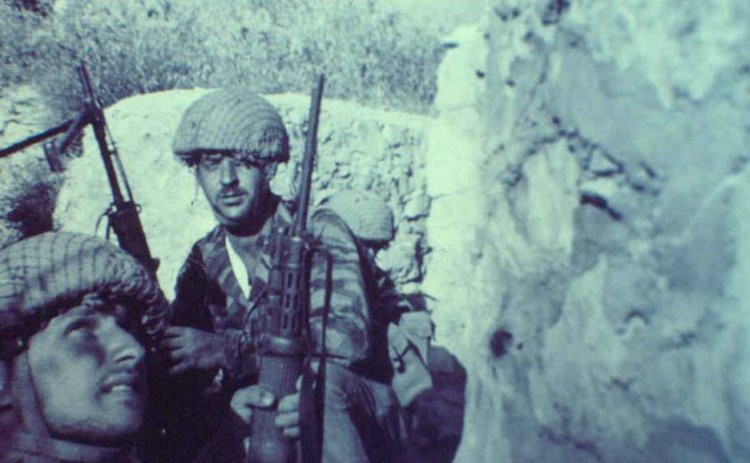 In the trenches of Ammunition Hill
Weren’t you afraid?
“Of course we were afraid — but we overcame the fear and kept fighting. We were constantly together, a large group of fighters with motivation and a clear determination to continue fighting until the objective was captured, without giving up.
“From there, we moved on to the next stages — Sheikh Jarrah, where we gained control of the route leading to the Old City; the Augusta Victoria position, which brought us closer to the goal; and finally the breach into the Old City through the Lions’ Gate and the arrival at the Temple Mount, with the call I will never forget: ‘The Temple Mount is in our hands!’”
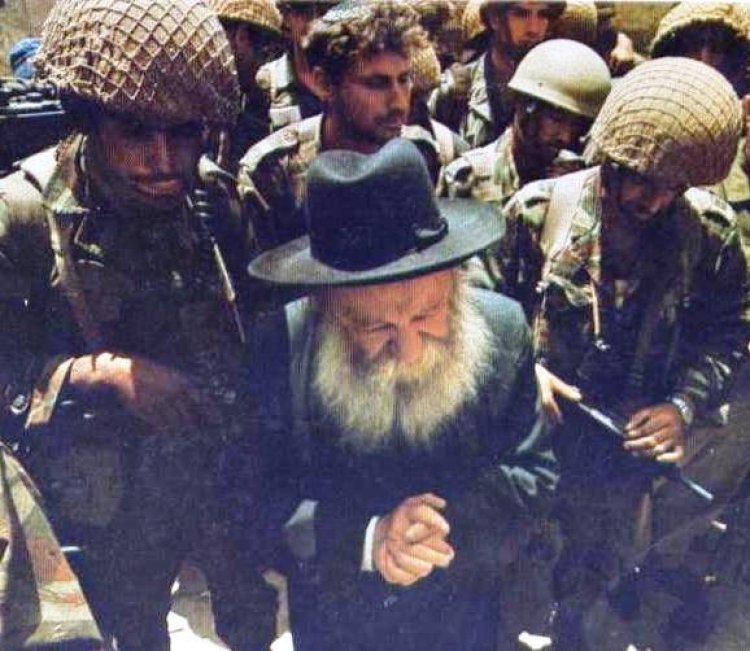 Cohen behind Rabbi Kook on the day of the Wall's liberation
A Miracle from Beginning to End
Cohen emphasizes that even decades later, he is deeply aware that the Six-Day War was an immense miracle from start to finish.
“In the introduction to my book, Six Days and a Camera, Professor Israel Aumann wrote that in late April 1967, just weeks before the war, he said: ‘There is less chance that I will ever reach the Western Wall, which is 700 meters away from me, than that I will reach the moon, which is 400,000 kilometers away.’”
“That was not an exaggeration,” Cohen stresses. “At the time, the Temple Mount and the Western Wall seemed like distant, completely unattainable dreams. In fact, had King Hussein of Jordan not decided to fly to Egypt and join the war, the Western Wall would not be in our hands to this day.”
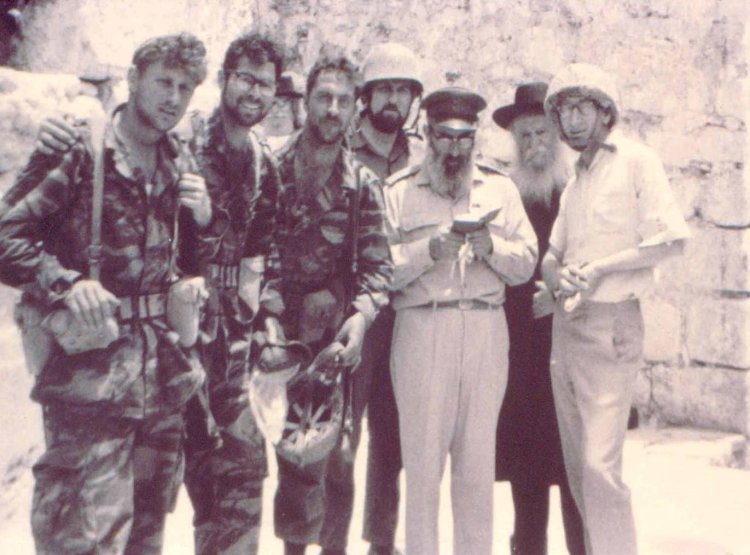 First prayer at the Wall, post-liberation (Cohen on the right)
A Great Victory, at a Heavy Price
Alongside the overwhelming victory, Cohen says it is impossible to ignore the heavy casualties.
“From Battalion 66 of the paratroopers alone, 24 soldiers were killed at Ammunition Hill within about three hours, including my platoon commander, Lt. Ofer Feniger, of blessed memory, who was killed right next to me. In all the battles for Jerusalem including Ammunition Hill, Sheikh Jarrah, the Old City, and more, 97 paratroopers from Brigade 55 were killed.
“This is in addition to hundreds of soldiers killed on other fronts, all within six days. Proportionally, more soldiers were killed in the Six-Day War than in the current ‘Iron Swords’ war. That’s why it’s so important to me to tell the stories of heroism from the battles for Jerusalem — because people gave their lives so that the Temple Mount would be in our hands and so that we could reach the Western Wall.”
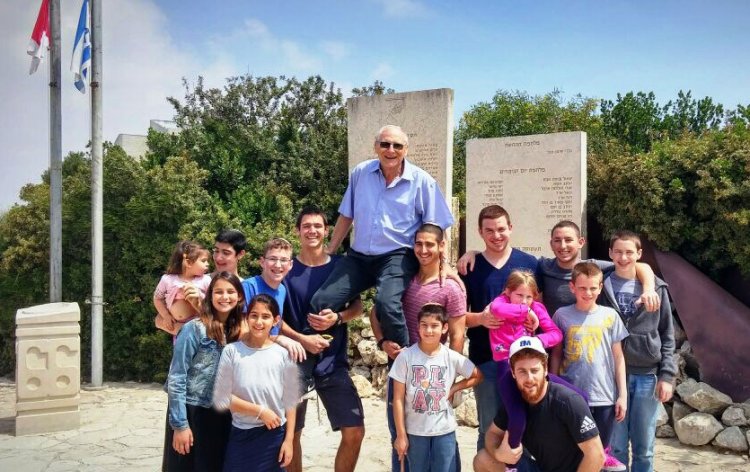 Yehuda Cohen with his grandchildren at Ammunition Hill
Bearing Witness for the Next Generations
Cohen notes that since he was already orphaned of both parents at the time of the war, he returned afterward to the home of a friend of his father and told them everything that had happened.
“A week after the war, I traveled back to Jerusalem with my girlfriend — my future wife, and gave her a precise tour of every place where we had fought, stopping at each location and reconstructing what had happened there.
“A few months later, Rabbi Yehoshua Yagel, of blessed memory, head of the Noam Yeshiva in Pardes Hanna where I studied, asked me to give a lecture to the high school students and share what we had gone through. I gathered the photos I had taken and turned them into slides to accompany the talk. The response from the students was incredible. I saw how deeply firsthand stories affected them, and from then until today, I make an effort to lecture wherever I’m invited — offering a personal and unique testimony as a paratrooper who had the privilege of witnessing and taking part in the historic moment of Jerusalem for the Jewish people and the State of Israel.”
Beyond the Battlefield
Incidentally, Cohen’s contribution did not end with his participation in the fighting. Later in his military service, he worked as an electronics engineer in the technological unit of Military Intelligence and received the Israel Defense Prize as well as a commendation from the Minister of Defense for intelligence projects that remain classified to this day.
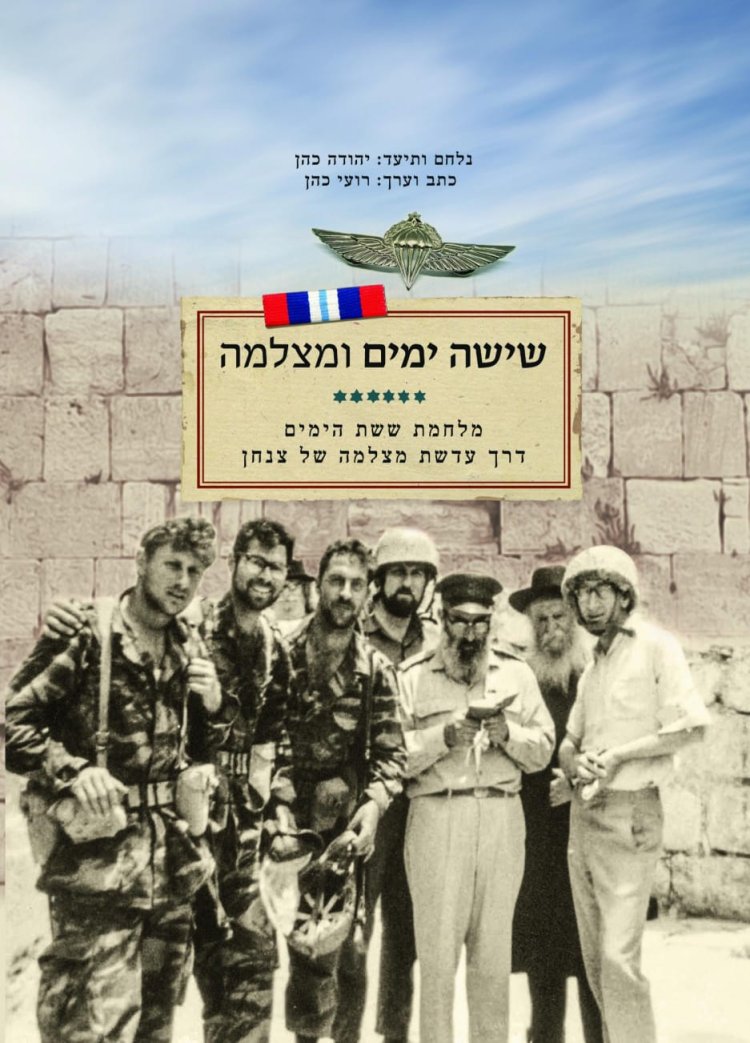 Cohen's book
The War of Life
At the end of Cohen’s book — which summarizes the Six-Day War through the lens of his camera, there appears a unique photograph of him standing by the Ammunition Hill memorial, surrounded by his many grandchildren, lifting him on their shoulders.
“More than ten of the grandchildren seen in the photo have fought or are currently fighting in Gaza,” he notes. “One of them — Captain Elkana Cohen, has even written a book based on his personal diary, documenting everything they went through during the war.
“When the Six-Day War ended, I thought to myself, ‘That’s it — wars are over, and my children will surely never have to fight.’ As the years pass, I’ve come to understand the reality of ‘the sword shall devour forever,’ realizing that our enemy is here to attack — and that not only the grandchildren, but even the great-grandchildren will still fight.
“But one thing is clear to me: our young fighters today deserve immense admiration. While we fought for less than a week, many of them have been fighting for nearly two years, determined to continue until victory. I believe this is the secret of the Jewish people — the spirit that prevails, and the ideal that always guides us: to fight for our people and for the sanctity of the Land of Israel, our promised land.”


