
Magazine
“He Was Born Again”: Efrat Mor on Her Son’s Return from Gaza
Why they rejected protests, endured fierce backlash, and chose unity, faith, and national responsibility over public pressure
- Moriah Luz
- |Updated
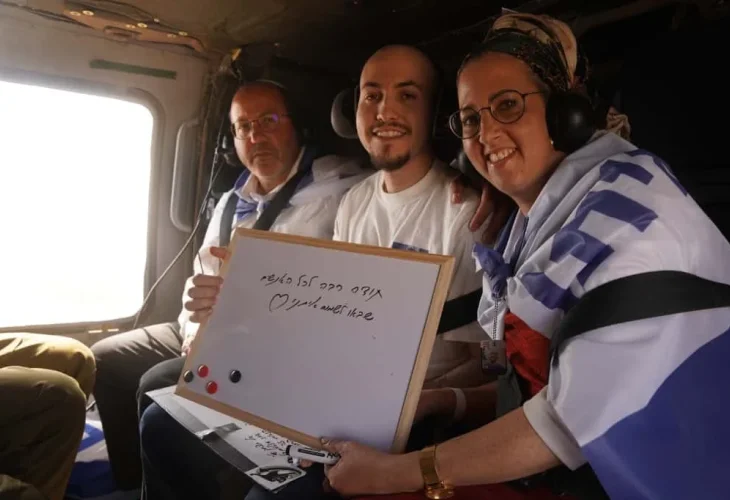 Eitan Mor with his parents in a helicopter, en route to the hospital after their initial reunion at the Re'im camp (Photo: IDF Spokesperson's Unit)
Two years of a living nightmare passed for Efrat and Tzvika Mor after their firstborn son, Eitan, was kidnapped to the Gaza Strip. Unlike other hostage families who took part in demonstrations and public calls urging the government to free the hostages “at any cost,” the Mor family chose a different path. For that choice, they endured shocking remarks, that continued even after their son returned from hell.
“Labor Pains”
Two weeks after Eitan’s return, I speak with Efrat. Eitan was released that day from Beilinson Hospital to his home in Kiryat Arba, though at the time of our conversation he was still hospitalized (“Eitan chose to stay a bit longer. They’re surrounding us here in an extraordinary way”). Efrat is speaking from a room near him. Her two younger daughters, ages seven and nine, are with her. She is sharp, articulate, and above all, standing tall.
How is Eitan doing?
“Thank God, Eitan is getting stronger every day. At first he spoke in a whisper. I don’t know if that was because he got used to speaking quietly there — there were periods when they were forbidden to speak, or simply because he was weak. But his voice has come back. There’s still a road ahead, of course,” she adds immediately. “He’ll need to continue rehabilitation at Beilinson. I see color returning to his face, and every day I feel he’s doing better and better. This is the beginning of a new journey. I’m not fooling myself — there will be ups and downs. But we’re with him, hand in hand.”
Tell me about the moment you first saw Eitan on the screen. Did you know what condition you would see him in?
“We didn’t receive any videos of him. We had only occasional signs of life — and not in the recent period. Even intelligence officials were very worried about what we were going to see.”
On the day of his release, Efrat and her husband Tzvika waited with the other parents at the initial meeting point at Re'im base.
“There was enormous excitement. Personally, I had real stomach pains — on the level of labor contractions. It’s not far from the truth. Eitan really was born again.”
At a certain point, the parents of the first group of released hostages were called into a room. There, in a closed circuit broadcast shown exclusively to them, they watched the spot where Israeli forces were to meet the Red Cross. Excruciating minutes passed until a convoy of jeeps appeared, winding through the dirt roads.
“The moment I saw him step down from the jeep and stand on his own two feet, a scream burst out of me. I’m a quiet person — I don’t scream. Even during my labors I didn’t scream. But at his rebirth, the scream came out of me uncontrollably. The camera moved and focused on each returnee in turn. Every time it focused on Eitan, I found myself screaming again with excitement.
“I saw him standing opposite the officers who received them — standing confidently, with a huge smile. In that moment, I felt that this was my Eitan, that I had gotten him back. I knew it was him. And even if there would be difficulties, I knew it was the same Eitan.”
Tell me about Eitan after two years in captivity.
“First of all, the sentence that moved me most was the very first thing he said — that he so appreciates the education we gave him as parents. That’s incredibly moving. I think any parent would be moved to hear that, especially from a child who returned from captivity after two years.
“It’s even more moving because it comes from a child who chose a somewhat different path from how he was raised at home — the ability to hold that complexity. To understand that Mom and Dad live differently, have a different lifestyle, and yet never once forgot that he is their child — and that he knows how much we love and admire him.
“When we first met him, he was pale, thin, and weak. I admit, it frightened me. But very quickly he cracked a joke, and I understood: this is him, with his sense of humor, which didn’t disappear even in captivity.”
There is another moment Efrat says she will never forget.
“We left the room after a long conversation with Eitan and started walking toward the helicopter. Eitan turned back to me and said, ‘Mom, what are you holding? What are you carrying?’ — and he took my bag from my hand. My God. This child was in captivity in Gaza until an hour earlier, in the most horrific place imaginable — and already he’s thinking about how he can help. Even in the hospital, he enjoys making coffee for visitors and being the host.”
Are there areas where he’s changed?
“So far, we’re not seeing anything extremely serious, but we’re very cautious. Before Eitan returned, the parents were prepared for the fact that returnees need a lot of restoring of control. In captivity they couldn’t say what they wanted or what their needs were. The terrorists dictated everything.
“At first, I really saw that we constantly had to tell him, ‘Eitan, you choose.’ In the smallest things. He would keep throwing decisions back to us, and we gently insisted that the choice was his — who comes to visit, when he wants to eat, how much he wants.
“At the beginning it was a bit hard for me to contain. Eitan was always a very independent child. Suddenly seeing him in a position of asking us to decide for him — it wasn’t simple. Thank God, he’s really progressing. You can’t compare where he is now to where he was two weeks ago.
“There was another surprising thing we were prepared for,” she notes. “Eitan was alone in captivity for more than a year. That means for over a year he spoke only Arabic. He came back with completely fluent Arabic, including the accent. He reads, writes, and speaks Arabic. We’ve noticed that sometimes when he speaks Hebrew with us, he gets stuck — you can literally see the difficulty retrieving words. That will loosen with time, but right now he speaks Arabic more fluently than Hebrew.”
Does Eitan talk about captivity?
“He talks a lot about existential fear — mainly from IDF bombardments. To our surprise, it turns out Eitan was above ground most of the time. We were sure he had been underground.
“It’s hard for me every time to hear about the terrible fear that accompanied him. By nature, Eitan is brave, and someone who’s not afraid of anything. Suddenly to experience with him those moments of existential fear, not once or twice but countless times. He told us that bombardments intensified at night. He was then with another hostage, and both of them prayed that night would not come. As a mother, it’s very hard to hear those descriptions.
“He also talks about hunger. Hunger wasn’t the same throughout captivity. We understand that in the first period it was extreme, and there he doesn’t go into much detail. I feel he’s protecting us as parents by filtering details, even though we ask him to tell us everything. We’re able, and we want to hear.”
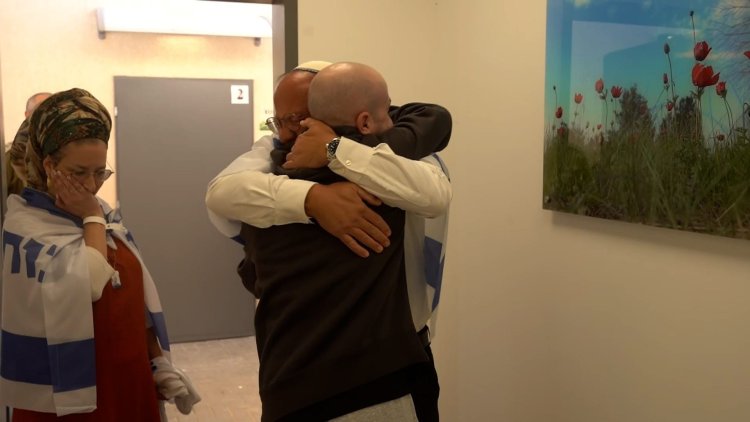 במפגש הראשוני ברעים עם הוריו, לאחר שנתיים
You mentioned you received signs of life during those two years. How did they come?
“Almost all signs of life came through confidential phone updates or officers arriving at our home. Each time we were told there was a sign of life through intelligence, without details because it would endanger him and the forces. The signs we received were extremely minimal.
“There was one sign of life that came via a hostage who returned in the first deal after 54 days. It was long ago, but he was the only one who actually saw Eitan and spoke with him in captivity.”
Efrat says it took a long time before that returnee felt able to speak with them; the conversation took place more than a year after his release.
“He described Eitan as strong and full of optimism, and said he served as a spokesperson for the captives vis-à-vis the terrorists. When they were together, Eitan was in a tunnel with four other men, and the conditions were horrific. They received one pita and one can of luncheon meat (loof) for five men — for an entire day.
“He told us that Eitan would address the captors on behalf of the other hostages — both because his Arabic was better and because he’s an expert in human relations. He knows how to communicate. I assume he knew what to say, to whom, and when. It didn’t surprise us — it only strengthened what we always believed about Eitan, and it gave me strength and hope.”
You chose to fight differently from the Hostages Families Headquarters, and among other things you helped establish the Tikva (Hope) Forum. Tell me about that choice.
“At the beginning of the war there was total chaos. No one understood what was happening. A civilian hostages headquarters was established to provide support to families. But when Tzvika and several other parents arrived and voiced a different opinion, they were essentially brushed off, to put it gently.”
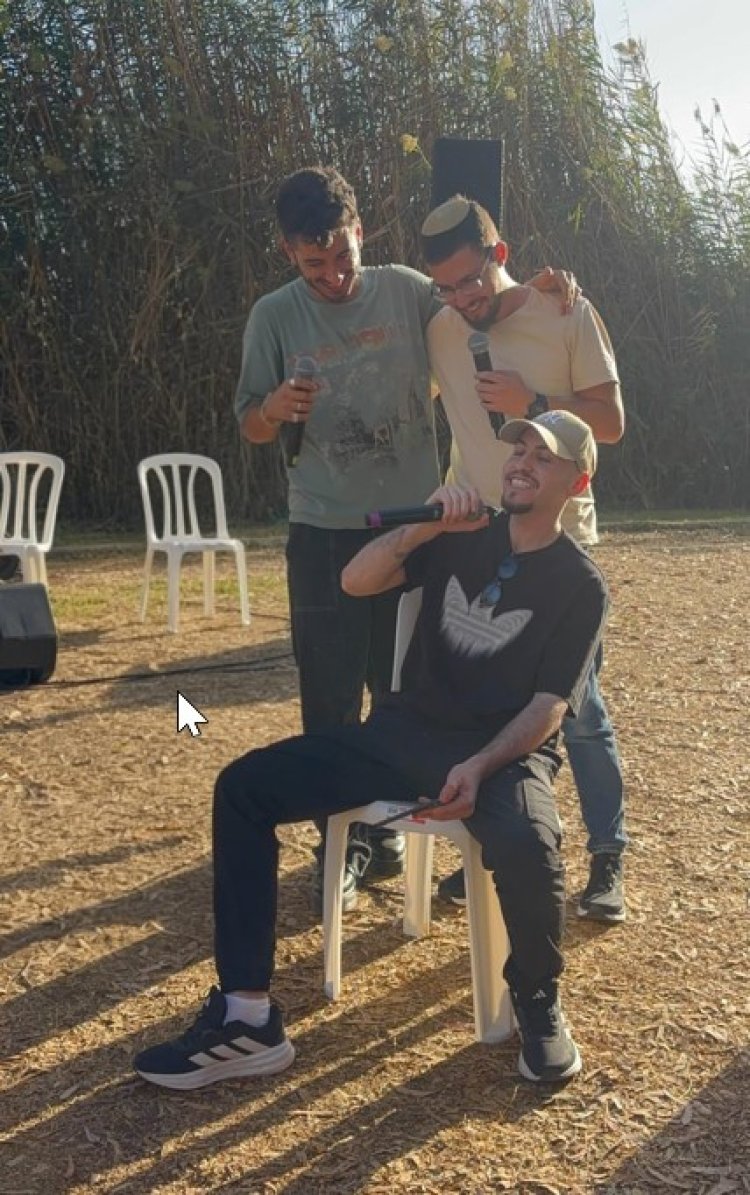 בהפוגה בזמן האשפוז
What was the different opinion?
“From the start, we believed the hostages must be returned in a way that does not endanger the rest of the people of Israel — not now and not for generations. That’s true ideologically, morally, and it’s also the fastest and safest way to bring them back. That was the position of the Tikva Forum.
“As time goes on, we see how correct this approach was. Every deal that came about was the result of pressure on Hamas. The conclusion is that we must force the enemy to surrender. We’ve already paid our price; we don’t need to grovel. From the beginning we spoke against negotiations. With an enemy you don’t negotiate. For example: a siege on Gaza. No one in, no one out. No humanitarian aid.
“The first deal came after there was no humanitarian aid. The most recent deal is a combination of the IDF entering Gaza City together with pressure from Trump. What resulted was a deal that included all the hostages — an option that wasn’t even on the table before. We insisted on it constantly. It became a slogan: All of them together, until the last hostage.”
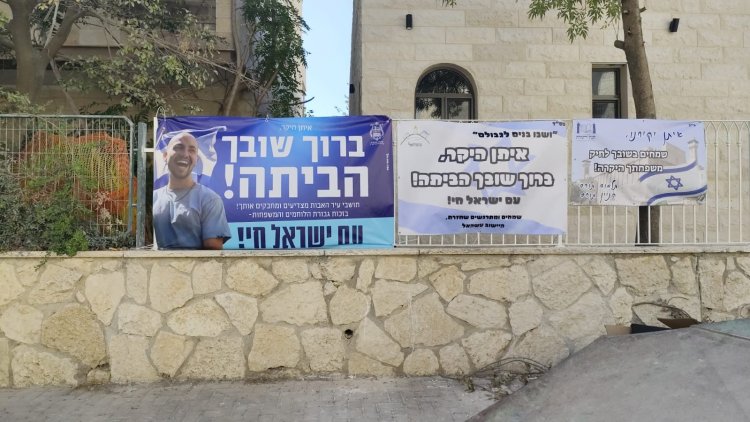 שלטים בקריית ארבע, בהמתנה לחזרתו של איתן לעיר מגוריו
Did you pay a price for this path?
“The main one who pays is Tzvika, because he’s more in the public and parliamentary arena. He took hits, and still does. Even when Eitan returned, a journalist wrote that now it’s time to find Eitan adoptive parents.”
That’s horrific. Did those reactions shake you?
“Not at all. Not for a moment,” Efrat says firmly. “At first I was very shaken by every comment. I won’t pretend it’s easy to read. But over time I realized you either have to pity those people or simply ignore them. I prefer to invest my energy in what truly matters — not in nonsense.”
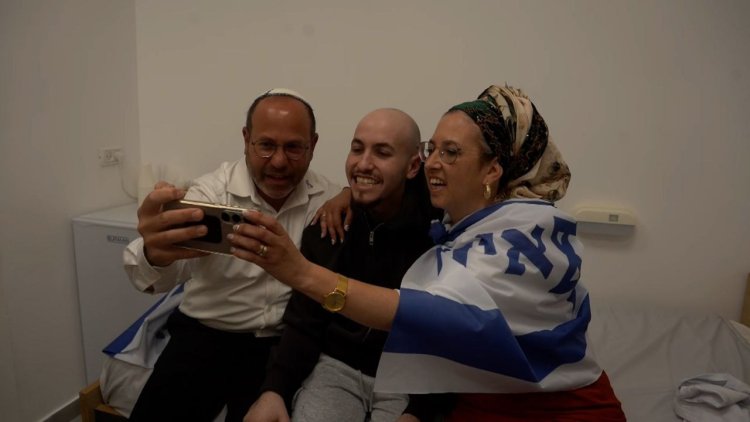 איתן והוריו בנקודת המפגש ברעים (צילום: דובר צה''ל)
Your son was kidnapped to Gaza and you were absorbing shocking remarks here. What gave you the strength to stick to your path?
“First of all, Tzvika. He led this entire path with confidence, integrity, and truth. He didn’t budge.
“The embrace from the people of Israel also gave us enormous strength. We received countless messages of support. Wives of reservists told me that when they were close to collapsing, whenever they needed a bit of strength they would open YouTube and listen to Tzvika or to me.
“Members of Knesset and ministers told us we gave them the courage to stand their ground in government meetings and committees. Especially Tzvika — he’s the political voice among us. I also heard endlessly from soldiers — before entering Gaza, Tzvika would speak with them and give them strength and spirit. It was clear to us that this was his mission, and that’s what gave us the strength to continue despite all the slander.”
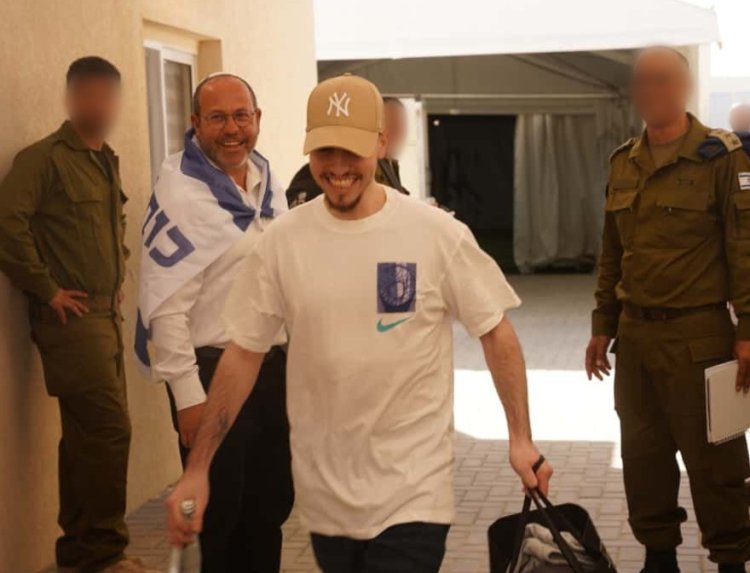 איתן סוחב לאימו את התיק בדרך למסוק (צילום: דובר צה''ל)
“The Ultimate Proof”
When Eitan returned, the media reported on a conversation he overheard between Hamas terrorists during captivity. One of them suggested releasing Eitan because his father doesn’t protest against the government, so keeping him doesn’t help them. I ask Efrat to describe it directly.
“It began when Izz ad-Din al-Haddad, considered very senior in Hamas, arrived. He sat with one of Eitan’s captors, and Eitan — who understands Arabic, heard their conversation. The captor said to the senior figure: ‘This Eitan — his father doesn’t love him. Look, he’s not protesting for his return.’ The senior replied: ‘What are you talking about? His father loves him, but he’s fighting in his own way. That doesn’t mean he doesn’t love him.’ Then he added: ‘Listen, Eitan should be released first. His father isn’t demonstrating anyway — he doesn’t help us.’
“When Eitan told us this, two things moved me deeply. First, that that Hamas terrorist, may his name be erased, understood that Eitan’s father loves him. It also shook me, because I said to myself: That Hamasnik understood what many Jews don’t. How do you explain that?
“The second thing is that what they said proved to us how much the opposite approach actually harmed the hostages and served Hamas. I don’t need stronger proof than that.”
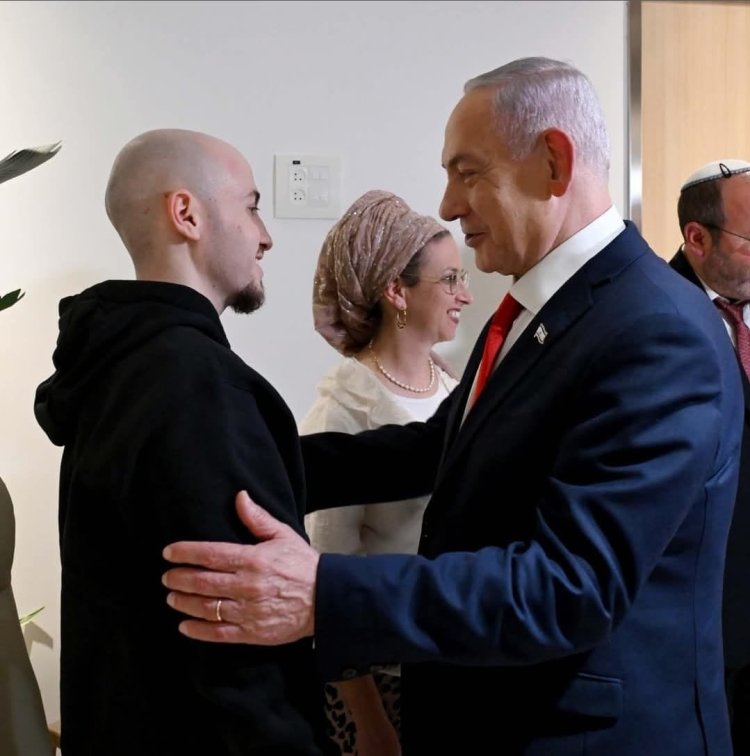 עם ראש הממשלה בנימין נתניהו (צילום: דוברות בילינסון)
Did Eitan know about your activity in the Tikva Forum while in captivity?
“No. He wasn’t aware. In the initial meeting room at Re’im, we tried to understand what he knew about what was happening in Israel. It turns out he didn’t know about the hostages’ situation or about the Tikva Forum. Occasionally he watched Al Jazeera — but as we know, Al Jazeera is a Hamas propaganda arm. They choose what to show.”
When did he know release was coming?
“Four days before. But he didn’t believe them. From his perspective, he had already accepted that he would die in Gaza. He lived daily with the feeling that death could come at any moment.”
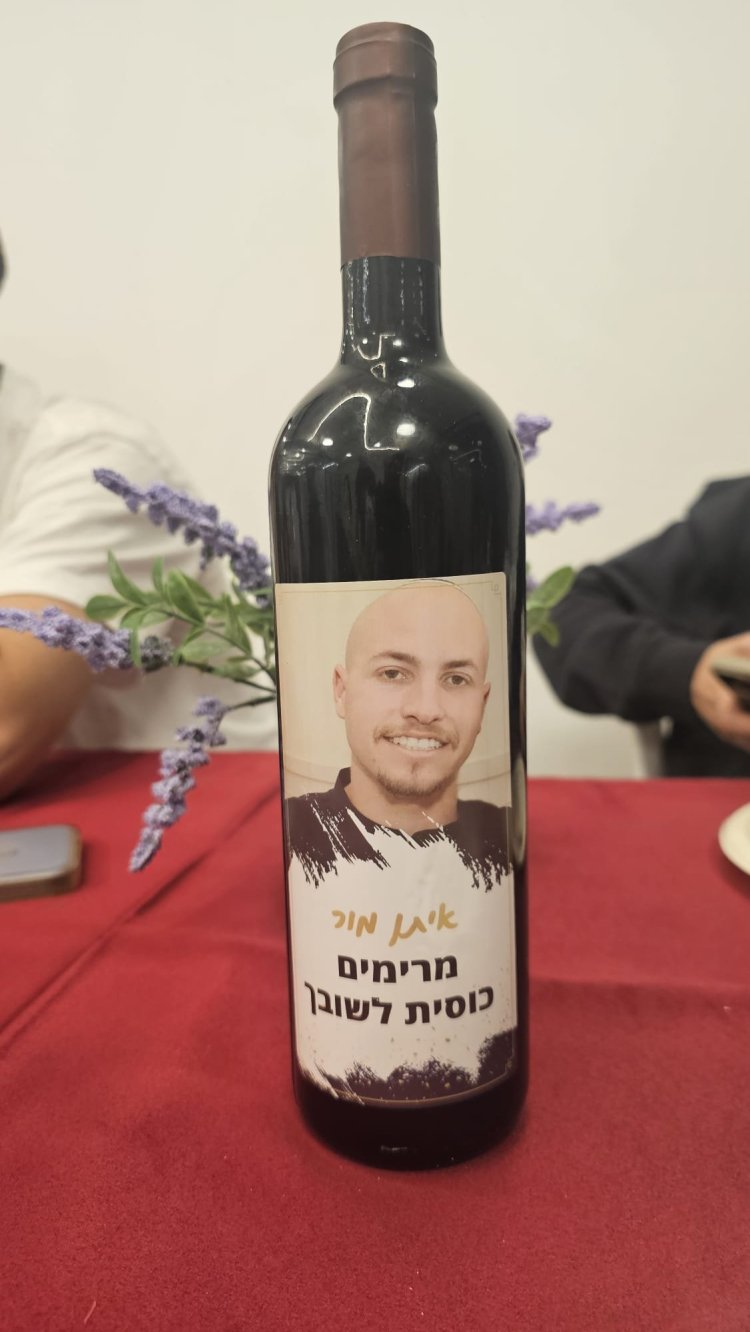 בקבוק יין עם תווית, לכבוד שובו של איתן
Choosing What Unites Us
When I ask Efrat how she would like to end, she shares: “Eitan spent a significant period in captivity with another hostage, from one of the kibbutzim around Gaza. I assume his views are very different from Eitan’s. But the bond formed between them is a bond that will never end. It’s the same bond among our soldiers in combat. No one asks who you voted for, where you live, or whether you keep Shabbat.
“That, in my view, is our great lesson. I’m not saying to blur principles or give them up. I’m saying: let’s choose what unites us. Even when we disagree, let’s speak to one another with respect. It’s possible.
“Just yesterday someone asked me about Einav Zangauker. I said: ‘Listen, I don’t agree with her path or with the way she fought. But I also don’t agree with the shocking expressions people write about her. I disagree with her completely — but I will never speak about her that way.’
“All along I felt that as long as they were in captivity, we still hadn’t done our part — and that we still had a mission. Only when we are glue, no one will be able to defeat us — not even the most brutal enemy.
“I pray that everything will be done with kindness and compassion. First of all, that all the captives return to us as soon as possible — for burial, so the circle can finally close for families suffering the unimaginable. And that we don’t forget to defeat the enemy completely. Even after all the hostages return, the work isn’t finished. We cannot leave Hamas in Gaza.
“And of course, my immense gratitude, first and foremost to the Master of the Universe; to all the soldiers who gave their bodies and souls; and to all the families of those serving — families we can never thank enough. Without them, we could not have received our son back.”
A few hours after our conversation, news breaks of the elimination of the terrorist who participated in the kidnapping of Eitan Mor, Avinatan Or, and Noa Argamani. In a joint response, the Mor and Or families said: “So shall all Your enemies perish, God. We received the news with joy that the terrorists who kidnapped our beloved Eitan Mor and Avinatan Or were eliminated by the IDF and the Shin Bet. The despicable terrorists who have not yet been eliminated should know that their day will come as well. We demand that the government continue striking those who kidnapped, murdered, and harmed — allow no one to evade the punishment they deserve.”


