
Magazine
One Woman’s Journey of Faith, Choice, and Healing
Ortal Amar faced impossible decisions — and discovered resilience, meaning, and hope
- Hidabroot
- |Updated
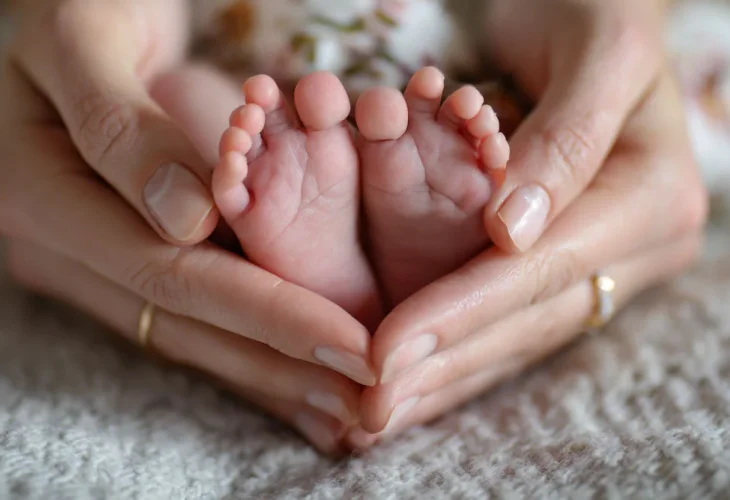
“I never imagined that there were things in life that could go wrong. Nothing prepared me for the idea that plans don’t always work out. I grew up doing everything ‘by the book.’ I didn’t experience any major tragedies or dramatic events. I had a calm, ordinary life.”
With these words, Ortal Amar opens the door to a story she never expected to tell. Remembering the upheaval that struck shortly after her wedding is not easy, but she feels a deep sense of purpose in sharing it.
“I feel this is my mission,” she says. “God wants me to strengthen others. Things don’t just happen randomly in life — there is clearly a purpose.”
Blow After Blow
“It all began when we were a young couple, excitedly awaiting our first child,” Ortal recalls. “The pregnancy was perfect, with no complications, all the tests were normal, and nothing hinted that something might go wrong. Then, two days before my due date, I woke up in the morning and felt that there was no heartbeat.” The shock was overwhelming.
“I had grown up in such a protected environment, with what felt like a perfect life, that I didn’t even know such a thing existed — being pregnant and then losing the baby. I had to go through a stillbirth, which is a full labor in every sense, except the baby is no longer alive. It was a deeply traumatic experience.”
Doctors tried to determine what had happened but found no explanation.
“In the end, they called it an ‘accident,’ without any real answer. I decided that if I wanted to keep living and not sink into grief, I needed to bring life back into my body as quickly as possible.”
Exactly three months later, they received news of another pregnancy. However, on the very same day came another announcement that was terrifying and devastating. Tests revealed that Ortal had cervical cancer. From the moment of diagnosis, doctors made it clear that the pregnancy was likely not viable and that termination seemed unavoidable.
She pauses, emphasizing the magnitude of the blow.
“I was a young woman who had just gotten married. I had gone through a stillbirth, and before I even had time to recover, cancer arrived. I felt like I was watching a horror movie that had nothing to do with me. Until then, my life really had been perfect, and stories about serious illness and tragedy felt completely foreign. How did this suddenly happen to me? It was blow after blow — something impossible to process.”
Faith Meets Fear
There was no time to linger in shock. Reality demanded action.
“My husband and I are people of faith, though from very different backgrounds — he grew up religious, while I grew up completely secular. Still, faith and tradition were present for both of us. From the moment we learned about the cancer, we prayed daily, read Tehillim and the Tikkun HaKlali, and went from rabbi to rabbi asking for blessings.”
Almost immediately, they were forced to make a life-altering decision about the pregnancy. Doctors warned unequivocally that continuing it could endanger Ortal’s life.
“My husband even tried to convince me: ‘Take care of yourself first. Another pregnancy will come later.’ But I was still deep in the pain of the stillbirth. I couldn’t let go. I felt this pregnancy was too precious, and I was convinced that somehow everything would work out. I refused to hear anything else.”
They sought opinions from multiple doctors.
“We learned that my case was extremely rare. First, cancer following a stillbirth is unusual. Second, this type of cancer usually appears at a much older age. And as if that weren’t enough, it turned out to be a cocktail of several aggressive strains — unlike typical cases, which involve two or three at most.”
The head of the department, a senior professor, told her frankly: “We can’t treat you locally because your case is so rare. We’ll have to choose — either fly you abroad for surgery or bring a specialist here.”
She actually supported Ortal’s decision to preserve the pregnancy, noting that it wasn’t at all certain Ortal would be able to conceive again — and since she had no children, this was not a decision to take lightly.
Another doctor, however, took the opposite stance. “There’s nothing to discuss,” he said. “Terminate the pregnancy immediately and remove the cervix. Maybe with treatment you’ll be able to get pregnant in the future.”
Faced with two completely opposing opinions, Ortal and her husband sought a third.
“This doctor approached it logically: ‘Why jump straight to removal and giving up the pregnancy? Let’s start with the least aggressive option to operate on the cervix, remove only the affected area plus a small margin to ensure clean borders, and then reassess.’”
They accepted his approach — accompanied, as Ortal emphasizes, by close rabbinic guidance and countless prayers.
“I Spoke to God in My Living Room”
Then came a day Ortal says she will never forget. “It was the morning before the surgery. I woke up and prayed as usual, reading the Tikkun HaKlali. Suddenly, I found myself talking to God. Not praying — talking. A real conversation.”
She describes it simply and without drama. “I spoke to Him as if He were right there beside me. I said: ‘Master of the Universe, I don’t know where You are leading me or what You have planned for my life. But I know one thing — if You make this terrifying thing disappear, I, Ortal, am willing to take on observing Shabbat.’”
At the time, they were not religious.
“On Shabbat we mostly went on trips. Giving up our plans and suddenly keeping Shabbat felt impossible to me. But in that moment, sitting in the living room, it didn’t feel like it came from me. It was something deep inside that simply commanded me to do it — to save myself.”
Just then, her husband walked into the room. “I told him, ‘You won’t believe it — I took on Shabbat.’ He was shocked, but after a moment he said, ‘I’ve always wanted a Shabbat-observant home. I’m in too.’”
Later, Ortal told her parents. Their response stunned her. “We’re taking on Shabbat as well,” they said. “The main thing is that you should be healthy.”
Waiting for the Answer
The surgery took place the next day. “I felt a higher power escorting me into the operating room,” Ortal recalls.
The results did not come immediately. The biopsy was sent for testing, and they were told to wait a week.
“A week later, a hospital strike broke out. But I couldn’t wait. I told my husband we were going to the department anyway and demanding answers. I couldn’t carry the tension anymore.”
They arrived to find that the senior doctor was absent, but a resident who had accompanied them throughout the process was there.
“When he saw me, he smiled the happiest smile and said, ‘I’m not allowed to give you the official answer — that’s for the attending physician, but I can’t hold this in another minute. You have nothing. You can continue the pregnancy.’”
How Can Cancer Just Disappear?
“The cancer was there,” Ortal explains. “They even identified a dangerous combination of strains. But it hadn’t penetrated inward — it remained external. When they removed the affected area during surgery, I was left completely clean.”
Early detection and swift action had transformed the situation into what doctors defined as pre-cancerous.
“I was overjoyed, of course — but also deeply moved by the spiritual journey. That conversation I had with God in my living room was so real, so direct. Even while it was happening, I felt an unmediated connection, a sense that after all the blessings and prayers from rabbis, it was time to speak directly without any intermediaries.”
The results felt nothing short of astonishing.
A Source of Blessing
From there, the miracles continued. The pregnancy — so fraught with fear, progressed normally and ended with the birth of a sweet baby girl. Two more healthy children were born afterward.
“We’ve kept Shabbat ever since,” Ortal says. “At first, it was incredibly difficult. We went from spending every Saturday traveling to being at home, between four walls, with silence and nothing to do. During the first Shabbats, we mostly slept just to pass the time.”
But slowly, something shifted. “Over time — and especially once the children arrived, we began to feel that Shabbat is a source of blessing. It brings so much joy. Today, we wait for Shabbat all week. I love the quiet, being just with the kids, the meals, the atmosphere. Honestly, I can’t understand how I ever lived without it.”
A Direct Relationship
“And yes,” Ortal adds, “I gained something else too — a direct relationship with God. I know that if I hadn’t gone through what I did, there’s no chance I’d be spiritually where I am today.”
That relationship, she says, has become the core of her life — during good times and hard ones.
“Every pregnancy since then has been stressful, because unlike the first time, I now know that not every pregnancy ends with a baby in your arms. But God is always with me — accompanying me, protecting me.”
Today, she says, she prays from a place of real closeness.
“With the understanding that even in the hardest situations, when it feels like there’s no hope, you have to keep believing. God creates and oversees the world. There is a reason for everything. We just need to see it, to believe — and not to give up.”


