
Magazine
Twenty-Two Years at the Western Wall: Stories of Faith, War, and Human Connection
A guide at the Western Wall witnesses how Jerusalem brings people together in times of pain and hope
- Hidabroot
- |Updated
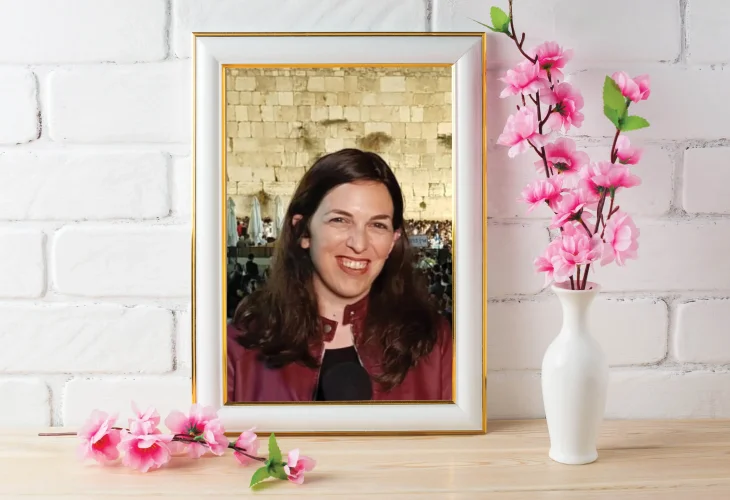 Image of Racheli Hadad
For twenty-two years, Racheli Hadad has had the privilege of arriving at the Western Wall every single day. She isn’t part of the group of regular worshippers from across Jerusalem who pray there daily; she comes because of her role as Director of Education at the Western Wall Heritage Foundation.
“I have the privilege of working at the Western Wall,” she says simply. “In the royal courtyard of the Master of the Universe.”
A Place That Never Stops Moving People
Racheli’s role takes her to the Wall day and night, in heat and in cold, throughout the entire year. And yet, she says, the sense of awe never fades.
“Think about it,” she explains. “The Western Wall plaza welcomes millions of visitors each year — people from every corner of Jewish and Israeli society. They come to pray, to mark the end of military reserve service, to tour the Western Wall tunnels, or sometimes simply to feel something. Often, they can’t even put into words why they’re here — just a desire to belong, to sense their connection to the chain of generations that has revolved around Jerusalem for thousands of years.”
Since the outbreak of the war, she says, the encounters at the Wall have gone beyond anything previously imaginable.
“I see soldiers coming straight from the battlefield in Gaza to say a prayer of thanksgiving; families of hostages doing everything they can to bring their loved ones home; wounded soldiers and their relatives; and, heartbreakingly, so many new bereaved families searching for comfort and hope in the place where the words ‘The Eternal One of Israel will not lie’ seem to echo from between the stones.”
“Just to Say Thank You”
Racheli guided one of the most moving tours of her career, when she accompanied Agam Berger and her mother to the Wall to offer a prayer of gratitude following Agam’s return from Hamas captivity.
“The meeting itself was incredibly emotional,” she recalls, “but the peak came when we stood opposite the site of the Holy of Holies. Agam and her mother, Merav, took out a page listing the names of all the hostages still held in Gaza. One by one, they read each name aloud, together with the hostage’s mother, praying from the depths of their hearts.”
Nearby, a group of visitors from different parts of the country had gathered for a tour of the Western Wall tunnels. When the prayer ended, everyone spontaneously joined in singing ‘Acheinu Kol Beit Yisrael’—Our brothers, the entire House of Israel.
“These were moments of pure prayer,” Racheli says. “People praying with all their hearts for brothers and sisters they had never met.”
When Strangers Become Family
She recalls another scene at the very same spot, just two weeks earlier. A group of friends from northern Israel — most of whom do not identify as religious, had reunited for the first time in years and joined her tour.
“While I was explaining the site,” she says, “we noticed a Chassidic man standing nearby with his daughter, who looked about bat mitzvah age. Beside him was his wife, holding newborn twins — one baby in each arm.”
The group couldn’t help but congratulate them. The father, his voice shaking with emotion, replied: “After years of waiting and praying, we came here simply to say thank you.”
The reaction was immediate and powerful. The entire group showered the family with blessings. The men embraced the father; the women rejoiced with the proud mother holding her treasures.
“Watching from the side,” Racheli says, “I suddenly understood the verse ‘Jerusalem, built as a city that is joined together.’ This is a city that turns all of Israel into one.”
From Tunnels of Darkness to Tunnels of Light
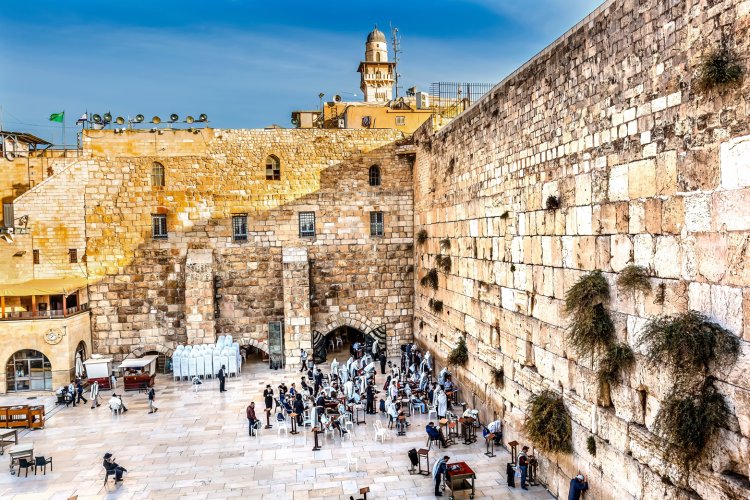
As Director of Education, Racheli guides multiple groups every day. “Beyond being a place of prayer,” she explains, “the Western Wall is also home to extraordinary historical sites — chief among them the Western Wall tunnels.”
Today, visitors can choose between two routes: The Great Stone Route and The Great Bridge Route. Both reveal the Wall’s full length and breadth.
“On the plaza, we see only 57 meters,” she notes. “But the Wall actually stretches 447 meters in total.”
The tunnels also contain striking archaeological remains that bring the story of destruction vividly to life — such as a massive stone from the Second Temple period, once weighing 570 tons.
“It’s displayed there — majestic and awe-inspiring, yet incomplete. During the destruction, the Romans shattered it. What people once thought was indestructible was destroyed. It’s a powerful reminder that baseless hatred can shatter even stones of unimaginable strength.”
The Three Weeks and Tisha B’Av
This time of year is particularly intense. Visitor numbers peak dramatically.
“The surge begins already on the Fast of the 17th of Tammuz,” Racheli explains. “It’s always brutally hot, but people come day and night. Throughout the Three Weeks, the flow grows, and the climax is on Tisha B’Av.”
Despite the heat and the fast, the plaza remains full around the clock. In recent years, something remarkable happens as the fast draws to a close: spontaneous circles of singing.
“On the last Tisha B’Av, it was chilling to hear thousands singing ‘Acheinu Kol Beit Yisrael’, followed by heartfelt prayers for the hostages in Gaza.”
She also highlights the quiet heroes of these days: people who bring food and drinks for those breaking the fast, and the Foundation’s volunteers who spend an entire week preparing personal fast-breaking packages for everyone who comes.
A Story That Closes the Circle
“I guided Sasha Trupanov and Sapir Cohen, who were both freed from captivity. Sapir was released on the 55th day of the war; Sasha after a year and five months. Just two and a half weeks after his release, Sasha came to tour the Western Wall tunnels.”
She admits she was nervous.
“I kept thinking — how can I take someone who spent months in Hamas tunnels into tunnels, even if they’re completely different?”
Her fears proved unfounded.
“Sasha didn’t skip a single passage or chamber. When I finally asked how he could do it, he answered: ‘This is my repair — from Hamas tunnels to the Western Wall tunnels, from tunnels of darkness to tunnels of light.’”
One moment stood out in particular: walking together on the remains of an ancient street built in Jerusalem by Hadrian after the destruction of the Second Temple.
“Hadrian tried to turn Jerusalem into a Roman city, believing he had solved the ‘Jewish problem.’ Walking there with Sasha and Sapir, I physically felt the verse ‘When God returned the captives of Zion, we were like dreamers.’ We are back home, in the Land of Israel, together with our brothers who were held captive. The dream is becoming reality.”


