
Magazine
The Hidden Jewish Story of Indonesia: Faith, Conversion, and an Unlikely Religious Alliance
How Jews survived, assimilated, and returned to Judaism in the world’s largest Muslim nation
- Chaim Gefen
- |Updated
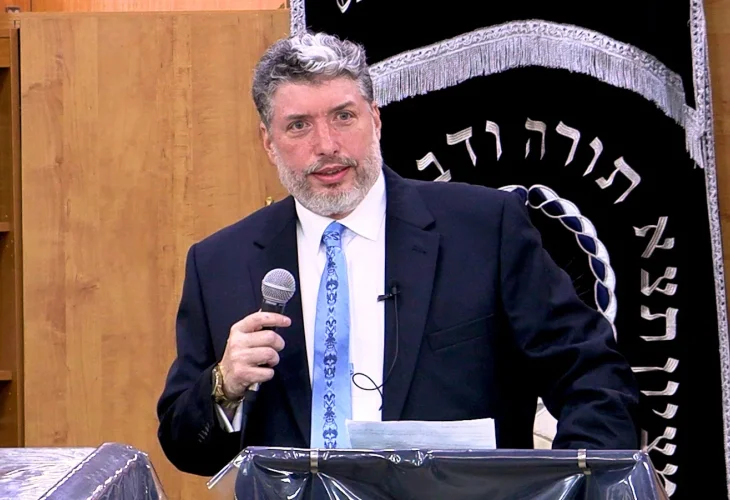 Rabbi Tovia Singer
If you ever happen to visit Indonesia, you may encounter a deeply unsettling phenomenon: newsstands openly selling antisemitic and anti-Israeli propaganda, including incendiary sermons by local clerics. As if that weren’t enough, some bookstores even carry The Protocols of the Elders of Zion translated into Indonesian.
And yet — paradoxically, within this environment, a quiet and unexpected Jewish story has been unfolding.
A Return to Judaism in the World’s Largest Muslim Country
Indonesia, the largest Muslim-majority country in the world, is home to only a handful of Jews. Most live in the capital city, Jakarta, centered around the community synagogue, Torat Chaim.
Until five years ago, the community’s rabbi — and officially recognized chief rabbi by the state, was Rabbi Tovia Singer. His assessment surprises many: “Despite Indonesia being a Muslim country, the main threat to Jews there actually comes from Christianity.”
Singer arrived in Indonesia as part of his lifelong, unofficial mission to combat Christian missionary activity targeting Jews around the world. Through lectures that have garnered millions of online views, he publicly debates Christian theology and challenges its core claims.
“As a child, I saw Jews converting to Christianity and trying to convert other Jews. It deeply disturbed me,” he recalls. “Later, I met a Jew in Israel who had joined the ‘Messianic Jews’ movement. He was the first who truly listened — and returned to Judaism. Since then, I’ve devoted my life to helping Jews come back, and to preventing others from falling into that trap in the first place.”
Why Indonesia?
Born in the United States and now an Israeli citizen, Rabbi Singer has traveled extensively to regions with active missionary movements — across the Americas and throughout East Asia. When he learned that missionaries were operating in Indonesia, he decided to go.
Were you afraid to go?
“Strangely enough, Indonesia is one of the only countries I’ve visited where I didn’t experience antisemitism at all. On the contrary — I was treated with great respect,” he says.
“Indonesia has around 30 million Christians actively trying to convert Muslims. Nearly every Muslim I met was genuinely grateful that I was exposing what they see as deep flaws in Christian theology. They viewed me as an ally in their own struggle. I could walk around openly with Jewish symbols, sit anywhere, and it was never dangerous. Many Indonesians recognized me and greeted me warmly.”
A Religious Battleground
Rabbi Singer based most of his activity in Jakarta. With the help of senior government officials, he established a spiritual center for prayer and lectures and gathered a community around him.
“Even though I built a Jewish community — including many Bnei Noach, most of my audiences were Muslim and Christian. Muslims attended prayers, and astonishingly, so did Christians. Many are still in touch with me today.”
The synagogue itself made a strong impression. “For them, the very existence of a synagogue was fascinating. It was strange — but precisely because of that, deeply intriguing.”
What was your real goal?
“I didn’t come to Indonesia to build a community. That was never the goal. I had one purpose only: to help local Jews who had converted to Christianity return to Judaism.”
His work followed the same model he used worldwide — lecturing, teaching, and explaining why Judaism does not accept Jesus as a messianic figure. “Over the decades, many Jews in Indonesia became Christians. This began after Indonesia gained independence and officially recognized only Islam, Christianity, Hinduism, and Buddhism. Judaism wasn’t recognized.”
Was there persecution?
“No. Jews weren’t forbidden from practicing Judaism. The problem was bureaucratic but devastating: national ID cards required citizens to list their religion — and Judaism wasn’t an option. Their children were then sent to public schools according to the listed religion, often Christianity. Over generations, many Jews became Christians, even though they knew privately that they were of Jewish descent.”
A Jewish Light in the Far East
Indonesia has no formal diplomatic relations with Israel. Its fourth president, Abdurrahman Wahid, was the first to acknowledge Israel, though he criticized its Palestinian policy. The current president, Prabowo Subianto, declared about a year ago his willingness to advance a resolution to the Israeli-Palestinian conflict.
Despite public hostility toward Israel, Rabbi Singer describes strong governmental backing. “The Indonesian government supported me enormously. They even officially appointed me as the country’s chief rabbi. I felt they were genuinely proud to have a rabbi in Indonesia.”
How does that explain the antisemitism?
“Much of the antisemitism stems from ignorance. Because Judaism wasn’t officially recognized, most Indonesians had no idea who Jews really are. I met with government officials regularly, and the person who helped establish the community with me was himself a government figure. This is a country of over 200 million Muslims, most of whom are deeply opposed to Christian missionary activity. They were glad I came to fight that.”
Antisemitism — or Something Else?
When asked about hostile incidents, Rabbi Singer smiles. “I understand why people assume the world’s largest Muslim country would be antisemitic. But Indonesia simply isn’t. The only real challenge I faced was obtaining kosher meat. I had to import it from neighboring countries.”
Often, while lecturing in places like Singapore, he would return with a suitcase packed full of frozen kosher meat and poultry.
Were there any scary moments?
“Earthquakes. They happen frequently and eventually become routine. And the heat — it was relentless.”
Five Years That Changed Lives
Rabbi Singer lived in Indonesia for five years. During that time, he helped numerous Jews — some already converted, others on the verge, return to Judaism.
“Many community members have since made aliyah to Israel. Just last week, two more arrived,” he says. “Because of uncertainty about lineage, they underwent conversion out of stringency. To this day, I stay in close contact with the Jakarta community, guiding and supporting them on their path back to Judaism.”
The ‘Rabbi Muhammad’ Controversy
On the margins of Indonesia’s Jewish story is the town of Tondano, home to a group that identifies as a Jewish community. It maintains a small but ornate synagogue called Sha’ar HaShamayim (“Gate of Heaven”), in front of which stands a 12-meter-tall menorah — the tallest in the world.
The man known as the community’s rabbi is Yaakov Baruch, an Indonesian of Dutch-Jewish descent whose ancestors assimilated. He acquired rabbinic clothing in the U.S. and is reportedly the only person who openly walks around Indonesia in Orthodox rabbinic dress.
A rabbi from a neighboring country, speaking anonymously, is blunt: “Yaakov Baruch is not Jewish. He’s a gangster. He’s damaging the Jewish image in the eyes of the Indonesian government.”
Why not confront him?
“It would be a pointless war. I believe he would do anything to retaliate. And most of his community members are likely not Jewish under halacha. They may descend from Jewish families, but the vast majority assimilated generations ago.”
A Complex Reality
Indonesia’s Jewish story defies easy labels. It is a place where antisemitic texts circulate freely — yet a rabbi can be officially appointed by the state. A country without ties to Israel, yet one that, behind the scenes, allowed Jewish life to re-emerge quietly.
It is a reminder that religious identity, politics, and human relationships are rarely as simple as headlines suggest.


