
Magazine
Shabbos Kestenbaum’s Harvard Battle: Defending Israel Amid Campus Hate
Flags, faith, and fierce advocacy: the Orthodox student leader confronting anti-Israel encampments, threats, and institutional failures at Harvard
- Chaya Mendelcorn
- |Updated
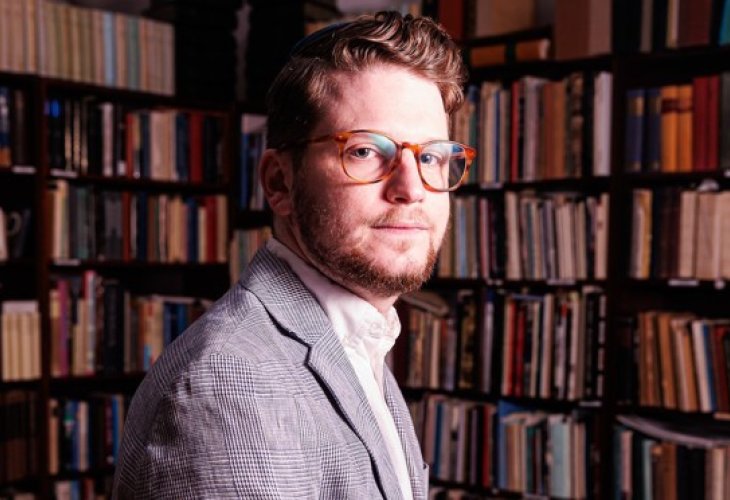 Shabbat Kastenbaum, at home
On the final night of the spring semester on Harvard University’s campus — between Holocaust Remembrance Day and Israel’s Memorial Day, there was a powerful display of “light versus darkness,” as an anonymous Israeli captured on camera. Opposite signs bearing antisemitic and anti-Israel slogans calling for the destruction of Israel and the Jewish people, and beside Hamas flags — lying for now near the “protest” tents, which have meanwhile been emptied of their violent occupants, a number of Jewish students gathered near the entrance gate to the campus. In rare moments of quiet, the students stood holding Israeli and American flags with pride and emotion, and read aloud — standing, with reverence and steady determination, the names of roughly 1,200 victims of the Simchat Torah massacre, the most horrific slaughter the Jewish people have experienced since the Holocaust.
At the same time, in the background, the theme from Steven Spielberg’s Holocaust film Schindler’s List played — music rising from the violin of Itzhak Perlman, expressing the pain and suffering of the Jewish people. In those moments, beyond the university gate, an Israeli woman passed by; when she heard the students honoring the names of the holy souls who were murdered with extreme brutality, she said to them admiringly, “Thank you — you’re amazing!” The Jewish students thanked her in return and continued reading the names.
Deep Roots
One of the Jewish students who read that evening at Harvard’s gates the names of the holy souls and the hostages is Shabbos Kestenbaum (born and raised in Riverdale, New York). Kestenbaum, who was then studying toward a master’s degree, is one of the most prominent Jewish student leaders in the United States, fighting with all his heart for Israel and with all his strength against the severe antisemitism on campuses. Shabbos is an Orthodox Jew with a large kippah on his head — “which has grown even bigger since the outbreak of the Iron Swords war in Israel,” he emphasizes with a smile in one of the many interviews he has given across the U.S. Pleasant, broad-minded, and highly articulate, with “fire in his eyes,” he defines himself as “a proud Jew, and also a proud American — because my two identities do not contradict one another.”
Kestenbaum, one of seven siblings, is a second-generation Jewish-American citizen. His parents — Orthodox Jews, with his father also close to Chabad Chassidut, immigrated in their youth from England to the United States. His father built a business auctioning rare and ancient Jewish books, and his mother has worked for years in early childhood education. “In an environment and atmosphere like that, it’s natural that my siblings and I would absorb from our beloved parents the love of Torah, the Jewish people, the Land of Israel and the State of Israel — and the history of our nation. Our parents always taught us to be Jews who believe in God, and to be very proud of our Jewish identity. The contents of centuries-old books that sat on our shelves — about Jewish thought, Jewish history, and Chassidut — together with the Chumash, Tanach, and other sacred books, fascinated us and opened all our hearts. Our parents, and their love for everything Jewish, are my strong roots — together with my siblings, for our Jewish pride.”
Even before he began his studies at Harvard toward a master’s degree in theology — focusing on research into the intersection between public policy within the state and contemporary Jewish communal life, Kestenbaum did not stand aside Jewishly. Among other things, he was a participant and counselor for Jewish teens in NCSY (the Orthodox/Religious Jewish youth movement in the U.S.), and he traveled many times to Israel with groups of teens to deepen their Jewish identity, connect them profoundly to their Jewish homeland, and encourage them to study at least one year in Israel before entering institutions of higher education in the U.S.
After high school, Shabbos himself learned for two years at Aish HaTorah in Jerusalem, experiencing beloved Israel — “in my heart, in my hands, and on the soles of my feet.” In addition, he travels often to the renewing Jewish communities in Poland, especially Kraków, to help them deepen their Jewish identity and assist them in every possible way. Recently, he took part in a bicycle journey between the Auschwitz-Birkenau death-camp site and the Jewish community center in Kraków, in order to raise funds for developing the city’s Jewish community. In the U.S., he organizes and actively participates in large and important pro-Israel and anti-antisemitism rallies, delivering fiery speeches. He also gave stirring Jewish testimony before the U.S. Congress’s Committee on Education and the Workforce, about the urgent duty to stop the rampant and dangerous antisemitism on Harvard’s campus — together with other Jewish students from universities across the U.S. who also delivered important testimony. Kestenbaum sees it as a mission to strengthen Israel and the Jewish people in the U.S. and around the world.
Shabbos, what do you remember, and where were you on the Shabbat when the horrific massacre occurred and the war began?
“I was at the Chabad synagogue on Harvard’s campus. As the horrifying news began reaching us about the mass, cruel murders and slaughter carried out by Hamas terrorists against men, women, and children in Israel, I felt fear and worry beyond anything I can describe. Beyond concern for all Israelis — civilians and soldiers, who are our brothers and sisters in heart and soul, I tried to reach by phone my brother, a Golani reserve soldier who is still serving now, married with a small child, living in Kiryat Gat; my sisters in Jerusalem and Tel Aviv; my grandfather and grandmother in Or Akiva; and my aunt and cousins in Caesarea — first and foremost, to hear that they were alive. Many Jewish students at Harvard did the same that day, in fear and tears. On the other hand, as the first terrible reports came in, our rabbi encouraged us and told us that specifically now there is a great mitzvah of ‘And you shall rejoice on your festival.’”
At the same time, before the stunned eyes of the worried and grieving Jewish students, Kestenbaum describes how they saw their fellow students — along with members of the academic faculty at Harvard — some of whom even came out in pajamas onto the lawns, rushing outside at speed with Hamas flags in their hands, shouting with terrible cries and anger in their eyes. Already then, they began demonstrating en masse against Israel’s basic right to defend itself against Hamas’s Nazi-like murderousness and Gaza, and against the very existence of the Jewish state. They even blamed Israel as solely responsible for the fact that many Israelis including soldiers, elderly people, women, and children, were murdered and kidnapped in the terrorists’ savage attacks.
Since the beginning of the war, therefore, at Harvard and at many other universities across the U.S., Canada, and Europe that joined the wave of antisemitic madness, Jewish students have been persecuted simply for their Jewish identity: people surround them on campuses and shout harsh curses and false accusations; they beat them with sticks and fists; spit on them; tear mezuzot from the doors of their dorm rooms; prevent them from studying and even from walking on campus safely and freely; and threaten their lives. In addition, not only do faculty members fail to lift a finger to protect Jewish students, but some join the many antisemitic students themselves and encourage them to demonstrate violently in favor of Israel’s destruction and in favor of killing the Jewish people — both in classrooms and through social media, in articles encouraging the killing of Jews and in vile antisemitic cartoons.
In the face of this horrific reality — while Israel’s heroic soldiers fight with self-sacrifice for the existence of Israel and the Jewish people, and Jews around the world are persecuted for their very Jewishness on campuses and in the streets — how do you, together with many Jewish students, cope and fight?
“In the shadow of the terrible verbal and physical attacks against us on campus, we began — all Jewish students together, to strengthen ourselves, not to be afraid, and to stand firm against Hamas supporters on campus. Instead of fleeing from our attackers, we held Israeli flags proudly, and we came as proud Jews to their ‘protest’ tents and demonstrations. We ‘closed distance,’ as they say in Israel, with the enemies trying to push us out; we argued with them about their terrorist and pro-Nazi ideas — both outside and through hate-soaked social media. We showed how much we identify with Israel and love our homeland and our wonderful people, and how utterly just the war Israel is waging is.”
“At Harvard and on many other U.S. campuses, we organized non-violent demonstrations where we showed the entire world how much we love and value our heroic brothers and sisters in Israel. Unlike the wild demonstrations filled with crude incitement that call for our destruction, in our demonstrations people speak intelligently, filled with uplifted spirit, Jewish pride, and love; we sing songs and pray together to God for the protection of all our brave soldiers and their victory over the cruel enemy, and for the release of all our hostages from Hamas. We hang up, everywhere, the photos of all our hostages, despite the fact that the many pro-terror demonstrators always rip them down. In this way, thank God, our fear diminished and our Jewish courage increased. At one demonstration where I spoke, I said that ‘Between the river and the sea my brothers and sisters truly live, and all of us — Jews and Israelis, are not going anywhere!’”
Shabbos notes that he visited Israel already in the first week after the war broke out: “Sadly, during that visit I helped dig graves at quite a few funerals of our heroic soldiers, may God avenge their blood. But I also played guitar in hospitals, drove packages of personal equipment I brought with me from the U.S. to IDF bases, and tried to help in every way I could. In January, I returned to Israel for my sister’s wedding, and there I went over, in front of everyone, the security and safety procedures we would need to follow if, God forbid, there were a missile alert in the middle of the wedding. In March, I returned again to Israel with a group of non-religious Jewish high-school students, to interest them in programs for a year of study in yeshivot and midrashot. It’s not only that we love Israel — Israel is our heart and soul.”
Your courage and Jewish pride strengthen us in Israel and make us very proud of you — and of all of us together. Together with you, we pray to God that we succeed in defeating all our enemies. Yet sadly, antisemitism has not subsided at Harvard. What have you experienced personally, as an active Jewish student fighting antisemitism on campus?
“First of all, I define the horrific antisemitism at Harvard as part of a national emergency — no less. On the first day of Passover, the wild antisemitic mob set up anti-Jewish, anti-Israel, and pro-Hamas encampments across campus. The many demonstrators screamed at us that ‘Palestine will be Arab,’ and violently chased Jews on their way to classes. They followed us and threatened to harm us.
“The encampments lasted three weeks. What is most severe is that university leadership surrendered to the antisemitic demands of terror supporters and allowed the terror flag to fly on campus undisturbed. We, the Jewish students, tried to meet with administrators and the president so they would seriously curb the terror against us — but to no avail: either they didn’t take us seriously and only told us ‘it will be okay,’ or they ignored us completely.”
“At Harvard, not only do they fail to curb and punish antisemitic terror — they do the opposite: they reward the antisemites. The administration surrendered to all their demands: they agreed to establish a ‘Palestine Studies’ program; agreed to economically harm Israel; and beyond all that, leadership did not lift a finger to stop antisemitism on campus or punish dangerous antisemites, and they also do not condemn antisemitism at all.
“Despite all this, we continue, thank God, to fight the pro-Hamas antisemites in every way. For example: we placed 1,200 Israeli and American flags in memory of all the Jews murdered on Simchat Torah. For that, I was arrested by the police — who are supposed to protect persecuted Jews, and all the flags were uprooted. Meanwhile, the antisemites — who destroy things, who shout ‘death to Jews’ and call for the violent destruction of the State of Israel, even though such speech and actions violate the institution’s own code of conduct — are not arrested, or are released immediately after being detained.
“On a personal level, a horrific threat was directed at me: a staff member at Harvard sent me a video in which he threatens me with a sharp knife and explicitly demands that I hold a public debate with him about his insane claims — insisting that Israel was behind the 9/11 terrorist attack on the Twin Towers. Another professor wrote on social media that ‘Zionists cannot work in public health.’ Lecturers encourage their students to participate in violent demonstrations against Israel. Even the master’s graduation ceremony on Harvard’s lawns, where I also received my diploma, was disastrous: professors who came up to speak delivered blatantly antisemitic hints from the podium, without saying a word about the horrific massacre Hamas committed against us. In addition, many students came to the ceremony wearing keffiyehs and screamed wildly against Israel and the Jewish people. At a certain point, thousands of faculty members and students stood up and left the ceremony in protest.”
It’s a miracle you managed to finish the degree.
“Very much so. Even before receiving the degree, in this toxic atmosphere I could barely study: masses of students blocked my way while shouting ‘globalize the intifada’ at me. They continue to follow me and record me simply because I fight for Israel and demand the civil rights of Jews. On the other hand, I’m proud to say that we, the Jewish students, fight for a minyan every day. We stand firm against the antisemitic rioters with Jewish pride, without fear, and with great love for Israel and the Jewish people.”
Moral Bankruptcy
“In short,” Kestenbaum continues, “as I said in one hearing in which I participated in Congress on the fight against antisemitism at universities: I have never experienced hatred so harsh and extreme against an ethnic minority group as what is revealed in all its ugliness in the way Harvard treats Jews. But as I stressed, are not afraid of them. Beyond our determined counter-demonstrations against terror on campuses, beyond our public-diplomacy work for Israel and against antisemitism, and beyond my testimony and the testimony of Jewish student leaders across the U.S. before the Education and the Workforce Committee in Congress — together with our demand to curb antisemites through legal and statutory means, we decided, already after the war broke out, I and five other Jewish students at Harvard, to file a dramatic lawsuit against the university administration.”
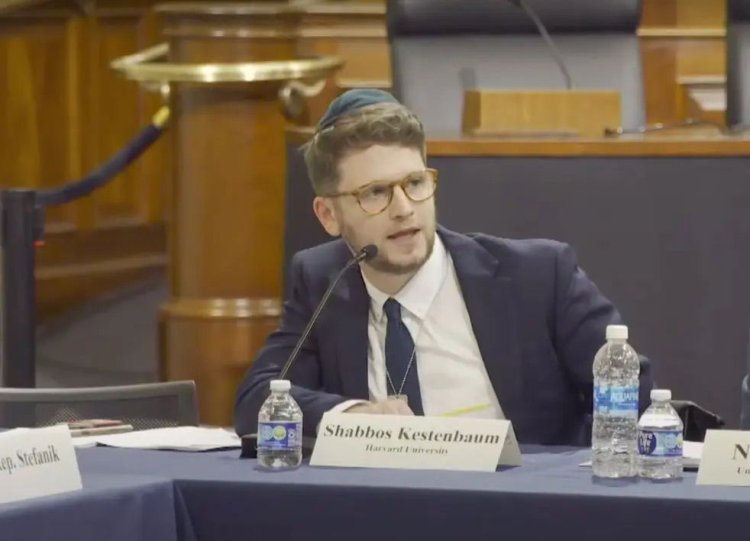 Kastenbaum testifying before Congress' Education and Labor Committee
Kestenbaum testifying before the Education Committee in Congress
What made you dare to take such a brave and challenging step? What was the last straw for you?
“First of all, it’s important to emphasize: I didn’t want to do it. When I started studying at Harvard, I simply wanted to learn quietly and safely. But the reality is that we must sue them because there is systemic, escalating, and rampant antisemitism there — coming to us directly from the top of the university. After the horrific massacre and the beginning of the war in Israel, we, as active Jewish students, tried many times to communicate with Harvard leadership to push them toward a serious effort to curb the dangerous antisemitism on campus — but they didn’t listen and ignored all our just demands.
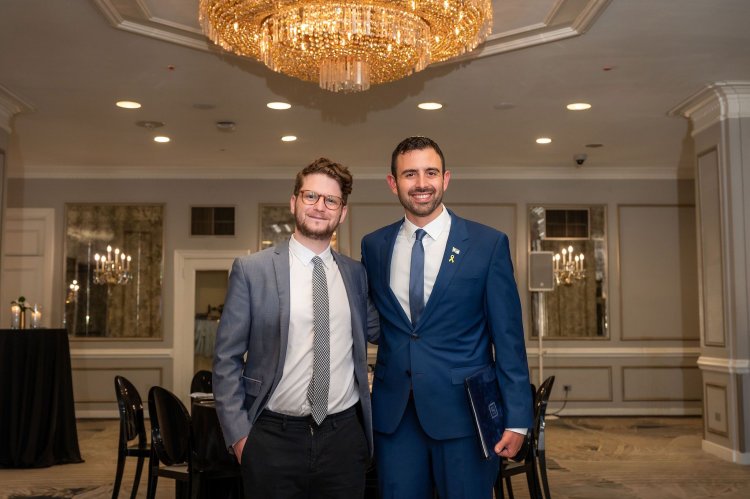 קסטנבאום עם אילון לוי, לשעבר דובר במערך ההסברה הלאומי של ישראל, בדינר של ה-UJA בטורונטו, קנדה
Kestenbaum with Eylon Levy, former spokesperson in Israel’s National Public Diplomacy Directorate, at a UJA dinner in Toronto, Canada
“The last straw for us was the horrific appearance of Harvard’s then-president, Claudine Gay, when she was called to testify before the Congress Committee on Education and the Workforce, to answer whether, if at all, her university was fighting unchecked antisemitism on campus. When Congresswoman Elise Stefanik, a pro-Israel representative from New York, asked her whether calls for the murder of the Jewish people and the destruction of their state — expressed, for example, in the phrase ‘the only solution — globalize the intifada,’ violate Harvard’s basic code of conduct, which speaks of protecting human rights and also the Jewish people’s right to exist, Gay — like the presidents of MIT and the University of Pennsylvania who sat beside her, answered that it depends on the ‘context’ in which the words against Jews were shouted, in order to determine whether such antisemitic calls indeed violate that code of conduct. Anyone who watched the presidents’ answers live from Congress understood that it is permitted to call for the murder of the Jewish people on campuses — and was even encouraged to do so. According to their disgraceful answers, not only is violent campus antisemitism allowed, it became officially acceptable and desirable. The words of Gay and her two colleagues constituted one of the greatest moral bankruptcies in history. In that moment, we saw clearly that Harvard’s hatred of Jews comes from the top. In light of that, we had no choice but to sue the university, in order to fight for every Jew persecuted simply for being Jewish.”
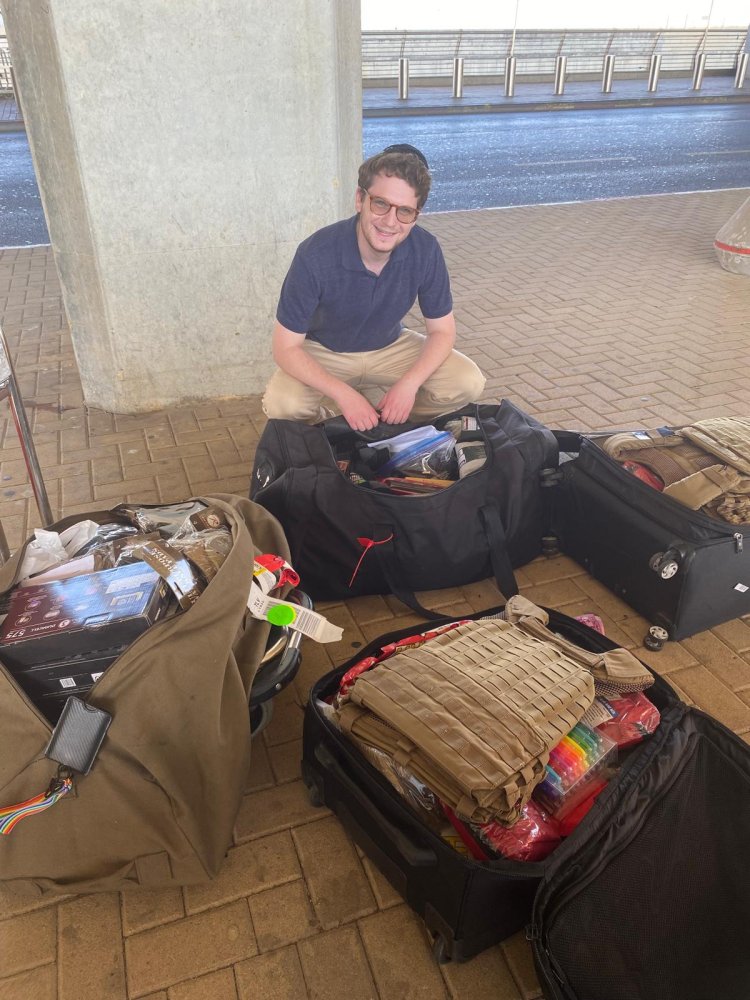 Kastenbaum after landing in Israel with supplies for soldiers, a week after the war began
Kestenbaum after landing in Israel, with personal equipment for soldiers, one week after the war began
In legal terms, how did you define your lawsuit against Harvard?
“Our lawsuit is complex, but it is built mainly on two central claims. The first is ‘blatant and severe violations of the Civil Rights Act, Title VI, from 1964,’ which establishes that it is illegal to discriminate against, harm, or threaten any person because of their race, ethnic identity, nationality, religion, or gender in their place of study and work, and anywhere. Since the horrific massacre and the outbreak of the war, Harvard University has clearly and blatantly harmed the most basic human rights of Jewish students and even encouraged the antisemitic mob to threaten their lives.
“The second claim is defined as a ‘serious breach of contract’ with us, the Jewish students: we pay tuition with our hard-earned money to study quietly, peacefully, and safely at Harvard — and at any higher-education institution we choose. But what did we receive? Instead of meeting that basic requirement, the university leadership encourages the wild antisemitic attacks against us and does not protect us at all. The result is that we paid tuition without receiving any positive return. Documented evidence of the horrific situation Jews face at Harvard is recorded on every page of the 77 pages of our complaint.”
 Kastenbaum with foreign high school students near the Western Wall
Kestenbaum with high-school students from abroad, near the Kotel
What do you want to achieve, practically, when you win in court, with God’s help?
“First of all, we want Harvard to pay dearly for the persecution of Jews on their campus, and we are seeking significant damages for all the suffering they caused us. Broadly, we want to make them pay for the harm they have done to the Jewish people and the State of Israel. We also want to force them to protect the Jews studying there so they can live and learn peacefully, and so that antisemitic threats are not allowed on campus.”
How did Harvard’s administration respond to your lawsuit against them?
“They are trying with all their might to get the court to dismiss our claim outright — what’s called ‘dismiss with prejudice.’ That is, to cancel our just lawsuit in a way that the court would never hear it at all, ever. They argue that ‘of course we support giving freedom, dignity, civil rights, and security to our Jewish students’ — but as we all know, words are one thing and actions are another: they have done, and continue to do, the exact opposite and harm us in everything. Their words are empty, and for that, with God’s help, they will pay dearly, and hopefully learn well not to harm the Jewish people. We also believe and are confident that we have an excellent chance to win the lawsuit. We look forward with great anticipation, with God’s help, to a just trial.
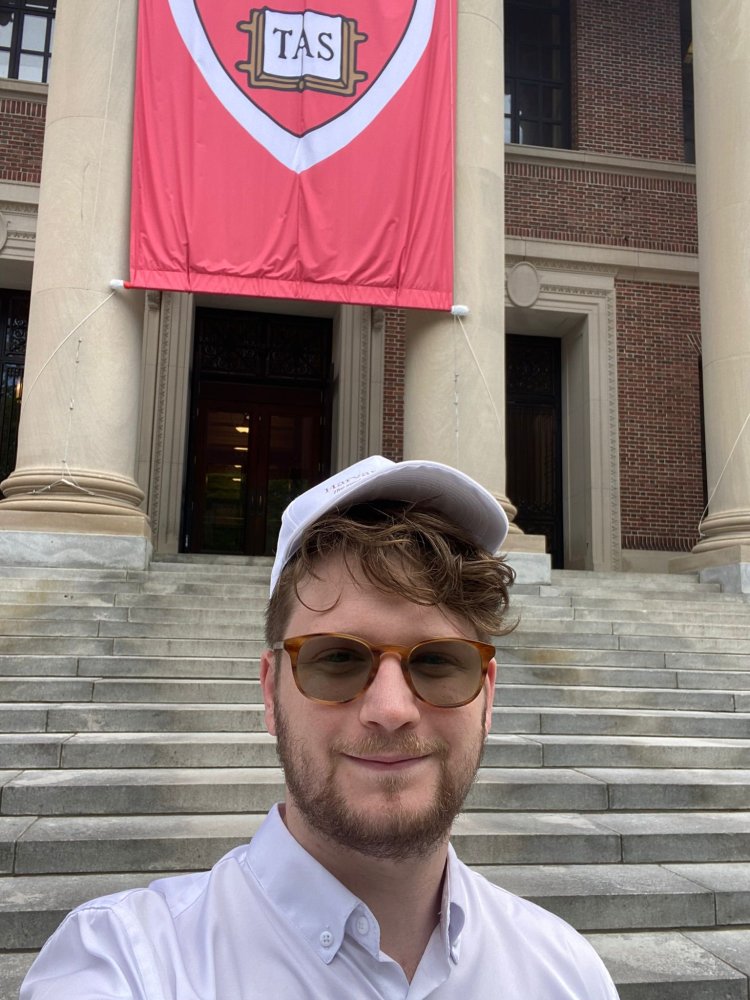 Kastenbaum outside Widener Library at Harvard
Kestenbaum outside Widener Library at Harvard
Great success to you, and to all of us. To close, a different question: in a reality like this, on the Jewish-positive side, and in a broad view of everything Jewish students around the world have gone through since the war began, do you see a great Jewish awakening among young Jews in the U.S., Canada, and the Western world?
“Definitely. We are very proud to be Jews and to celebrate in the streets our love and deep commitment to the Jewish people, the Land of Israel, and our holy Torah. Now I sound like a Bnei Akiva counselor… but I believe it with all my heart. We also deeply appreciate the support and love we receive from Jewish communities across the U.S., and from our beloved Jewish state. In Chabad Houses, for example, you can see that Jewish participation in prayers and shared Jewish activities on Shabbat and holidays is breaking all records — while many Jews also say Tehillim there and pray for the protection of our heroic soldiers, for Israel’s victory over all our enemies, and for the swift return home of all our precious hostages.
“Our beloved, heroic soldiers are fighting on all fronts for all of us, in Israel. Together with them — in heart and soul, and still in the diaspora for now, we too are fighting against very severe antisemitism and for Jewish pride and identity in Jewish communities around the world. It may look like two different battles, two different campaigns — but it is the same war of all of us together, for the sake of the entire beloved Jewish people. With God’s help, together we will win: Am Yisrael Chai!”


