
Magazine
Against All Odds: The Extraordinary Journey of Motherhood Later in Life
A powerful story of hope, belief, and unexpected blessings
- Hidabroot
- |Updated
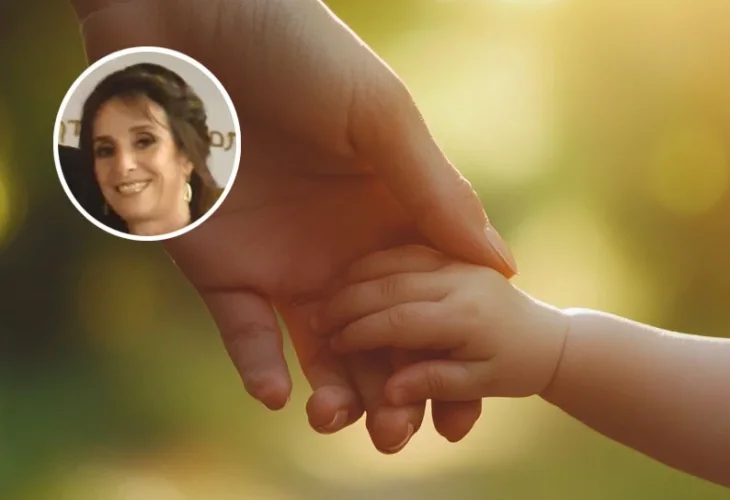 (Inset: Deborah Shira Azulai)
When Devorah Shira Azulai recently celebrated her 59th birthday, she was surrounded by her young children — Chaya Mushka, a year and a half old; Menachem Mendel, seven and a half; and Nehorai, who recently celebrated his bar mitzvah.
Yes, you read that correctly — these are not Devorah Shira’s grandchildren, but her three children, born miraculously at ages when most women would not even imagine expanding their families. “These are gifts that the Creator of the world gave me,” she says simply, “and I can never stop thanking Him.”
A journey of searching
Devorah Shira’s life journey is fascinating, and its upheavals began long before the children were born. “I am a Chabad Chassid, a ba’alat teshuvah. Until the age of forty I lived in the secular world, far from Torah and mitzvot,” she recounts. “At 24 I married for the first time, and I had two children — a daughter and a son. At 32 I was hit with the blow of divorce, and I continued raising my children on my own.”
She describes herself as a woman of strong initiative and action, but during those years she came to realize just how difficult it is to raise children without a life partner. Although she began searching fairly quickly for another match, it did not come easily.
“For ten years I raised my children alone,” she says. “I tried to give them everything so they wouldn’t miss out on anything, and at the same time I kept searching for my match. I went out with dozens upon dozens of men, but nothing ever reached the finish line.”
Then came her growing closeness to Rabbi Yoram Abergel of blessed memory in Netivot. “That was about three years before I met my current husband,” she notes. “Through my brother I merited to meet the rabbi and also his son and successor, Rabbi Chaim Abergel. I was going through a very difficult crisis at the time, and the rabbi blessed and encouraged me. From then on I kept in touch with him and would occasionally consult him on important matters.
“At the same time, I grew closer to Chabad. As a resident of the Neve Sha’anan neighborhood in Haifa, I connected with Chabad emissaries and participated in classes and activities. One day I shared my difficulty and deep longing for a match with the emissaries, and they suggested: ‘Why don’t you write to the Rebbe through the Igrot Kodesh (letters of the Rebbe)?’ After so many years of trying so many things, I didn’t mind trying this as well. As some have the custom, after writing the question, you open the Rebbe’s letters and receive an answer.
“The Rebbe’s response surprised me greatly. While my question was ‘When will I get married again?’ the answer I received was that one should ‘observe Shabbat.’ At first it was clear to me that there was no chance I could do that. I had two teenage children who went out on Shabbat, and I was functioning as both mother and father. How could I impose such a thing on them? But on second thought, I decided in my heart that maybe it wasn’t right for me at that moment, but that I wanted to reach that place in the future. At that stage I didn’t yet know how, but something inside me had already awakened.”
Drawing closer and meriting
Devorah Shira finds it hard to count all the meetings and dates she had in her search for marriage. “I met many men, from all backgrounds and styles — some with difficult personalities and complex life stories, but I never dismissed anyone outright. I always tried to check,” she says. “At a certain point, after ten years of searching, I happened to meet an interesting man through a completely secular dating site. Before our first meeting, I remember praying to God: ‘Please send me a good person, and if not — enough with the trials. I give up, because I’ve reached my limit.’”
From the very first dates, she told her future husband that she was very close to Chabad and wanted him to respect that. She also said she wanted more children, and it didn’t deter him at all. They continued seeing each other for a year, until they eventually announced their engagement.
When Devorah Shira married for the second time, she was 43. It was shortly after her father passed away, and she decided to begin covering her hair. “I did it for the elevation of my father’s soul, to give him spiritual pleasure, but in the end it also connected me to God,” she explains. “I began observing family purity, and later my resolve to observe Shabbat grew stronger.”
How did you manage to keep Shabbat in a non-religious home?
“My children were already relatively grown and needed me less. My husband was still distant from observance, but he didn’t mind. I tried to keep all my positive commitments between myself and God. I didn’t demand anything from my children or my husband — I didn’t remove the television from the house at first and didn’t force them to join me for Shabbat meals. I think that precisely because of this, the children also found their own connection in their own way — my son asked to study at a religious yeshiva in Yavne, and my daughter asked, at age sixteen, to observe Shabbat. My husband also began showing interest and drawing closer to Judaism, not through Chabad but in his own way.”
Then came the great surprise. Exactly nine months after her wedding, Devorah Shira discovered she was pregnant. “I was forty-five, and the pregnancy happened completely naturally. My gynecologist was stunned, because when I had visited her a few months earlier she told me that at my age this wouldn’t happen on its own and that I would need treatments. I planned to do that — but before I even got the chance, the good news arrived.
“I went to Rabbi Abergel in the second week of the pregnancy. He blessed me and asked me to invite him to the brit. From that moment I knew I would have a son — and indeed he was right. Our son Nehorai was born in the ninth month, a healthy baby. He joined my two older children, my husband’s three children from his first marriage, and even the grandchildren my husband already had.”
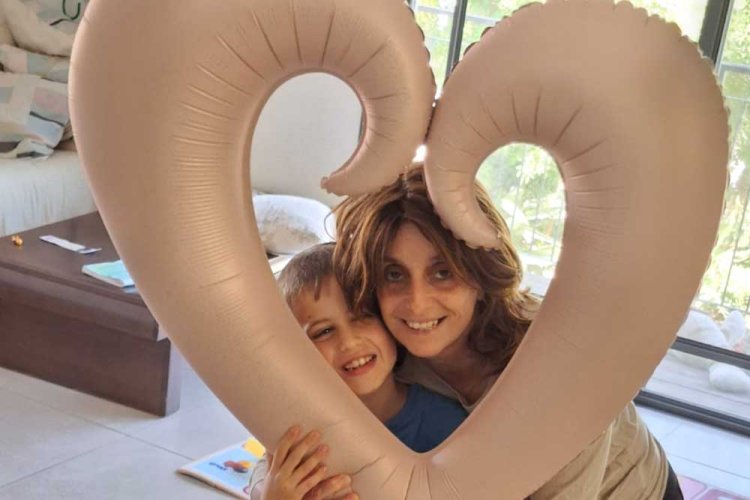 Deborah Shira with her son Menachem Mendel
“The doctors said: zero chance”
Devorah Shira knew she had received an enormous gift, but she felt her mission of bringing souls into the world was not yet complete. “Ever since I can remember, even before my return to observance, I dreamed of a large family,” she explains. “I remember walking through ultra-Orthodox neighborhoods in Haifa, seeing mothers pushing strollers with two or three little ones, and knowing that this is exactly what I wanted too.
“I remembered the doctor’s words that at my age this wouldn’t happen naturally, and I turned to a private doctor recommended by Rabbi Abergel. I underwent various treatments, including nutritional supplements, special exercises, and more. I tried anything I was told might help, without giving up on anything.
“When Nehorai was three, I flew for the first time to the Chabad Rebbe’s Ohel. I went to the gravesite of Rebbetzin Chaya Mushka, the Rebbe’s wife, and Rebbetzin Chana, his mother. I stood between the two tombstones and prayed. I told God how much I wanted more children, that I wouldn’t give up, and that I would do whatever was necessary for it to happen — that Menachem Mendel and Chaya Mushka would also join our family, no matter the order or whether together or separately. I believed with a full heart that it would happen.
“I returned to Israel with renewed strength and began another round of treatments. On paper, conditions were good — but success didn’t come. Still, we continued with the treatments while I went on with my daily life and my very challenging educational work at the time, teaching a particularly difficult population.
“In the end, the third treatment that doctors initially defined as having ‘zero chance of success,’ was the one that worked and led to the pregnancy that ended with the birth of Menachem Mendel. I gave birth to him at age fifty-one, a bit early, and he spent some time in the NICU, but thank God he is a healthy, whole, and very happy child.”
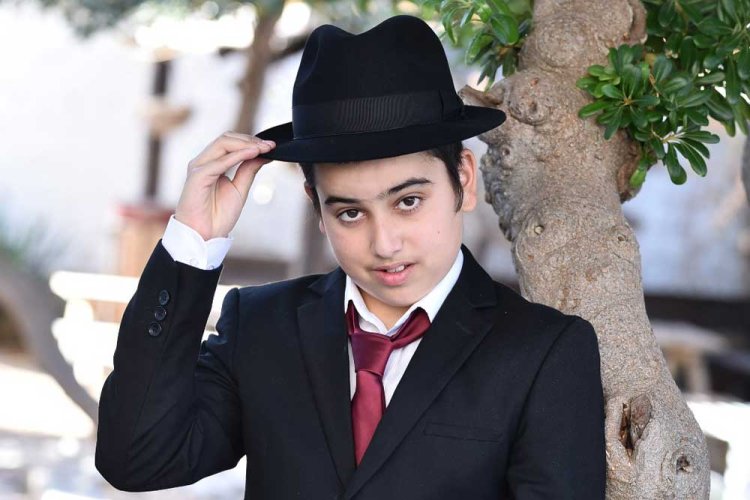 Nehorai, Deborah Shira's son
The miracle continued
Devorah Shira’s story does not end there. “A few months after Menachem Mendel was born, I dreamed about my beloved grandmother — my mother’s mother,” she says. “I loved her deeply and was very connected to her. In the dream, we were walking together with a pink stroller, and at that moment I knew, in the simplest way, that I would have a daughter.”
With her husband’s full support, Devorah Shira decided to continue with treatments and attempts. “This time the treatments were expensive, since we didn’t receive health fund participation as before, but that didn’t bother me at all,” she explains. “I saw only one goal before my eyes and was sure it would be fulfilled.
“To know that I had done my full effort, I also went to a professional acupuncturist, who referred me to a very senior gynecologist. She recommended several additional steps to ‘refresh’ the body and prepare it to receive another pregnancy.
“The treatments were not easy, but I left every test happy and smiling, certain that another gift was on its way. After the final treatment I traveled to Kfar Chabad, sat in ‘the Rebbe’s room,’ prayed, and wrote in the Igrot Kodesh asking that the treatment succeed. This time the response was: ‘May it be proper and healthy, an easy birth.’
“And indeed, shortly afterward the test results came back and it turned out the treatment had succeeded. In the fifth week it seemed the pregnancy might be lost, and I was even hospitalized, but I had strong faith and promised myself that no matter what, I would continue and nothing would stop me. In the end, with divine assistance, the pregnancy progressed successfully.
“During that time I was accompanied by a very experienced gynecologist who had also followed me in my earlier pregnancies. He recommended a long series of tests due to my age, but I trusted God to send me a healthy, whole child and underwent only the essential tests.
“I continued monthly visits, and when the doctor announced that the tests showed I was carrying a girl, I wasn’t surprised. I remembered the dream and already knew her name would be Chaya Mushka. Thank God, her pregnancy too passed completely normally from beginning to end, and she was born on the 25th of Adar — the birthday of Rebbetzin Chaya Mushka.”
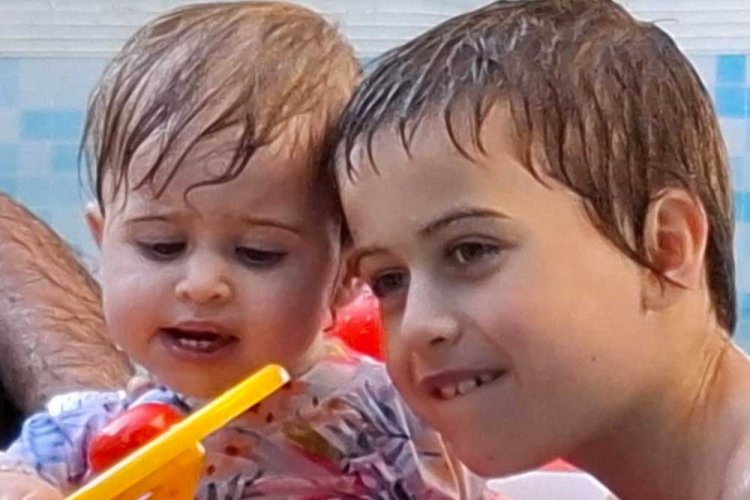 Menachem Mendel and Chaya Mushka, Deborah Shira's children
A dramatic birth
Devorah Shira recounts a powerful story about the birth itself: “I asked to go to the hospital and called my doula. I went down to the car, while my husband stayed behind to settle a few last things with the little ones. Before he or the doula even managed to join me, I already felt the birth was about to happen.
“I called MDA, and they said they were sending an ambulance. Meanwhile I was alone with myself. At the very last moment my amazing doula arrived. She immediately took charge and helped me give birth while praying, singing, and breathing. It was a calm, easy birth — just as I had dreamed. At the end, exactly when my doula placed the baby in my arms, a mobile intensive care unit arrived, and my husband ran to the car. I will never forget the image: everyone standing around me, while I was already sitting in the car, lifting my daughter up and announcing, ‘Mazal tov — we have a daughter!’”
Seeing the miracles
Today Devorah Shira raises her family calmly and joyfully in Migdal HaEmek, with the young children filling the home with light. “Every morning I look at them again and can’t believe the magnitude of the miracle — after the doctors said ‘zero chance,’ it simply happened. And there is no medical explanation for it.”
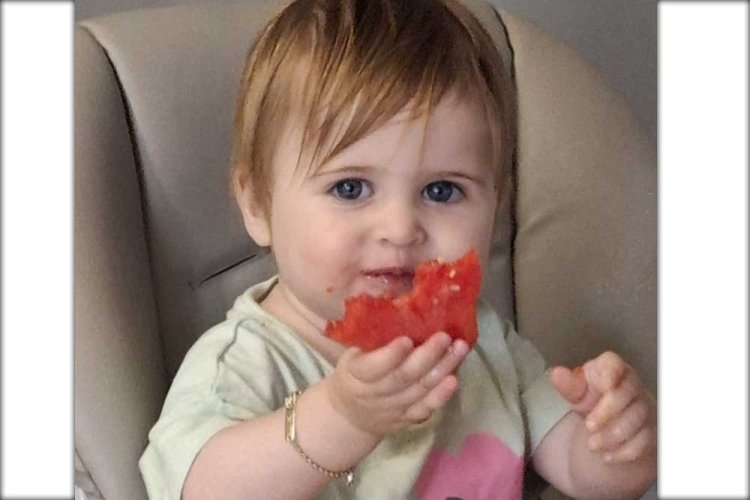 Chaya Mushka, daughter of Deborah Shira
Where did the strength and faith come from along the way? How did you believe you would receive such seemingly impossible gifts?
“I am very connected to the Creator of the world and knew in the simplest way that He is all-powerful. I was also constantly accompanied by rabbis — Rabbi Yoram Abergel and his son Rabbi Chaim Abergel, as well as Rabbi Yadgar, the Rebbe’s emissary in Ta’anachin, whom the Rebbe blessed with the ability ‘to bless people.’
“When I came to receive a blessing from him and said my name, he immediately asked, ‘That’s not the name you were given at birth, right?’ And he was correct — my original name was Devorah, and I added the name Shira during my army service. Rabbi Yadgar instructed me to keep both names but to be called Devorah Shira, not Shira Devorah, because the initials of the latter form a problematic word.
“Throughout this entire journey I felt as though I was being carried on hands, with the peak coming at the birth of Chaya Mushka, when I felt that God was right there beside me. That is also why today I see it as my mission to strengthen Jewish women. I try to speak with women and give lectures, to convey the message that God is always with us and performs open miracles for us. We just need to believe, and simply ask.”

