
Magazine
“She Was Reading Psalms”: The Final Moments and Lasting Legacy of Sarita Mendelson
The quiet acts of kindness, prayer, and devotion that defined her life
- Moriah Luz
- |Updated
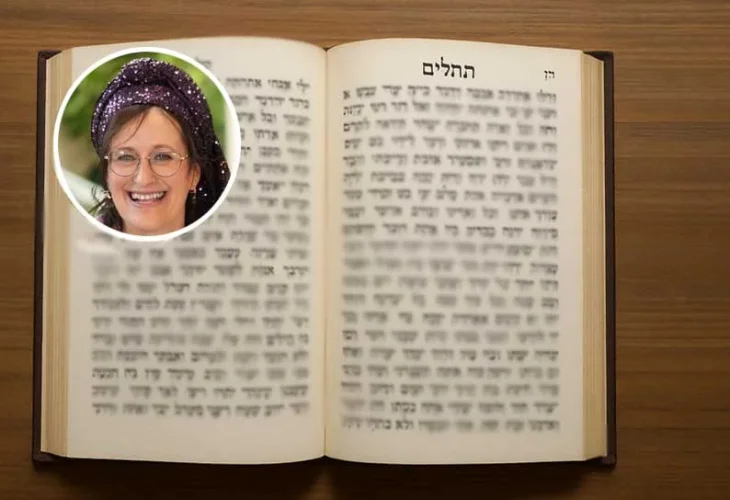 Inset: Sarita Mendelsohn z"l
On Sunday night, just a few hours before terrorist bullets would take her life at the Ramot Junction in Jerusalem, Sarita Mendelson (of blessed memory) shared a Hidabroot post. As remembered, that night there was a lunar eclipse, and the post discussed the message that can be learned from it.
“In Judaism, the moon is a symbol of the Jewish people: just as the moon wanes and is renewed, so too the Jewish people go through periods of darkness and concealment — but always return, renewed and shining,” Sarita shared, almost as if foretelling the blood-soaked morning that would follow.
“Her Phone Was Open to the Binding of Yitzchak”
“That morning I was on a drive I had really been looking forward to,” begins Sarita’s daughter, Avia Ben Harosh. “During the drive, my mom sent me several messages: ‘Good morning, how are you? How are things? How do you feel? So, have you left already?’ — with her usual nicknames, stickers, and emojis. When I replied, ‘Mom, of course, I’m on my way and about to reach my destination,’ she said to me: ‘Wow, how? I’ve already been on the bus for half an hour and still haven’t reached the Ramot Junction.’”
In retrospect, it turned out there had been a chain-reaction accident on a major road near the Ramot Junction. The accident created unusual traffic congestion, and many people were waiting at the bus stop. Sarita left her home in the Ramat Shlomo neighborhood and headed toward the Ramot Junction, where a friend was picking her up so they could continue together to the office where she worked. Ben Harosh recounts that the attack occurred while the friend was waiting at a traffic light near the stop.
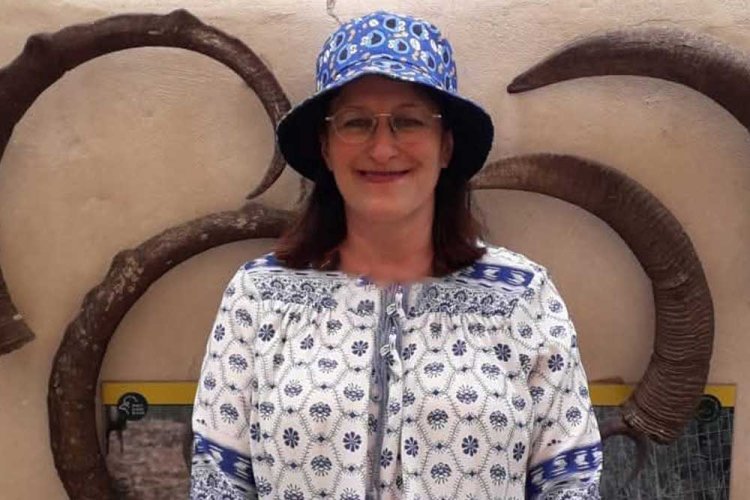 שריתה מנדלסון הי"ד
 What do you know about what your mother went through during the attack?
“My mom was standing at the edge of the bus stop, and a bus had stopped there. The terrorists’ car overtook it and stopped right next to my mom. She was apparently among the first to be shot. What comforts me is knowing that she wasn’t afraid.”
After the attack, Sarita’s children received her mobile phone. Three “windows” were open on it, Ben Harosh shares — one with a chapter of Tehillim, another with the portion of the Binding of Yitzchak, and a third with a list of people Sarita used to mention in her prayers. “In her final moments, she was in the middle of reciting Psalms.”
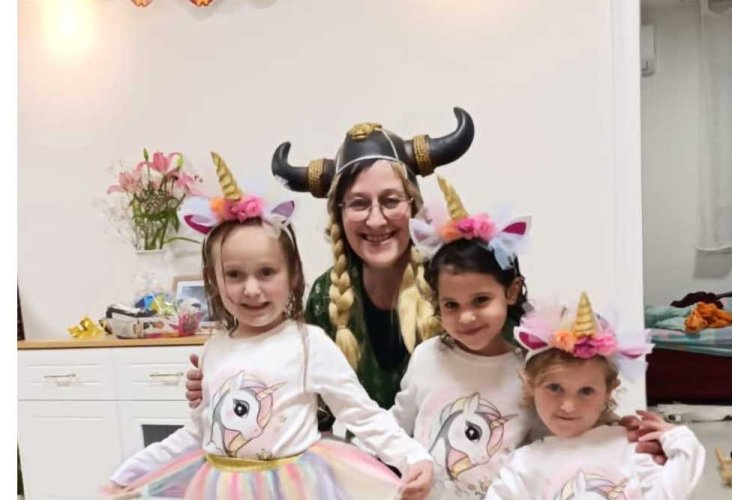 שריתה מנדלסון הי"ד ונכדותיה
“Life Goes On”
Sarita immigrated from Argentina at around age six. After her death, her close friend eulogized her in writing and noted that adjusting to life in Israel had not been easy for her. When Sarita was 12, her mother passed away, and during her high school years she moved in with a well-off family, in exchange for cleaning work she did in their home.
During the shiva, a woman who had known Sarita came to visit, her daughter shares. That woman had lost her own mother, who passed away suddenly after a short illness.
“She told me, ‘Avia, when I was sitting shiva, your mother came to me at the end of the week with a letter. The central sentence in it was: “My dear M., I lost my mother at age 12, and I want to tell you that there is life, and life goes on, and it’s possible to be joyful, and it’s possible to do so much.”’ I grabbed that woman and told her she absolutely had to find the letter,” Ben Harosh says emotionally. “My mom never spoke to us about those places in her soul. I see this as a sign for us.”
In the eulogies for Sarita, family members mentioned, among other things, the extraordinary honor she showed her parents and her in-laws. As noted, her mother passed away when Sarita was young, and several years later her father remarried. Ben Harosh recalls the respect Sarita showed her stepmother and the devoted care she gave her father.
“She took care of my grandfather — went to him and looked after him. It was not standard filial devotion.”
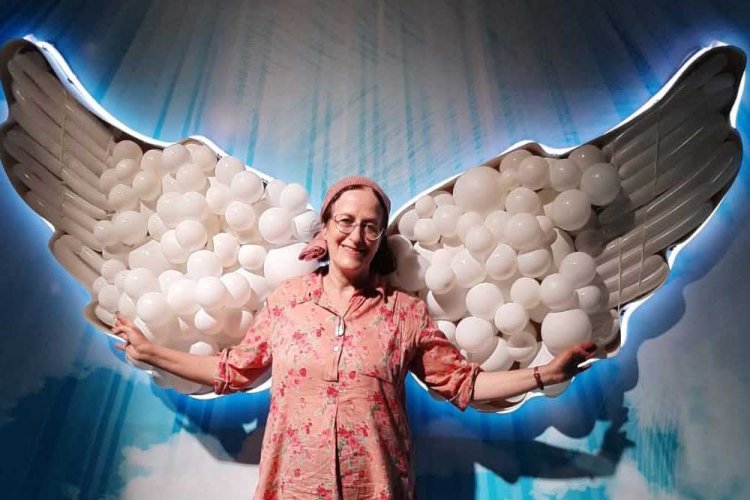 שריתה מנדלסון הי"ד
 A Bond of Admiration
Two years ago, Sarita’s mother-in-law passed away — a woman Sarita was deeply connected to.
“We grew up with this grandmother, who was a righteous and amazing woman. During the COVID period, her health deteriorated. She couldn’t live alone, so she moved in with my parents for eight months,” Ben Harosh says.
She notes that despite common stereotypes about relationships between mothers-in-law and daughters-in-law, the bond between her mother and grandmother was exceptionally close.
“There was a relationship of admiration between them. When I asked my mom about it, she would say: ‘Grandma is truly something special — one of a generation.’ The appreciation was completely mutual. There was a sweet bond of respect between them, even though outwardly they seemed very different.”
Ben Harosh adds that her grandmother moved into her parents’ home shortly after Ben Harosh herself got married.
“It was the most intense period of COVID, and in order not to endanger Grandma, we couldn’t visit my parents for a long time. Even though our absence wasn’t easy for my mom, she was very clear that Grandma needed to be in a good place. Grandma was mentally sharp, but physically she needed a lot of help, and both my parents took care of her devotedly. My dad mentioned during the shiva that my mom never complained for a moment — it was obvious to her that this was what had to be done.
“For my mom, Grandma was an extraordinary figure. She constantly recited Psalms and prayed for the sick and wounded from lists she kept. My mom learned this from her. She would regularly say Tehillim, and on Shabbat, when everyone had already gone to their rooms, she would explain that she needed to finish the Tehillim.”
Sarita also took it upon herself to prepare lists of people in need of prayer. She constantly updated the lists — adding wounded individuals and joyfully removing successful matches.
“She would check them off and immediately send a message: ‘How wonderful — I’m taking you off my list.’ During the shiva, comforters came who showed the family the moving, heartfelt messages Sarita had sent them.”
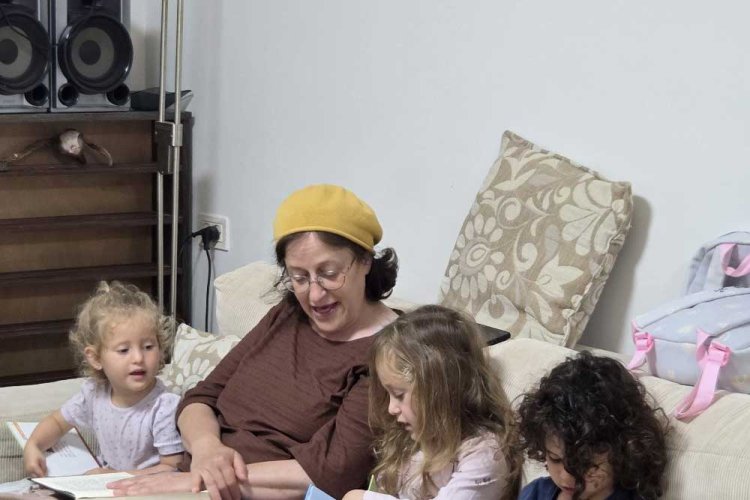 שריתה מנדלסון הי"ד ונכדותיה
“Do Good for Others”
“My mom did so many things in her life,” Ben Harosh reflects. “But I never thought of the things she did as ‘big.’ She did them simply, pleasantly, and with love. It was part of who she was — to take interest in people, ask how they were doing, and really listen. She genuinely loved it. It was natural for her to listen to someone for half an hour, ask about their children and grandchildren, and remember everything.
“She was modest and didn’t make a fuss about it. For her, this giving was obvious.”
Ben Harosh explains that her mother worked in an office job in finance, but her office — without a door and surrounded by three entrances, became a magnet for people.
“She filled a drawer with cookies, notes, pens, and small prizes, and anyone who passed by would take a cookie. Even phone calls that required special handling somehow found their way to her.”
What message can we take from your mother?
“Above all, to do good. My mom was entirely goodness. Pay attention to those around you. Say a kind word and show interest. All my mom wanted was to do good, and for the Jewish people to reach a good place. She was pained by hatred and division, and she only prayed for the Jewish people.”

