
Magazine
From Israel to the Philippines: How One Family Brought the High Holidays to a Remote Jewish Community
How a young family transformed uncertainty into inspiration — building community, faith, and Jewish life far from home
- Hidabroot
- |Updated
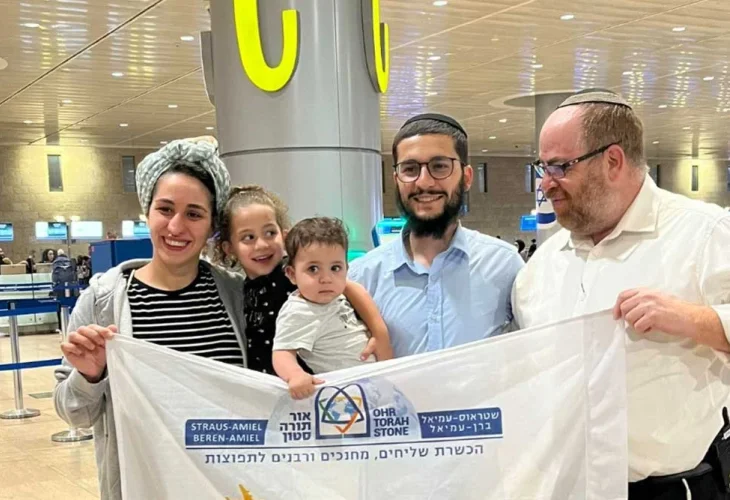 Rabbi Raphael and his wife Mor Mimran upon departure for their mission, with Rabbi Binyamin Myers from the Ohr Torah Stone's Strauss-Amiel program
Less than a week before Rosh Hashanah 5785, Rabbi Refael Mimran and his wife Mor found themselves landing in the Philippines for the first time in their lives, together with their two young daughters. They were about to begin their mission as emissaries of the Straus–Amiel Institute of Ohr Torah Stone. The timing was, to say the least, challenging: alongside getting to know the local Jewish community, the country, and the language, they also needed to organize full Rosh Hashanah meals for the community — complete with all the traditional foods, symbols, and customs.
Bringing Spirituality from Day One
Arriving so close to Rosh Hashanah was not accidental. “One of the conditions of our mission was that I would also serve as a shochet,” Rabbi Mimran explains. “Since I didn’t have prior training, I had to learn the craft in a very short time and master all the relevant halachot. Only after I passed the certification exam were we able to leave — and that was less than a week before Rosh Hashanah.”
Before they even had a chance to settle into their new home, their first stop was the community kitchen. “When I walked in, my heart sank,” Rabbi Mimran recalls. “There were serious kashrut issues. The rice, for example, was stored in containers on the floor, crawling with insects. We also discovered that leafy greens in the Philippines require far more stringent inspection than in Israel because they are heavily infested. In practice, the kitchen needed almost complete re-kashering — especially since it was about to serve close to 100 people, not only for Rosh Hashanah but throughout the High Holidays.” This, he notes, was only the first challenge awaiting them.
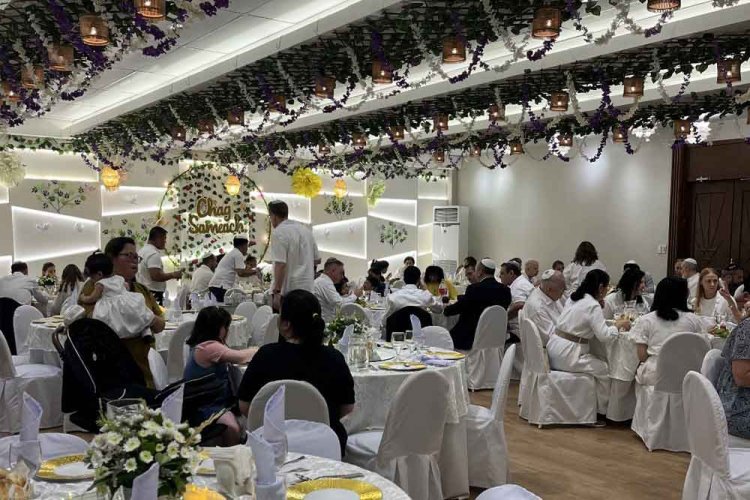 הקהילה בסעודת החג
First Encounters with the Community
“The day after we arrived, we sent our daughter to kindergarten and began meeting the young families and children of the community,” Mor shares. “Honestly, we were shocked. There was a Rosh Hashanah ceremony, and all the parents and children arrived dressed in bright white clothing. No one had prepared us for these dress codes — we hadn’t planned for it at all,” she laughs. “But in the end, it became a wonderful opportunity to get to know the community and the children, who later became our students. We prepared them for the holiday, explained the shofar blowing and the Rosh Hashanah symbols, and tried to bring as much spirituality as possible into something that many of them had barely encountered before.”
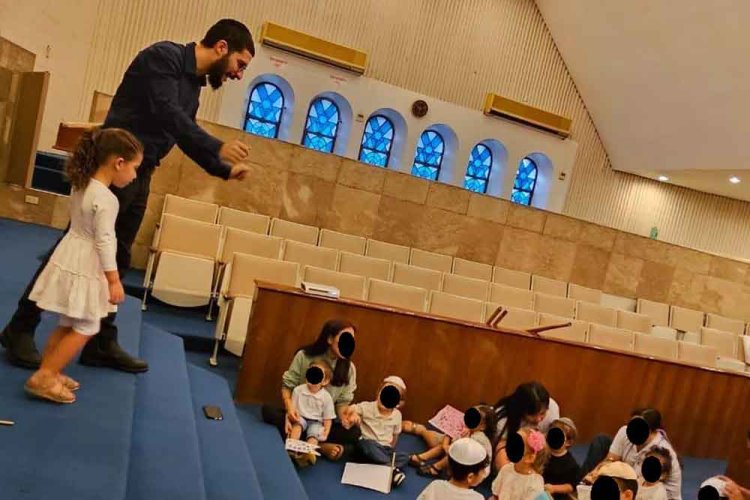 הרב רפאל בפעילות קהילתית
A Holiday Meal Like No Other
Alongside the activities for children, preparations for the adults were no less demanding. “It was extremely challenging,” Rabbi Mimran explains, “because I didn’t have time to get to know people gradually or sit down for introductory conversations. I was thrown straight into the deep end, with everyone watching closely, eager to see ‘who the rabbi they brought us is.’ All my sermons had to be delivered in English — a language I had never used for public speaking before, and all this without knowing the community’s level of Jewish knowledge or background.”
Mor adds, “I connected with the women of the community. At first I was nervous, because my English wasn’t very strong. Even today I sometimes feel awkward when what I want to say comes out differently than planned, or when women share things with me and I don’t fully grasp every detail. But from the very first moment we decided to follow our hearts — to give the community our warmth, love, and connection. Thank God, the people are attentive, deeply interested, and constantly seeking to learn and grow.”
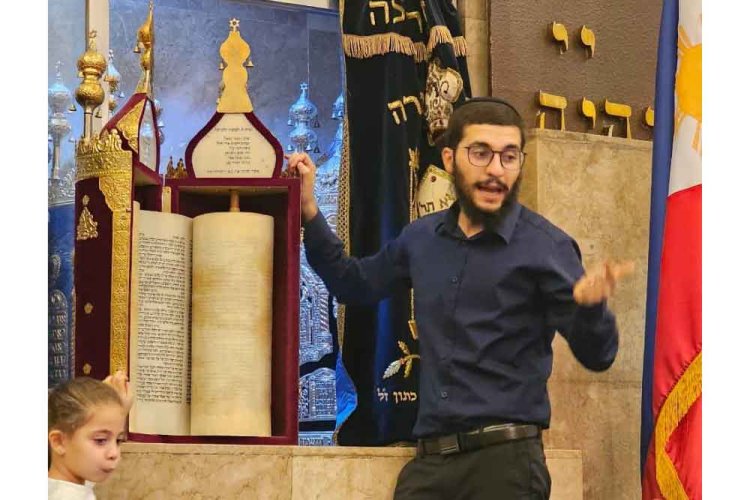 הרב רפאל מסביר לילדים על שמחת תורה
Who makes up the community?
“The community here is very diverse,” Rabbi Mimran explains. “Some members are locals who have lived here for many years, while others arrived from different countries. Officially, the community defines itself as Sephardic, and the prayer rite reflects that, but since it includes people from many backgrounds, different customs are practiced — including Moroccan and Ashkenazi traditions. It’s fascinating and adds a lot of beauty, especially during the holidays.”
 על יד סימני ראש השנה, בקשה להחזרת החטופים
Rosh Hashanah Around the Table
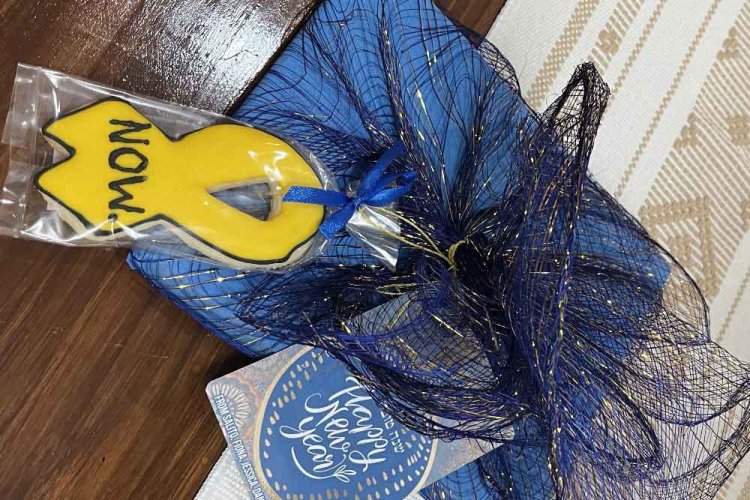
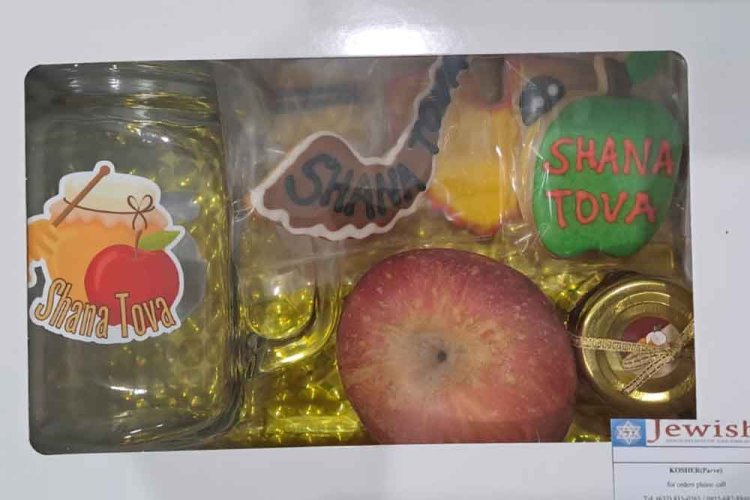
“The first Rosh Hashanah meal was the largest — around 100 people attended,” Mor recalls. “We didn’t know in advance how many would come, so we prepared very large quantities of food and symbolic dishes. After Kiddush, we distributed the simanim one by one, with my husband explaining the meaning behind each symbol. We also added a special symbol dedicated to the hostages, along with other unique elements. Each plate featured blessings in both English and Hebrew, and we all recited them together.”
Behind the Scenes: Making It Happen
“Technically, it’s not simple at all,” Mor admits, “but labor in the Philippines is very inexpensive, and there are many workers available to handle logistics, including setup, seating arrangements, and more. Some even decorated the hall exactly as we requested. This allowed us to focus mainly on the spiritual and religious aspects: leading the meal and creating the right atmosphere.”
Sukkot, Dedication, and Longing
Rosh Hashanah was only the opening act of the busy month of Tishrei. “We prepared the Four Species, which arrived in the Philippines about three weeks before Sukkot,” they recall with a smile. “We guarded them carefully in special refrigerators, wrapped in damp towels to keep them fresh, checking them daily. We knew that if they dried out, there would be no way to replace them. We were especially careful with the etrogim, of which we had very few.”
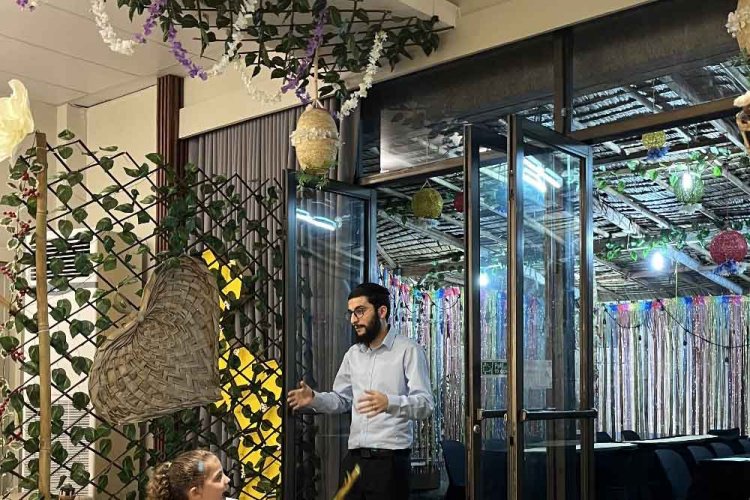
They also built a large, beautiful sukkah, decorated with artwork made by kindergarten children. “Most nights, I was the only one who slept in it,” Rabbi Mimran says. “Community members loved visiting the sukkah to hear explanations about the holiday. You could sense how much they were searching for Judaism and eager to ask questions. In practice, no one else stayed overnight, but I hope that this year some will join me and experience the mitzvah firsthand.”
Looking Ahead — and Looking Back
As they prepare for the upcoming High Holidays of 5786, the Mimrans say they began preparations much earlier than last year. “People clearly have very positive memories of last year’s holidays,” Mor says. “That challenges us to make this year just as meaningful, engaging, and uplifting. We have many plans for each holiday and for activities in between, and we hope to bring them all to life.”
 "סוכה מיוחדת במינה". בכניסה לסוכה
Do you miss the holidays back home?
They pause for a moment; the question touches a sensitive place. “I love celebrating the holidays with family in Israel,” Mor finally says. “At the same time, being here — far from everyone, I choose to experience the holidays in a completely different way, knowing that this is our mission right now.”
Rabbi Mimran adds, “I can’t ignore the longing when I think about the familiar smells and traditional foods from my parents’ home, or the prayers in the synagogues I grew up in. But when I see people here entering a synagogue for the first time in their lives, I feel their Jewish soul spark to life. I understand the magnitude of the mission — and I realize it’s worth everything. That feeling outweighs all the longing and brings an immense sense of fulfillment.”

