
Magazine
Reviving Hope: Wigs, Compassion, and Sisterhood for Women Battling Cancer
Meet Chaya Branfman and her sisters, who developed a unique volunteer method to help women facing cancer keep their identity, dignity, and strength
- Hidabroot
- |Updated
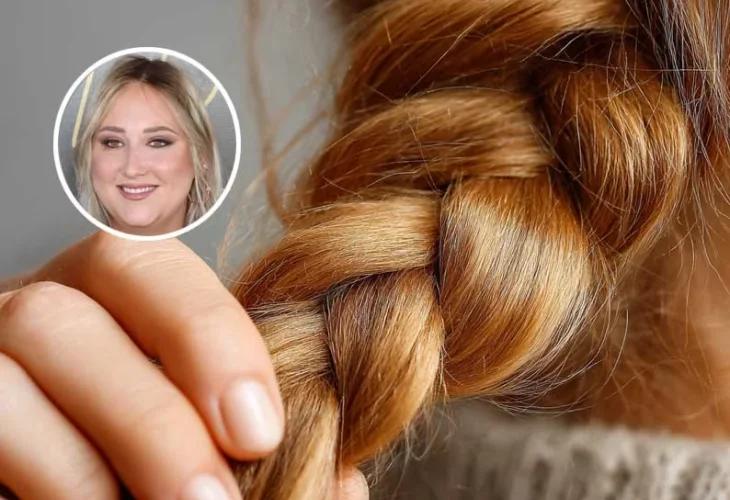 Inset: Chaya Bronfman
When you step into Chaya Branfman’s studio in Jerusalem, it looks at first like a large wig factory store. Nothing about the place hints that the studio’s name is being whispered from one oncology ward to another across hospitals around the country. But in recent years, Chaya has set herself a major mission: to produce wigs for women coping with cancer, as a volunteer project, with no financial profit at all. To do that, she developed a one-of-a-kind method: creating wigs from the women’s own hair.
“It wasn’t just my idea,” she says. “It was my sisters’ idea too — they work with me. The four of us run the wig-making together, and we also have branches in Los Angeles and New York. This partnership is a huge gift and leads to so much good. At the top of it all is the project we’ve been running in recent years: to spare women who’ve been diagnosed from having to say goodbye to their hair, and to save them at least that part of the struggle, as part of the journey toward recovery.”
How did you come up with the idea of making “medical wigs”?
“Even before we developed the method, sick women would come to us looking for a solution for their hair loss, and from almost all of them we heard things like: ‘When I got the diagnosis, the first thing I thought about was my hair falling out,’ or ‘I didn’t sleep all night because I was worried about my hair,’ and so on. I understand it completely. Hair is external — it doesn’t define who we are, but as women, of course we care about how we look. Especially when it’s young women, at a stage when it matters so much to them to look good. We tried to think how we could ease it for them, and that’s how we developed the method of making a wig from their own hair.”
How the process works
“The women usually come to us right at the beginning — shortly after the diagnosis. Sometimes they come straight from the hospital, even before chemotherapy starts. They want to understand how it works, and for that we have a professional team that’s been trained to explain everything and support them.
“We always suggest they bring people who make them feel good during the process — a husband, children, a close friend, and so on. Even though this is a planned haircut and not a treatment, it’s still not an easy moment. We promise them the wig will be ready, with God’s help, within five hours — and you can literally see them breathe with relief. That feeling is so tangible in the room.”
Then the work begins:
“First, we remove the hair using a unique method that allows each strand to remain in its original placement. That matters, because our hair is exposed to the sun and develops different tones, and we want to recreate every strand in the exact position it used to be. Some women ask us to remove ‘all the hair,’ and some prefer leaving it short because they want to experience it gradually. After that, the woman steps out for a bit to decompress, and meanwhile all of us throw ourselves into sewing the wig so it can be ready as quickly as possible.
“The wig moves between us like an assembly line — each team member does her part and drops everything else for the sake of this goal. When the woman comes back to pick up the wig, I always see the tension on her face. And when she receives the wig — which is essentially her own hair, you see this enormous relief: she didn’t really lose her hair. It’s still with her.”
A first-grade hairstyle
In recent years, Chaya and her sisters have accompanied hundreds of women. “Sadly, we’ve met many women whose hair had already fallen out, and they were so upset and told us: ‘It’s a shame we didn’t know,’ or ‘If only we had done this in time.’ One woman even told me: ‘I feel like someone discovered a cure for cancer and I don’t know about it.’ Sentences like that make me feel the loss too. So when a woman like that comes to us, we clear our schedules to make her a wig before it’s too late.”
Chaya says she stays in personal contact with most of the women even after the wig is delivered, and she hears what they are going through.
“Every woman has her own story and her own path, but it’s moving to see the incredible strength Hashem gives them. They’re unusually strong women, and they strengthen me again and again.
“Some tell me they never take the wig off. Some say it’s because ‘their environment can’t handle it’ — and that’s something we all need to pay attention to. The youngest client we ever had was a first-grade girl. Her mother told us through tears how much her daughter loves having braids and special hairstyles, and she couldn’t bear the thought of her hair disappearing. We promised her it wouldn’t disappear — and we really made her a wig from her own hair, without giving up a single strand. For a long time afterward, her mother sent us photos from events and parties — this little girl wearing the wig and looking just like any other child her age. It was so moving and so strengthening.
“There are also women who don’t use a wig daily and often prefer a scarf or a hat. But just knowing they have the option to look exactly like they did before — so that no one can tell what they’re going through, gives them tremendous strength.
“I always emphasize to the women: ‘Your hair isn’t you. Your identity is much deeper and more internal, and even without hair you will always be you.’ But after you’ve been thrown into the reality of illness, it’s important that you have choice. Just like you choose which doctor will treat you and which hospital you’ll go to — so too you should have the choice of going with a wig or without one.”
“Sisters for the Journey”
As part of the work, in recent weeks Chaya launched a community called “Sisters for the Journey”, bringing together a large group of women who have come through her studio over the years — some still coping, some already in recovery. The goal is to centralize information on a wide range of topics relevant to them — not only hair.
“At the launch event, a young woman came up to me — 21 years old. She’s been dealing with cancer for half a year, and she said: ‘This is the first time I’m meeting girls my age who are dealing with this.’”
Chaya adds: “Personally, I went through an incredible journey too. When I started the project I thought I was touching hair — but really, I went through a deep personal and emotional journey. I’ve learned, and I’m still learning, so much from these women. To raise awareness, I decided to publish a local profile once a month about a woman who’s willing to share her story to strengthen other women. Articles were published all around the country, and the stories went deep and gave so much strength. These are exceptional women who turned their hardship into a challenge, and their test into a tremendous springboard.”
How do you deal with the pain that comes with all these stories?
“Even though we’ve already accompanied hundreds of women, each case breaks us all over again,” Chaya admits. “The moment a woman has to part from her hair is always very hard. We’re there with her, and every time we cry together. But by the end of the day, the moment of the smile comes too — when these precious women walk out happy and satisfied, with the feeling that a stone has been lifted from their hearts, and they’re free to continue their personal journey of healing.”

