
World News
One Year After His Fall, Bashar al-Assad Quietly Rebuilds a Life in Moscow
Report describes the former Syrian leader’s secluded exile, blocked media ambitions, and attempts to return to ophthalmology
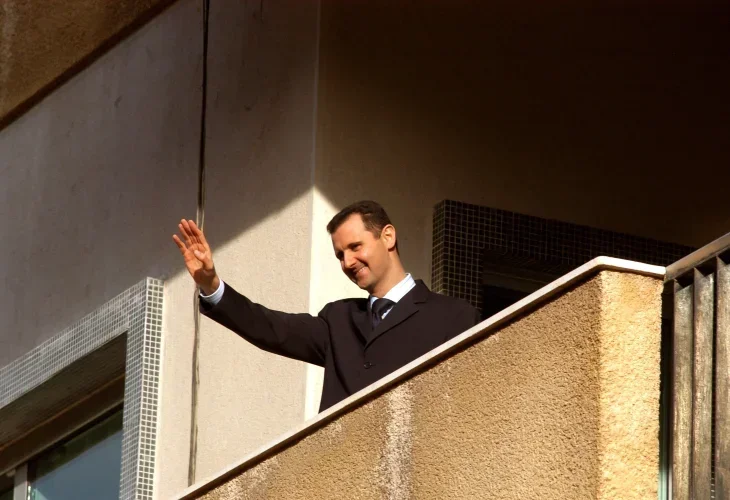 Bashar al-Assad (Shutterstock)
One year after fleeing Syria as rebels closed in on Damascus, former president Bashar al-Assad is living a quiet, tightly controlled life in exile in Moscow, and is reportedly attempting to return to his former profession as an ophthalmologist.
According to a detailed report published by The Guardian, Assad, once the entrenched ruler of Syria, is now largely isolated, barred from political or media activity, and relearning the medical skills he practiced before the outbreak of the Syrian civil war. The report shows a striking contrast between Assad’s current low-profile existence and the scale of devastation left behind during his rule, which ended after 14 years of war that killed an estimated 620,000 people and displaced nearly 14 million.
Russia’s central role in Assad’s exile stems from its long-standing alliance with his regime. In 2015, when Assad was close to losing the war, Russia intervened militarily, helping keep him in power and securing major military bases in Syria in return. When his rule finally collapsed, it was Russian forces that evacuated him, and it is Moscow that now controls his life and public silence in exile.
Assad fled Damascus in the early hours of December 8, 2024, as rebel forces advanced toward the capital. Escorted by Russian soldiers, he and his sons were taken to the Khmeimim air base and flown out of Syria. According to people familiar with the events, Assad did not warn extended family members or close regime allies of the impending collapse.
Before entering politics, Assad trained as an ophthalmologist in London and later practiced in Damascus. A source close to the family told The Guardian that he is now “studying Russian and brushing up on his ophthalmology again. It’s a passion of his, he obviously doesn’t need the money.”
Assad and his family are believed to be residing in Rublyovka, a gated district west of Moscow known for housing Russia’s political and financial elite. After Western sanctions were imposed on Syria in 2011, much of the family’s wealth was reportedly shifted to Russia, beyond the reach of Western regulators. Despite their comfortable surroundings, sources said Assad is cut off from both Syrian loyalists and Russia’s inner political circles.
A source close to the Kremlin described Assad as largely irrelevant to President Vladimir Putin. “Putin has little patience for leaders who lose their grip on power,” the source said, adding that Assad is no longer viewed as influential or worth engaging.
The sudden flight left relatives scrambling. Eli Hatem, the lawyer for Bashar’s uncle Rifaat al-Assad, said family members were initially stranded outside the Russian air base. “Eight of them had to sleep in their cars,” he said, until intervention by a senior Russian official allowed them to leave for Oman. A friend of Maher al-Assad, Bashar’s brother and a senior military official, said Maher repeatedly tried to reach him in the final days. “Maher called Bashar for days but he did not answer,” the friend said. “Maher, not Bashar, helped others escape. Bashar took care only of himself.”
In the months following the escape, the family gathered in Moscow to support Asma al-Assad, the former first lady, who had long been battling leukemia. A source familiar with her condition said she recovered after undergoing experimental treatment under Russian security supervision.
While Assad has reportedly sought to give interviews to Russia’s RT network and a prominent right-wing American podcaster, Russian authorities have blocked any public appearance. Russia’s ambassador to Iraq confirmed that Assad is barred from political or media activity, saying he is allowed to live in Russia but remain silent.
His children, meanwhile, are adjusting to life out of power. The family’s only public appearance since the regime’s fall was at the June 30 graduation of Assad’s daughter Zein from Moscow’s MGIMO University, where relatives kept a low profile.

