
World News
U.S. Threatens New Sanctions as ICC Pressures Mount Over Trump and Israeli Leaders
Washington warns it will expand sanctions unless the ICC drops cases against Trump officials and Israeli leaders
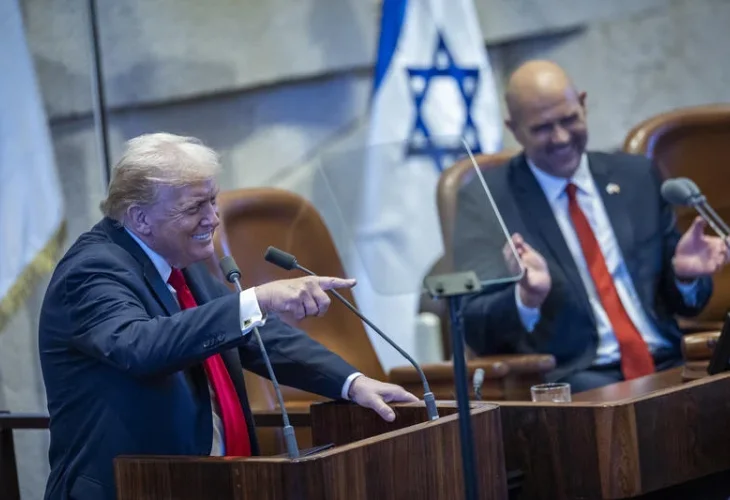 Trump (Yonatan Sindel/Flash90)
The Trump administration issued a sharp warning to the International Criminal Court (ICC), demanding it stop investigations involving senior U.S. officials and Israeli leaders, Reuters reported today. Washington said that if the court refuses, it will widen sanctions against ICC judges and could even target the court itself.
The dispute marks a sharp rise in tensions between Washington and the court, at a time when both U.S. and Israeli leaders are already under pressure from ongoing ICC investigations. U.S. officials say they worry that once President Trump’s term ends in 2029, the ICC may pursue cases against him and other top figures.
According to a senior U.S. official, Washington has delivered three demands to the ICC and to member states. First, the court must provide written assurances that it will not prosecute Trump, the vice president, the secretary of war or other senior officials. Second, it must drop the arrest warrants issued for Prime Minister Benjamin Netanyahu and former defense chief Yoav Gallant. Third, it must formally close its Afghanistan investigation, which has remained open since 2020. “There is growing concern … that in 2029 the ICC will turn its attention to the president, to the vice president, to the secretary of war and others, and pursue prosecutions against them,” the official said. “That is unacceptable, and we will not allow it to happen.”
Earlier this year, the United States sanctioned nine ICC officials involved in these probes. Now, American officials say future penalties could go further, by restricting the court’s operations by targeting its finances, bank access and software systems.
The ICC, in a written response, noted that “Amendments are within the prerogative of States Parties.” Changing that treaty requires approval from two-thirds of member nations, making Washington’s demands difficult to meet. Still, the U.S. insists the court must limit its own authority. “The solution is that they need to make very clear that they don't have jurisdiction,” the official said.
U.S. concern has also grown after recent military actions in Latin America. American forces carried out strikes on suspected drug-smuggling vessels this year, resulting in dozens of deaths and prompting a congressional review. Officials fear such incidents could someday draw ICC scrutiny.
For now, the court has not indicated how it will respond. The dispute now moves to ICC member states, whose decisions in the coming weeks may determine whether the crisis escalates further.

