
Israel News
Netanyahu Announces December 29 Meeting With President Trump at Mar-a-Lago
Talks will center on Gaza Phase Two, Iran’s missile buildup, Lebanon, and a planned international stabilization force
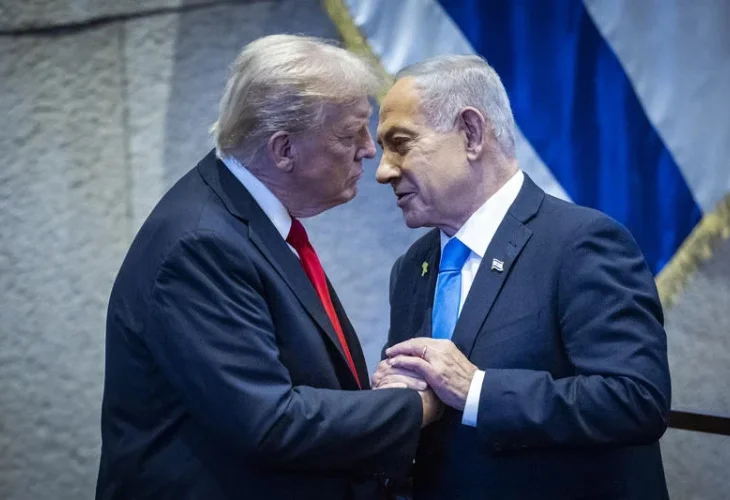 U.S. President Donald Trump with Israeli Prime Minister Benjamin Netanyahu (Yonatan Sindel/Flash90)
Prime Minister Benjamin Netanyahu announced he will meet U.S. President Donald Trump on December 29 at Mar-a-Lago, one of the most significant meetings since the current ceasefire began. Government spokesperson Shosh Bedrosian said, “The Prime Minister will meet with President Trump on Monday, December 29. They will discuss the future steps and phases and the international stabilization force of the ceasefire plan.”
Netanyahu will depart Israel on December 28 and extend his stay in the United States through the weekend, with a planned return on January 4. His office has not yet finalized whether he will remain at Mar-a-Lago throughout the visit or stay at a nearby hotel. The announcement marks a major step in preparing a coordinated Israeli–U.S. strategy for the next stages of the regional security landscape.
Israeli officials say the meeting comes at a critical moment in the Gaza ceasefire framework, as Jerusalem and Washington work to finalize the transition to Phase Two. According to assessments, Trump is expected to raise several regional files, including the shift to Phase Two in Gaza, challenges surrounding a potential arrangement with Syria, and the ongoing effort to stabilize the situation in Lebanon. These discussions cover remaining gaps over the timeline for dismantling Hamas’s military capacity, plans for rebuilding the Strip, and the establishment of the proposed international stabilization force.
An Israeli source said Iran will dominate the closed-door portion of the talks. The two leaders are expected to discuss Tehran’s accelerating ballistic missile procurement, highlighted after Israel struck missile stockpiles during Operation Am Kalavi. The source added that Netanyahu intends to ask Trump for a “green light” for potential military action in Lebanon if Hezbollah refuses to disarm.
The agenda will also include U.S. contacts with Damascus, ongoing efforts to promote normalization with Saudi Arabia and other states, and regional diplomatic realignments that both leaders have sought to advance.

