
Israel News
Israel Opens Debate on New Charedi Military Draft Law
Lawmakers clash over long-standing exemption system as committee launches review of proposal to gradually bring ultra-Orthodox men into national service
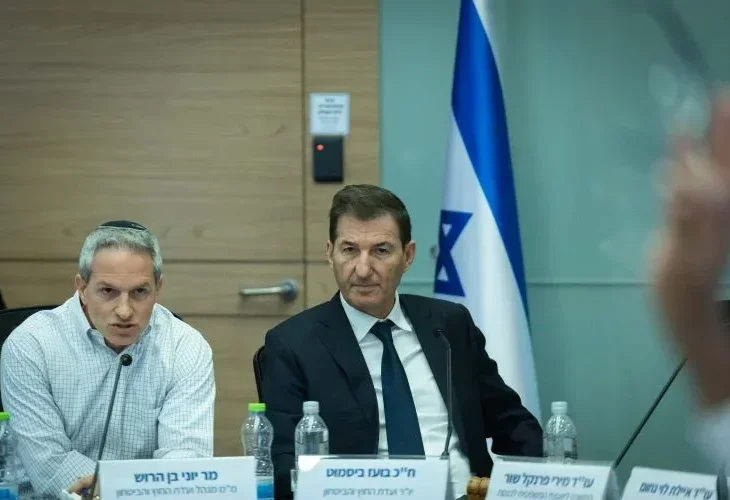 MK Bismuth (Yonatan Sindel/Flash90)
Israel began a high-stakes debate on Monday over one of the country’s most sensitive issues of whether and how to draft Chareidi men into the IDF. Israel’s Foreign Affairs and Defense Committee, the Knesset’s main body responsible for military and national-security oversight, convened to review a new draft law authored by committee chair Boaz Bismuth, which outlines a gradual plan to bring Chareidi men into military or national service, that triggered emotional confrontations, political attacks, and opposition.
Committee chair MK Boaz Bismuth of the ruling Likud party opened the meeting by stressing that the draft law “belongs to the entire State of Israel,” not to any single political camp. His attempt to frame the issue as national rather than partisan was quickly challenged by opposition leader Yair Lapid, who labeled the proposal a “disgraceful evasion law” and accused the government of abandoning soldiers who fought and died in the recent war.
The debate centers on whether Charedi men, who have historically received exemptions from military service, should now be required to serve in some capacity. Bismuth’s draft law outlines a gradual plan. It begins with a target of 4,800 Haredi recruits in the first year and aims to reach 50 percent of each draft-age class within five years. Those who continue to learn Torah full-time in Yeshiva would still receive automatic deferments, while others could perform civilian national service instead of military duty. Penalties for avoiding service are limited, with personal restrictions on travel and driver’s licenses, and only partial, delayed budget cuts for non-compliant yeshivot.
Strong emotions also came from bereaved father Itzik Bonzel, whose son Amit was killed in combat. He thanked Bismuth for taking on what he called “the hardest task in Israel today,” but demanded genuine equality in national service. Addressing Charedi MK Meir Porush directly, he asked, “Do you think my children will risk their lives and ultimately give their lives?” Bonzel added that while sincere Torah scholars should be allowed to continue their studies, “there are Charedi people in Israel who walk around doing nothing… it’s time you demand equality too.”
Porush though also rejected the proposal outright, arguing it unfairly targets the Charedi community when other groups also have lower-than-average enlistment rates. He said that the plan should be “torn up.”
Inside the governing coalition as well, members of the Religious Zionist party said they cannot support the bill in its current form. Former committee chair Yuli Edelstein of Likud argued that the proposal does not truly solve the military-service imbalance and could harm Israel’s security. Aliyah and Absorption Minister Ofir Sofer said he would vote against the bill even if it meant being dismissed from his position.
Despite the pushback, Bismuth insisted the law is necessary to maintain Israel’s security and social cohesion. “Whoever votes for it votes for Israel’s future,” he said. “Whoever opposes it prefers petty politics over the security of the state.”
The committee will continue examining and revising the bill in the coming weeks. With opposition emerging from both coalition and opposition parties, the proposal faces a difficult path to passing the Knesset, and even tougher scrutiny if it reaches Israel’s Supreme Court, which has repeatedly struck down earlier versions of Charedi draft laws.

