
Israel News
AI Project Opens Medieval Jewish World Hidden in Cairo Geniza
Israeli and international researchers launch an AI-driven transcription effort to unlock hundreds of thousands of long-unread fragments, revealing everyday Jewish life in Medieval Age
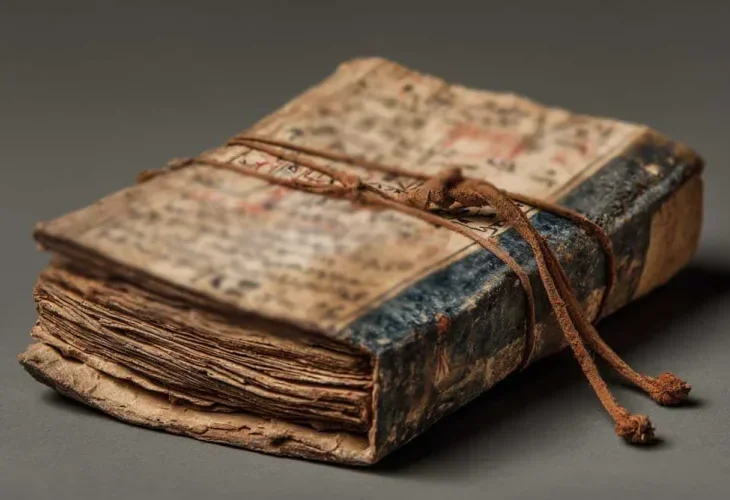
A new Israeli-led research project is using artificial intelligence to unlock the “Cairo Geniza,” a massive collection of medieval Jewish documents that has sat largely unread for more than a century. The initiative, known as the MiDRASH project, aims to finally transcribe and analyze over 400,000 Geniza fragments, the overwhelming majority of which have never been properly examined.
Although the whole collection was digitized years ago, only about 10–15 percent had usable transcriptions. Without searchable text, scholars couldn’t trace ideas, match up fragments, or rebuild fuller documents. The new AI system changes that. Researchers say it can now read large sections of the material, link pieces that ended up in different collections, and reveal patterns that were impossible to spot before.
A geniza is traditionally where documents containing God’s name are placed before burial. The “Cairo Geniza” was a chamber in the Ben Ezra Synagogue where the Jewish community stored these sacred texts destined for burial, but alongside Torah fragments and worn prayer books, the Cairo community even deposited mundane items like marriage contracts, business letters, tax documents, grocery lists and personal correspondence. Thanks to the dry climate and this unusually broad practice, the Geniza preserved an unparalleled time capsule of Jewish life in the medieval Islamic world, showing in remarkable detail how Jews lived, traded and interacted with their Muslim and Christian neighbors.
“We are constantly trying to improve the abilities of the machine to decipher ancient scripts,” said Daniel Stökl Ben Ezra, one of the project’s principal researchers. He said the technology allows far wider access, noting, “The modern translation possibilities are incredibly advanced now and interlacing all this becomes much more feasible, much more accessible to the normal and non-scientific reader.”
“This material is extremely important because 90% of the Jews [in the Middle Ages] lived in Muslim-ruled areas, not in Europe, and yet most of their manuscripts got lost,” Stökl said. The Geniza preserved what history almost erased.
Among the fragments transcribed so far is a 16th-century Yiddish letter from Rachel, a widow in Jerusalem, writing to her son in Egypt. He responded in the margins, describing efforts to survive a plague sweeping through Cairo. Another set of fragments includes Maimonides’ personal letters about the death of his brother David, a tragedy that left him bedridden “with fever and despair” for a year. Such documents, long unreadable or inaccessible, now emerge clearly through the AI model’s work.
But the researchers say the tool is valuable not only for discovering individual stories, but for tracing entire intellectual lineages. “The transcription is only the beginning of the process,” Stökl explained. “We want to conduct linguistic analysis to identify who is quoting whom, who is paraphrasing whom, and who takes which ideas from whom.”
According to him, the project is on the verge of enabling a vast reconstruction of Jewish intellectual history: “The possibility to reconstruct, to make a kind of Facebook of the Middle Ages, is just before our eyes.”
As part of the rollout, scholars launched a four-day “Transcribe-a-thon,” inviting volunteers to review and correct AI-generated transcriptions. Those corrections feed back into the system, improving its accuracy as it processes millions more images. Researchers emphasized that AI does not replace scholarship but accelerates it. The system allows experts to find patterns, identify genres, and compare language across centuries.
By transforming static images into searchable text, the project opens the Geniza to a global audience of not only academics, but anyone curious about Jewish history. For a millennium, the Jews of Cairo preserved their memories in a synagogue attic. Today, those memories are being rediscovered, reshaped into a living archive that technology is finally bringing into the light.

