
World News
Saudi Crown Prince Acts as Secret Mediator Between Iran and U.S., Seeking New Nuclear Dialogue
Tehran signals interest in dialogue through Saudi Arabia, even as it publicly denies reaching out to Washington
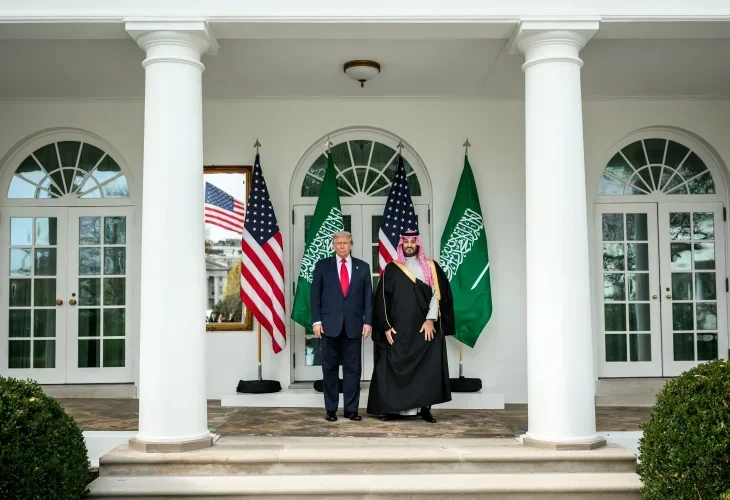 Trump and bin Salman (Photo credit: The White House)
A quiet diplomatic channel took shape in the Middle East, as Iran has asked Saudi Arabia to pass a message to the United States expressing interest in restarting nuclear talks, according to reports in Arabic media and Reuters on Tuesday. The request, made “out of fear of regional escalation,” was delivered to Washington by Saudi Crown Prince Mohammed bin Salman during his recent visit to the White House, the reports said.
The development suggests that despite months of aggressive rhetoric and ongoing sanctions pressure, Iran may be looking for a way back to the negotiating table. It also places Saudi Arabia, long a rival of Iran, at the center of a sensitive U.S.–Iranian dialogue.
According to the reports, bin Salman presented U.S. President Donald Trump with a letter written by Iranian President Masoud Pezeshkian and approved by Supreme Leader Ali Khamenei. The message expressed “an expression of willingness for a diplomatic solution and to address the nuclear issue while preserving its rights.” Sources told Arab outlets that Trump reacted positively.
Once the reports surfaced, however, Tehran publicly denied making any such approach. But on Tuesday, the opposition channel Iran International quoted former Iranian lawmaker Mostafa Kavakebian as confirming the move, saying “Bin Salman indeed conveyed the Iranian message.” He said Iran’s president authored the letter.
At the same time, the Hezbollah-linked Lebanese newspaper Al-Akhbar published its own version of events, claiming Trump authorized bin Salman to lead a mediation effort aimed at crafting a new agreement covering Iran’s nuclear program and the entire U.S. sanctions regime. According to the paper, the crown prince told Trump that an understanding with Iran is necessary for regional stability and warned that Prime Minister Benjamin Netanyahu’s government may try to derail the process.
According to the report, once bin Salman returned from the White House, he immediately reached out to senior Iranian officials. The two sides then agreed in principle to hold a high-level meeting in Paris within 24 hours. This meeting was meant to be the first step in a Saudi-led shuttle dialogue between Washington and Tehran. The report also describes an earlier conversation in Riyadh, where bin Salman asked Iran’s National Security Council chief, Ali Larijani, whether Tehran would support a Saudi mediation effort. Larijani responded positively but made one point clear, that Iran was interested in talks, but it “would not make concessions,” especially after the Israel–Iran clash last June.
The reports come as Iran debates its nuclear strategy after halting cooperation with the International Atomic Energy Agency. Former diplomat Koroush Ahmadi said the IAEA’s latest resolution has no direct enforcement mechanism, calling Western restraint a possible sign that a window for diplomacy may still exist.

