
Israel News
Freed Hostages Share Accounts of Hamas Captivity at JFNA Gathering
Four former captives describe survival, loss and resilience as 2,000 Jewish leaders listen
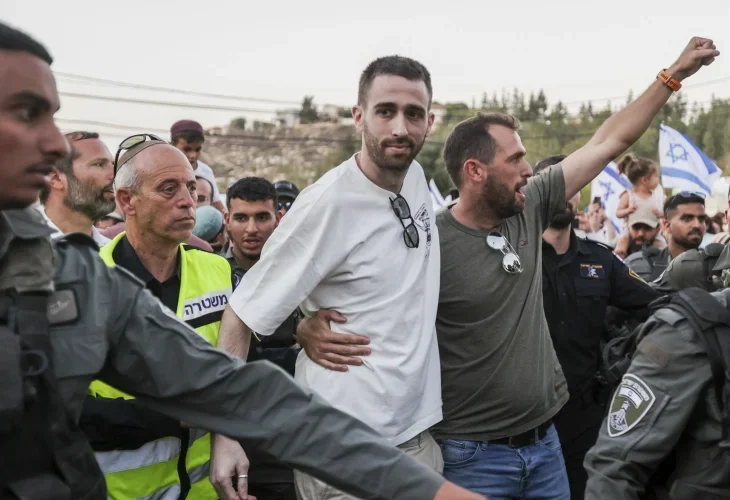 Avinatan Or (Tal Gal Flash/90)
Former Israeli hostages Noa Argamani, Avinatan Or, Evyatar David and Guy Gilboa-Dalal on Sunday night shared accounts of their time in Hamas captivity at the Jewish Federations of North America General Assembly in Washington, telling Jewish communal leaders stories they had not previously spoken about in public.
Their testimony offered one of the most detailed public descriptions to date of the conditions endured by hostages inside Gaza, from months of solitary confinement to witnessing the murder of fellow captives.
Argamani opened the program by recalling the moment she and Or, her boyfriend, were seized as Hamas terrorists attacked the Nova Music Festival on October 7, 2023. Dragged onto a motorcycle and taken into Gaza, she was separated from him almost immediately. For months, she said, she didn’t know whether he was still alive.
“In captivity, I saw two of my friends, Yossi Sharabi and Itay Svirsky, brutally murdered while I survived,” she said. She was rescued by Israeli forces in June 2024, returning home to find her mother battling cancer. They reunited before her mother’s death three weeks later.
Or, who was abducted alongside Argamani and spent more than two years underground and held alone in Hamas’ tunnels, spoke in the most detail. He said he sometimes went days without seeing another person. “I tried to escape,” he told the conference. “I dug for weeks through sandbags, through a collapsed tunnel towards the surface. I made myself work to change my own destiny. One day, as I was digging, I hit the root of a tree. I smelled it. It felt like touching life in the place of death,” he continued. “Then, one night, I reached the outside. I saw stars for the first time in years.” He said he wrote “hostage” on a white sandbag, hoping to signal for help, but the attempt led to severe punishment. “They found out. They beat me for days, they tied me to a chair for a week.”
Or said that for over a year he was shackled to bars inside a cage barely taller than he is, with only a thin mattress beneath him. “I was underground in Gaza for 738 days, alone, chained, without light and without food. For more than two years, I did not see sunlight, days passed without anyone speaking to me, I did not hear my language, no one called my name,” he said. “The hardest part is not knowing anything — not what day it is, not what happened in the world, not whether the people I love are still alive.”
To stay alive, Or said he developed four rules. “Rule number one: patience. Every day I told myself ‘just one more day,’ ‘don’t think any further ahead.’ Patience was my lifeline,” he said. “Rule number two: find common ground. I talked to my captors about faith, about the Torah and the Quran, about Joseph and Yusuf, about Abraham and Ibrahim, different names but universal stories.”
“Rule number three: anger destroys,” he said. “You can’t survive when you’re angry.”
“Rule number four: keep my brain working. My engineering background saved me. I counted steps, collected data, built a small lamp from broken cables, planned escape routes in my head and told myself ‘you won’t let others decide your fate.’”
He added that he spoke with his captors about shared narratives. “It reminded me that humanity can exist even in darkness,” he said. Or also emphasized the sacrifices of the IDF soldiers who risked their lives to free him. “I don’t see myself as a hero; I didn’t choose to become a hostage,” he said, noting that his next mission is to support soldiers dealing with trauma. “Everything can be taken from you, but no one can take your mind and your clarity.”
Speaking after Or, Guy Gilboa-Dalal said that before he was taken down to the tunnels, he managed to hear radio broadcasts describing global Jewish solidarity. “You prayed for me and for all the other hostages to return home safely as soon as possible. You gave me hope and strength,” he said.
David, also freed last month, said the struggle did not end with their release. “Our new journey is just beginning,” he said. “A journey of healing and coping together with our families and amazing people like you who support us. We will recover, rebuild, and emerge stronger than ever.”
He added that their families fought for them throughout their captivity: “They went everywhere, called our names, demanded our return. Their love and strength reached us, even from afar. And today, thanks to them — and thanks to many of you — we are home.”
The four former hostages received a long standing ovation as they took the stage, days before they are set to meet President Trump, who invited all 20 hostages released last month during the ceasefire he helped broker between Israel and Hamas.

