
Issues in the Bible
Can a Priest Wear Glasses? The Surprising Link Between Tzara’at, Passover, and Seeing Through Glass
Timeless lessons on clarity, perception, and the fine line between vision and illusion in Jewish thought
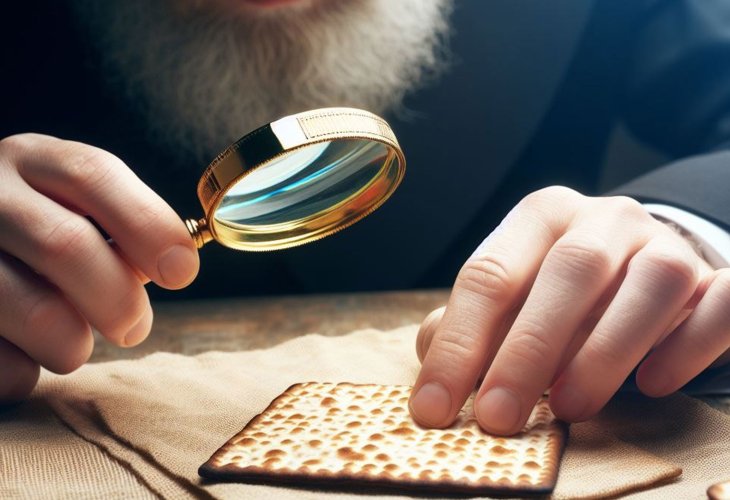
This week’s Torah portion is Metzora, and the date is Erev Pesach (the eve of Passover). At first glance, the two seem completely unrelated. What connection could there be between chametz (leaven) and tzara’at (biblical leprosy)? Between the month of Nisan, the season of freedom, and the laws of ritual impurity, which no longer apply today?
The Sages teach that “the words of Torah are poor in one place and rich in another.” Meaning that Torah principles often interconnect in surprising ways, even across seemingly distant topics.
Seeing Through Glass: What Counts as True “Sight”?
To determine a case of tzara’at, the Torah requires the priest’s direct observation: “And the priest shall see the plague” (Vayikra 13:3).
This raises an intriguing halachic question: Does seeing through glass count as actual seeing? For example, if a person faces an immodest sight but there is a glass partition between them, may they still recite a blessing? This question appears in Tractate Berachot.
Similarly, in the laws of sanctifying the new month, witnesses must see the new moon directly — not through a windowpane. If they observed it from inside a house through glass, no matter how clearly, their testimony would be invalid.
What About a Priest with Glasses?
The brilliant Rogatchover Gaon (Rabbi Yosef Rosen of Dvinsk) posed a fascinating question: If a Kohen (priest) wears eyeglasses, can he validly inspect a leprous mark?
If he removes his glasses, he won’t see clearly, but if he keeps them on, perhaps he isn’t seeing the lesion directly, but only through glass!
The Parallel Case: Searching for Chametz
A similar issue arises in the laws of bedikat chametz, the pre-Pesach search for leaven. The Talmud rules that one may not perform the inspection through a window.
Does that mean that a person wearing glasses should remove them while searching for chametz?
The Halachic Ruling: Glasses Are Part of the Eye
The leading halachic authorities ruled decisively that there is no need to remove glasses.
Eyeglasses are considered an extension of the eyes themselves, not a barrier separating the viewer from what is seen. They are not like a wall of glass, but are functionally part of the act of vision.
Therefore, whether inspecting leprous marks or checking for chametz, everything can be done as usual, glasses included.
One More Twist: Can a Priest Serve in the Temple Wearing Glasses?
According to Divrei Malkiel, a Kohen may not perform Temple service wearing glasses, as this would count as an “extra garment” (tosafet begadim) not prescribed by the Torah.
If you happen to be a Kohen eagerly awaiting the rebuilding of the Beit HaMikdash, you might consider laser eye surgery, to be fully qualified for your sacred duties when that day arrives, speedily in our days, Amen.

