
Health and Nutrition
The Surprising Truth About 'Healthy' Foods
Carob spread, lactose-free milk, and fresh orange juice may not be as healthy as they seem. Pay attention to the details.
A mom I work with called me. “You are going to be so proud of me!” she announced.
“I am already proud of you,” I replied, “but do tell me.”
“I swapped chocolate spread for carob spread, and the kids love it. They keep spreading it on bread and eating happily,” she said.
I sighed.
On one hand, she genuinely wants to make a change. Her intentions are good. Carobs are indeed a very healthy food, rich in calcium, iron, and other nutrients that benefit the body. Rabbi Shimon bar Yochai and Rabbi Elazar ben Shimon lived for years on carobs and water while the Zohar was written. There is something quite special about carobs.
But still… she was talking about a carob-flavored spread. Before she gave more details, I already knew exactly which one she meant. It’s a well-known brand with generally excellent products, but in this case, I think they missed the mark.
I asked her to read me the ingredients. She began eagerly: “Demerara sugar, carob powder — um… only 11%, soybean oil…” Her enthusiasm faded. “Stabilizers, E471, flavorings.” Then she sighed. “I bought two jars. Should I return the unopened one?”
“I think that would be wise,” I replied.
This is far from my first encounter with so-called “health” products that are anything but healthy.
Agave syrup and maple syrup, for example — another big “health” trend — behave in the body exactly like sugar. Just because something comes from a natural source doesn’t mean we can consume it freely or without limits.
Advertisements don’t help either.
Most breakfast cereals marketed as whole grains enriched with vitamins are, in reality, industrial and nutritionally empty. Everything good has been shredded, heated, and processed. Then sugar (lots of it), salts, flavor enhancers, colorants, and synthetic vitamins are added back in. The same goes for many energy bars.
Call me old-fashioned, but I still believe in vitamins that come from a fruit or vegetable — not ones synthesized in a lab and sprinkled into processed food.
Dairy desserts, soy puddings, yogurt drinks — these also contain huge amounts of sugar or, even worse, diet sugar substitutes.
And by the way, if the ingredient list says “vegetable fat” or “hardened fat,” those are simply synonyms for trans fat.
In the health-food aisle, I often see soup croutons, cookies, schnitzel coatings, and even bread crumbs — all gluten-free. But many of these “gluten-free” items contain substitutes such as potato starch or tapioca, which are high-calorie, high-glycemic carbohydrates that spike blood sugar.
I admit, I fell for these traps too — especially when I first discovered lactose-free milk.
Lactose, as you know, is the sugar in milk. And sugar, like any sugar, can cause hyperactivity in children.
I’m lactose intolerant myself, so lactose-free milk suits me well. In my naivety, I assumed it would be suitable for my kids too. I even recommended it to my mother and sister for weight-management reasons.
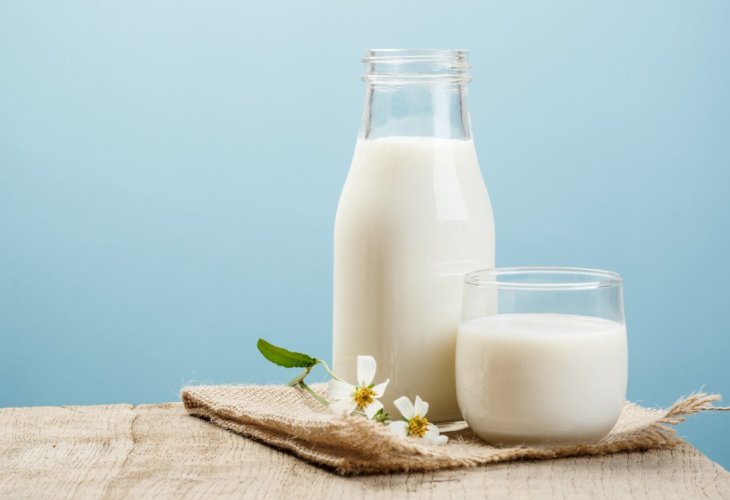
Then Noa, my naturopathic nutrition lecturer, explained why lactose-free milk tastes sweeter. Lactose is a disaccharide broken down in the body by the enzyme lactase into two monosaccharides: glucose and galactose. People like me, who lack lactase, cannot break down lactose on their own — so the food industry does the work outside the body. That is why lactose-free milk contains glucose and galactose directly, and why it tastes sweeter.
So, before we continue, a quick summary:
Diet products – intended for people with diabetes (some recommend diet drinks for weight loss, but I believe that is a mistake — more on that in a future post).
Gluten-free – intended for people with celiac disease.
Lactose-free – intended for people with lactose intolerance.
And so on.
Another time, a dear relative called me excitedly to share her latest lifestyle change. “You’ll never guess! We bought a citrus juicer, and from now on my husband and I are replacing our morning black coffee — and the kids’ cocoa — with fresh orange juice!”
She sounded so thrilled that I didn’t have the heart to tell her she’d be better off sticking with coffee than switching to orange juice. So I congratulated her, wished her success, and gently suggested not overdoing the juice since it is still sugar. As a small tip, I recommended diluting half of it with water.
Had she consulted me before rushing to buy a juicer, I would have told her how healthy a whole orange is — how many vitamins it contains and how much dietary fiber. An orange contains about two teaspoons of sugar. Eating one or two is perfectly reasonable; the body knows how to handle it. Slow chewing allows the sugar to be absorbed gradually.
But a glass of orange juice contains the equivalent of four oranges — that’s eight teaspoons of sugar consumed at once.
Even in terms of satiety, food should be eaten, not drunk. After two oranges, you feel full. After a glass of orange juice, most people can drink another… and another… and then eat something afterward. It’s a lot of calories — and a lot of sugar.
So, what’s so bad about sugar?
Like anything else, it’s about quantity and quality.
In the next post, I’ll dive deeper into monosaccharides, disaccharides, polysaccharides — how they affect us, and what distinguishes simple from complex carbohydrates.
Until then, stay healthy!
Chen Tovi

