
Life After Death
Time Is Short: Powerful Stories of Torah Giants Who Treasured Every Moment
Inspiring lessons on how to live with purpose and spiritual urgency
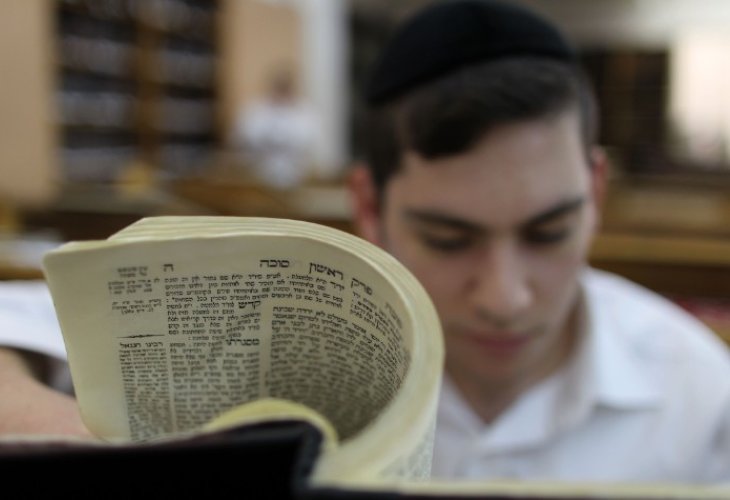
When the Gaon of Vilna’s sister finally came to visit him after nearly fifty years during which they had not seen each other, he left his room, greeted her warmly, and even recited the blessing “Mechaye HaMetim” (“Who revives the dead”) as required by halacha.
He asked about her well-being and her family, and then immediately returned to his learning.
He said to her, with deep humility: “See, my sister, my hair has turned white. This is like a warning from the Heavenly Court that my end is near. In the next world, I will have to give an account for all my deeds — good and bad. How can I spend my remaining moments on mundane conversation, when the days allotted to me are so few?”
His sister understood his spirit and went to visit the Rebbetzin, while the Gaon himself resumed his learning.
(From “Otzrot Acharit HaYamim”)
“The Time Is Short and the Work Is Much”
Rabbi Yitzchak Yehuda Stern, a student of the Ktav Sofer, immersed himself in Torah with astonishing diligence. His mouth never ceased from learning. His love for Torah knew no bounds — he slept only a few hours, ate only minimal food necessary for survival, and devoted all remaining time to Torah.
Although he deeply loved his children and grandchildren, he cherished the Torah infinitely more. He refrained from conversations with them unless necessary for serving God.
At age eighty-five he became ill and lay bedridden in pain. His children and grandchildren traveled long distances to attend to him, but were startled to hear him say: “My beloved children, forgive me, but I cannot speak with you now. Have mercy on me — I cannot waste precious time that should go to Torah learning. The time is short and the work is vast…”
Even as his suffering increased, he continued learning with extraordinary devotion.
(From “Ksav Zot Zikaron,” cited in “Otzrot Acharit HaYamim”)
“Soon I Will Be Summoned Before the Heavenly Court”
Because of his immense diligence in Torah study, Maran HaGaon HaRav Menachem Mendel Shach would not accept invitations to serve as sandek at a bris.
A student once begged him to serve as sandek. Rav Shach refused: “I am already old, and soon I will be summoned before the Heavenly Court. If I agree to be sandek for you, I’ll need to agree to others, and then I won’t have time left to learn. Would you have me enter the Heavenly Court as an ignoramus who wasted his time? I must use every moment to learn Torah.”
Rabbi Moshe Mordechai Shulsinger testified: “For many years Rav Shach kept a small sefer Even Shleimah in his pocket, worn open to the chapter about day of death and what follows. He would review it often.”
(From “Otzrot Acharit HaYamim”)
If the Dead Were Allowed to Return for One Hour…
Rabbi Chaim of Brisk once said: Imagine that Heaven announced that all the dead would be allowed to rise from their graves for one hour, free to do whatever they wish.
When people heard this news, they would rush to the cemeteries, desperate to speak again with departed loved ones.
Then the great moment would arrive — every grave opens, and the dead rise. The living run toward their relatives, hoping to speak a few precious words after so permanent a separation.
But the resurrected would push through the crowd and run — not toward their families, but straight to the study hall where they would sit and learn Torah with tremendous intensity until the moment they had to return to the ground.
This, said Rabbi Chaim, is the meaning of the teaching: “The words of Torah endure only in one who ‘kills himself’ over them.” (Berachot 63b)
A person who understands the value of time in this world, treats it like someone granted one hour to rise from the grave. In the World of Truth, one learns to treasure every drop of time.
(From “Otzrot Acharit HaYamim”)

