
Torah Personalities
Rabbi Yaakov Edelstein: Stories, Lessons, and the Legacy of a Quiet Giant
Powerful stories of faith, humility, and love for every Jew
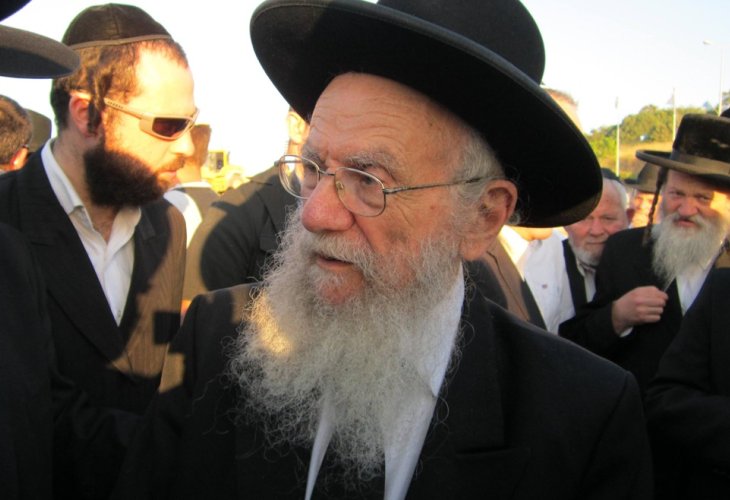 Rabbi Yaakov Edelstein
The 27th of Shevat, marks the yahrzeit of Rabbi Yaakov Edelstein who served as the rabbi of Ramat HaSharon for nearly 70 years and as a senior dayan in the beis din of Rabbi Nissim Karelitz in Bnei Brak. Rabbi Yitzchak Zamel, a close disciple, shared with Yated Ne’eman a collection of powerful and illuminating stories. Below is a curated selection.
A Heart Overflowing with Love for Every Jew
“I was privileged to witness firsthand the Rabbi’s deep, personal affection for every Jew. With genuine closeness and heartfelt care, the Rav prayed for people, offered guidance, and showered them with blessings from his expansive heart — the heart of Klal Yisrael.
Whenever people asked how they could strengthen themselves spiritually, the Rav would suggest something precise — and they would be astonished to discover he had touched exactly the area that required strengthening.”
His First Words After Two Months of Silence
‘Modeh Ani Lefanecha…’ “Let me share an example that shook all of us — including the doctors in the room.
The Rav underwent a surgery that removed his ability to speak. For two months he communicated only by writing notes, which was extremely difficult for a man who had spent his life speaking Torah.
After two months of recovery, the doctors decided it was time to test a special prosthetic that might allow him to speak again. Senior doctors entered the room and asked the Rav to try. We all wondered what his first words would be after two months of silence — surely he would thank the doctors?
The Rav placed his hand on the device and, with great emotion, said aloud: ‘Modeh ani lefanecha, Melech chai v’kayam…’— I give thanks before You, Living and Eternal King...
His first spoken words after months of silence were to thank his Creator for returning his soul each morning.
Gratitude in Three Languages
The Rav’s respect for doctors and nurses was extraordinary. “After a difficult operation, he called me over and wrote with great effort:
‘Thank you to all the doctors and nurses. You were like angels in every uniform.’
Knowing that some staff members spoke English and Russian, he wrote the same message in all three languages. He asked me to photograph it and show it to every nurse and doctor.
They were deeply moved — many to tears, that in his weakened state, the Rav’s biggest concern was to express gratitude.”
"I Am in a Magical Gan Eden in Tel HaShomer”
His ability to transform suffering into spiritual elevation was astonishing. After the surgery, he wrote a note: “I am in a magical Gan Eden in Tel HaShomer.”
I asked him, “Why does the Rav call this place Gan Eden? Will there be a hospital in Gan Eden?”
He wrote back: “There will be no hospital in Gan Eden. But in Tel HaShomer, there is a kind of Gan Eden — because here are people who, through their illness, fixed stumbling blocks on their path to Paradise.”
“You Must Treat Doctors with Honor”
“Many examples can be told of his respect for others,” Rabbi Zamel said.
“In his final days, a young intern came to perform a procedure. After preparing everything, I went to call the doctor. The Rav stopped me and wrote: ‘You do not tell a doctor what to do. Treat them with honor. Just tell him we finished preparing — he will understand the rest.’
Even in profound weakness, the Rav guarded the dignity of every person.”
During His Wife’s Illness, He Slept on the Floor
A remarkable story reveals the depth of his sensitivity:
During his first wife’s final illness, she lay in the hospital while the Rav stayed home alone. Family members insisted that someone sleep beside him in case he needed help, but he refused.
Only afterward did they discover why: Every night while she was suffering, he slept on a thin mattress on the floor, not wanting to sleep comfortably in his bed while she lay in pain. He hid this from the family to avoid causing worry.
“Give the Child the Name Your Wife Wants”
“When my son was born, we were unsure what name to choose. I brought the Rav a list of names. He immediately pointed to one and said: ‘This is the name your wife wants — choose the name she desires.’
I almost fainted. How did he know?
On many occasions, when people sought his advice, he would ask specifically about the wife’s opinion and often instruct: ‘Do as your wife wants — that is where you will find success.’
He modeled extraordinary respect toward his own Rebbetzin.”
Beginning Every Speech With ‘Shehakol’
At public events, before speaking, the Rav would ask for something to drink. He would begin his talk by saying the blessing: ‘Shehakol nihyeh bidvaro.’
Then he would add: “Everything — your shidduch, your simcha, is all created by His word.”
A Faithful Servant
The Rav lived every moment as a faithful servant of Hashem.
“When the Rav sang the song ‘Ana avda d’Kudsha Brich Hu,’ he would be overcome with emotion, tears flowing. Even during his illness, when he felt terrible, the moment the song began he was transported elsewhere.
This was his entire identity — What can I do as a servant before my Creator?”

