
Torah Personalities
Rabbi Ovadia Yosef: Life, Legacy, and Leadership
His early years, halachic revolution, monumental writings, and enduring impact on Torah and Jewish identity
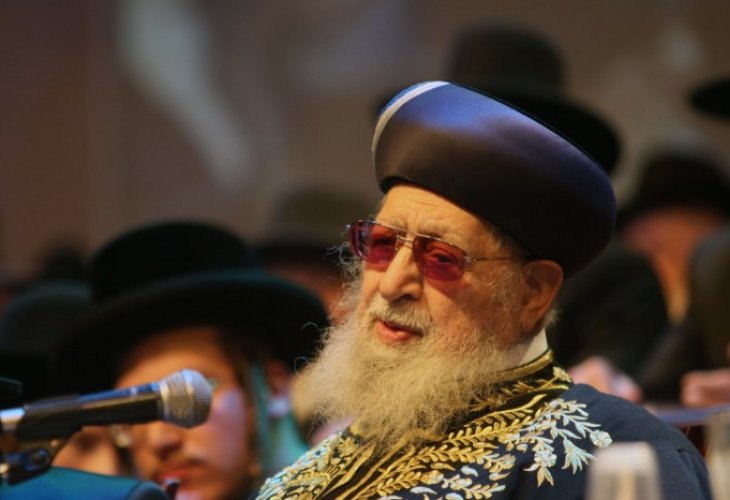 Rabbi Ovadia Yosef (Photos: Flash 90)
Rabbi Ovadia Yosef was born on the 12th of Tishrei 5681 (1920) and passed away at age 93, on the 3rd of Cheshvan 5774 (2013).
He was born in Baghdad to Yaakov and Georgia (Gurjiya). He was named Ovadia after Rabbi Abdallah Somech and Yosef after the Ben Ish Chai (Rabbi Yosef Chaim). Later, “Yosef” became his family name.
At age four, his family immigrated to Jerusalem and settled in the “Beit Yisrael” neighborhood. The family lived in poverty, and young Ovadia had to work from a young age — yet he invested every moment he could in Torah study.
Childhood Genius and Torah Study
His first written Torah work was composed at age nine — margin notes on the sefer Reshit Chochmah.
At age twelve, after his father was persuaded of the importance of Torah study, he entered the Porat Yosef Yeshiva in the Old City — a step that shaped his entire future. That same year, he wrote his first book, Machberet Ha’atakaṯ Chidot, together with two friends.
At Porat Yosef, he immersed himself completely in Torah learning and writing. The Rosh Yeshiva, Rabbi Ezra Attia, became his primary spiritual mentor.
Rabbinic Ordination and Early Leadership
In 1940, at age twenty, he received semichah (rabbinic ordination and judicial certification) from Rabbi Ben-Zion Meir Hai Uziel.
From 1945–1947, he served as a dayan (rabbinic judge) in the Sephardic Beit Din of Jerusalem. His halachic approach had already begun to crystallize, and he was responding to many halachic inquiries.
In 1947, at the invitation of Rabbi Uziel, he traveled to Egypt, where he served as deputy to the chief rabbi, Rabbi Nachum Effendi, and as head of the Beit Din. He found religious observance there to be in decline — among laypeople, leaders, and even rabbis. After two years he returned to Israel and resumed his position as a dayan.
Founding Works and Rise as a Halachic Authority
The First Sefer: Chazon Ovadia
In 1952, he published Chazon Ovadia on the laws of Pesach, which received enthusiastic praise and rabbinic approbations — including from both chief rabbis and Rabbi Ezra Attia.
Building Torah Leadership
Two years later, he founded Or HaTorah, a yeshiva for outstanding Sephardic scholars — the first of many institutions he would later establish, with the goal of creating a new generation of Sephardic Torah leaders.
Chief Rabbi and Halachic Influence
From 1958–1965 he served on the Jerusalem Regional Rabbinical Court, and in 1965 became a member of the Supreme Rabbinical Court. He later served as Rishon LeTzion (Sephardic Chief Rabbi of Israel) from 1973–1983.
Between 1977–1994 he published six volumes of Yechaveh Da’at, known for their clear and accessible halachic rulings.
His Guiding Vision — “Restoring the Crown to Its Glory”
Rabbi Ovadia’s central mission was “lehachzir atarah leyoshnah” — restoring the Sephardic halachic tradition.
He sought to:
Reestablish Rabbi Yosef Karo (author of the Shulchan Aruch) as the primary halachic authority (Mara D’atra) in Israel
Unite Jewish law under a consistent and authentic Sephardic framework
Strengthen Sephardic identity and dignity
In Yabia Omer, he wrote: “I stand guard to restore the crown to its glory, to rule in accordance with Maran whose rulings we have accepted.”
His Major Works (Selected)
Yabia Omer
10 volumes of responsa, plus an index volume — his central halachic masterpiece.
Yechaveh Da’at
Short, clear answers to halachic questions asked on Kol Israel radio (6 volumes).
Chazon Ovadia
19 volumes covering:
Pesach and the Haggadah
Sukkot and Yom Tov
Four fast days
Chanukah and Purim
Yamim Nora’im
Shevi’it and terumot/ma’asrot
Shabbat (6 volumes)
Avelut (3 volumes)
Other Works
Kaf HaChaim (completed part of Yoreh De’ah at the author’s request)
Halichot Olam on the Ben Ish Chai (8 volumes)
Taharat HaBayit (3 volumes on niddah and mikveh)
Meor Yisrael — explanations on the Talmud
Orchot Maran — testimonies about his personal practices
Halacha Berurah — authored by his son Rabbi David Yosef (13 volumes)
Yalkut Yosef — 30+ volumes of practical rulings based on his decisions, by his son Rabbi Yitzchak Yosef
As well as many more sefarim compiled from his Torah teachings and rulings.
Final Years and Passing
At age 93, the great luminary returned his holy soul to its Creator.
His levayah (funeral), held the same day — 3 Cheshvan 5774 — was attended by an estimated 850,000 people, the largest funeral in Israel’s history.
He is buried at the Sanhedria Cemetery in Jerusalem.
His Legacy
Rabbi Ovadia Yosef is remembered as:
The preeminent Sephardic posek of the generation
A master of halachic reasoning, with encyclopedic knowledge
A leader whose compassion matched his brilliance
A builder of Torah, responsible for the spiritual revival of Sephardic Jewry
A force who shaped Jewish law, Jewish society, and Jewish destiny
His teachings continue to guide millions.

