
Torah Personalities
The Maharal of Prague: Life, Teachings, and 10 Profound Ideas
Exploring the philosophy, spirituality, and enduring legacy of one of Judaism’s greatest thinkers
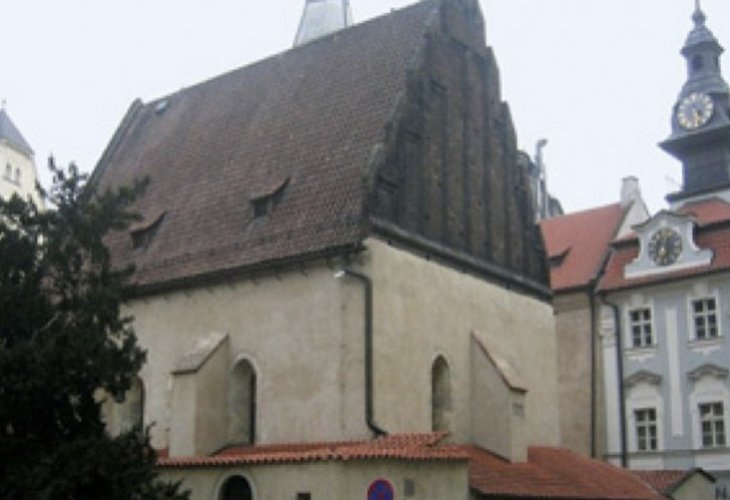
Rabbi Yehuda Loew ben Bezalel (born around 1512 – September 1609, 18 Elul 5369), known by the acronym Maharal (short for Morenu HaGadol Rabbi Loew) of Prague, was a rabbi, halachic authority, kabbalist, and philosopher — one of the most prominent Jewish thinkers of the early modern era.
In the traditional division of rabbinic eras, the Maharal is considered part of the early period of the Acharonim (later authorities).
The Maharal wrote dozens of books, which are regarded as foundational works that provide a proper Torah-based outlook on Jewish thought and the development of faith. His work Netivot Olam opens a window into understanding the traits and inner qualities of the human soul.
His yartzeit is on the 18th of Elul. Following are 10 quotes from his profound and unique teachings:
1. There Is Nothing in the World Besides the Creator
The Maharal taught that not only is the source of all creation rooted in Godliness, but that nothing exists in the world besides the Divine. (Netivot Olam I, Netiv HaEmet, ch. 2) This idea later appeared in Chassidic thought as the phrase “ein od milvado,” meaning that there is a divine order and purpose to the world and that nothing happens by chance. (Derech Chaim 3:14)
2. This World Was Created for the Honor of God
Unlike approaches that dismiss this world — labeling it “alma d’shikra” (a world of falsehood) and urging separation from it, the Maharal argued that such a view does not honor Heaven.
Regarding the four empires that ruled the world, he wrote:
“Since God created everything, everything was certainly created for His honor.” (Ner Mitzvah, p. 8) Therefore, he added, “One who possesses a spirit of holiness does not view this world with such lowliness.” (Or Chadash, p. 55)
3. Laughter and Joy Are Entirely Positive
Contrary to perspectives that encourage sadness, fear, or depression, the Maharal held that “Laughter and joy are inherently good — for they indicate a state of completeness.”
(Be’er HaGolah, Fourth Well)
4. Worried About Disaster? Avoid This Trait
Similarly, the Maharal wrote that: “Worry over calamities is a disgraceful trait, one from which a person must flee.”
(Derech Chaim 1:6)
5. Money Gives a Person Strength and Stability
The Maharal’s respect for this world is also reflected in his encouragement of productive work: “Work is something of great value, upon which an important principle depends… One should not think work diminishes his honor; on the contrary — work grants a person honor.” (Derech Chaim 1:10)
He further explained that money gives a person strength and stability, and therefore the human mind is naturally drawn to it. (Netivot Olam II, Netiv Ahavat Hashem, ch. 1)
6. One Must Not Deviate From the Holy Teachings of the Sages
The Maharal described the words of the Sages as: “Deep words of wisdom, not said based on conjecture or simple reasoning.”
He once asked: “How can donkeys like us stand in the secret Council of the Holy Ones?” (Netzach Yisrael, ch. 7) He strongly warned against deviating from the teachings of Chazal. (Gur Aryeh, Shemot 12)
7. Beauty in the World Is Spiritual and Divine
The Maharal emphasized that beauty found in the world is spiritual, writing: “Splendor and beauty stem from a divine quality present within created beings; beauty does not relate to the physical at all.”
(Netzach Yisrael, ch. 7)
8. The Walls of Jerusalem Will One Day Be Built of Onyx and Jasper
Based on this approach, the Maharal explained that the High Priest — described in the Talmud as possessing supreme beauty, reflects a spiritual aesthetic. Therefore, he maintained that in the future, the walls and gates of Jerusalem will literally be built from precious stones such as onyx (shoham) and jasper (yashpeh).
(Netzach Yisrael, ch. 51)
9. One Must Educate a Child According to His Nature and Ability
In education, the Maharal taught that learning must progress from simple to complex. He firmly opposed unstructured teaching and the neglect of foundational skills. Educational development, he argued, must follow the principle: “Give a child a burden he is able to carry, according to his nature.” (Gur Aryeh, Devarim 6:7)
10. A Moving Prayer for the Building of the Temple
The Maharal composed a heartfelt prayer for the end of exile:
“And now, Lord our God, You are our Father, and Your great name is called upon Your children… If ‘you are children of the Living God,’ why does He hide His eyes from you all these days?
Like sheep led to slaughter, handed over to foreigners… If our forefathers and we have sinned before You, surely it is in Your power to remove us. What do we gain in Your world if Your holy name is desecrated through Your children? Therefore, we beseech from before Your glorious throne: do not hand us over to foreigners… Have mercy on us and redeem us from their hands.” (Netzach Yisrael, ch. 49)

