
Torah Personalities
Rabbi Elchanan Wasserman: Life, Leadership, and Martyrdom in the Holocaust
Essential facts about the Chofetz Chaim’s greatest student and his final moments of Kiddush Hashem
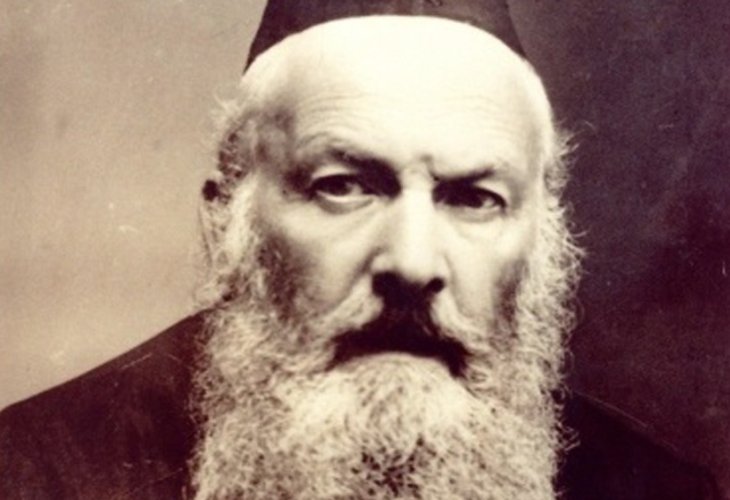
The 11th of Tammuz marks the murder of Rabbi Elchanan Wasserman. Following are key points about his towering legacy.
1. A Distinguished Student of the Chofetz Chaim
Rabbi Elchanan Bunim Wasserman was the foremost student of the Chofetz Chaim, and one of the leading figures of Agudas Yisroel and the European Charedi world in the generation before the Holocaust.
2. Head of the Baranovich Yeshiva
He headed the Ohel Torah Yeshiva in Baranovich, Lithuania. This yeshiva was geared toward younger students, and under his leadership it became one of the greatest and most illustrious Torah centers in Europe, influencing the entire continent.
3. The Yeshiva During the Outbreak of World War II
At the outbreak of World War II, the Baranovich Yeshiva had several hundred students. When the Germans bombed Baranovich from the air, the Jewish community was devastated, and the yeshiva fell together with it.
The younger students returned home
Older students scattered to different places
A small number survived and reached places of safety
4. Attempting to Escape Through Kovno
Rabbi Elchanan, along with a group of students, endured many hardships until they reached Kovno, Lithuania, hoping to find a route to emigrate to a free country.
But they were too late — Kovno was also occupied by the Germans shortly thereafter.
5. Teaching the Laws of Martyrdom Under Nazi Occupation
After the German occupation of Kovno in 1941, when the mass roundups and deportations to death sites began, Rabbi Elchanan delivered shiurim (Torah lectures) on Kiddush Hashem.
He even taught his son and his students the exact blessing to recite at the moment one gives his life for the sanctification of God’s Name.
6. A Chance to Escape — and He Refused
When his students were being sent to their deaths, Rabbi Elchanan had an opportunity to save himself. But he said: “I prefer to be buried alive together with my people — my holy and pure Jewish brothers. Their fate is my fate, and what is decreed upon them shall be my portion as well.”
He chose to die with them rather than leave them.
7. His Final Words Before Being Taken to the Ninth Fort
On 11 Tammuz 5701 (1941), Rabbi Elchanan was taken with rabbis and students from the Kovno Ghetto to the Ninth Fort, where mass shootings were carried out.
Moments before their death, he spoke to them about the weight of intention at that moment, warning that even one improper thought could blemish the greatness of the act: “In Heaven they consider us righteous, it seems, for we have been chosen to atone with our bodies for the Jewish people. We must repent now, immediately, for time is short… We must remember that we are truly sanctifying God’s Name. We shall go with heads held high, and God forbid that any foreign thought should arise, which would be like pigul that invalidates a sacrifice. We are now fulfilling the greatest mitzvah: Kiddush Hashem. The fire that will burn in our bones is the fire that will rebuild the Jewish nation anew.”
These were his final words before he and his students were murdered.
8. Martyrdom Together With His Sons and Students
Together with Rabbi Elchanan, thirteen students of the yeshiva were murdered. Among them were two of his sons — Naftali and Tzvi Yehuda.
Their holy souls ascended in purity. They are buried together in a mass grave, sanctified by their martyrdom.
9. His Torah Works
Rabbi Elchanan authored several influential Torah works:
Kovetz Shiurim – commentary and insights on the Talmud
Kovetz Maamarim and Igros – essays on Jewish thought, emunah, and aggadah
Kovetz He’aros – arranged like a responsa-style commentary on Tractate Yevamos
Divrei Sofrim – discussions on the tradition and transmission of Torah
Ikveta d’Meshicha – essays on the signs of the era preceding Mashiach
His writings remain central to yeshiva learning worldwide.
10. His Legacy in Eretz Yisrael
In 1979, his son, Rabbi Elazar Shmuel Wasserman, moved to Israel and established the Or Elchanan Yeshiva in Jerusalem in his memory.
The yeshiva continues to publish his writings. Additionally, the neighborhood Ramat Elchanan in Bnei Brak is named in his honor.

