
Torah Personalities
Rashi: Biography, Works, and Influence on Jewish Learning
A comprehensive look at Rashi’s origins, his daughters and descendants, his scholarship, and the legends that shaped his legacy
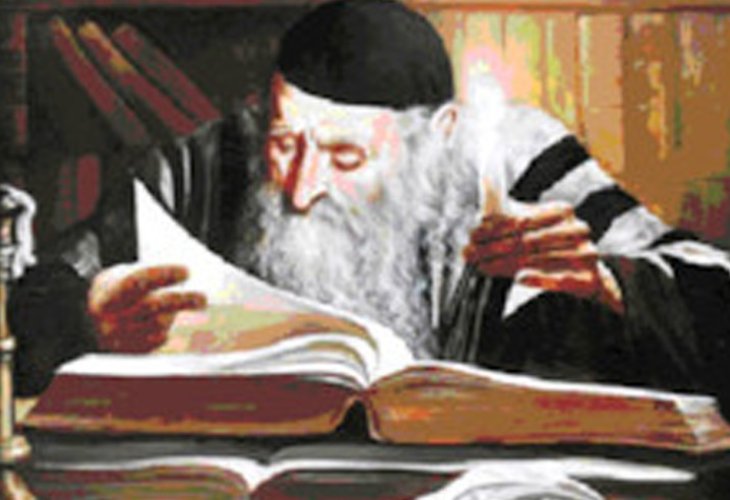
Rashi was born in 1040 CE in the city of Troyes, in the Champagne region of France. He passed away and was buried there on Thursday, the 29th of Tammuz, in the year 1105 CE.
Family Lineage and Early Life
Rabbi Shlomo Yitzchaki — known worldwide simply as Rashi, was the youngest son of parents who had waited many years to conceive. Rashi’s mother was the sister of Rabbi Shimshon the Elder, known as “the Master of the Piyyutim”, and his father was a great Torah scholar. His maternal uncle was Rabbi Shimon the Elder, a disciple of Rabbeinu Gershom “the Light of the Exile” of Mainz.
Some traditions claim that Rashi’s lineage traces directly back to King David, though this is debated. Rashi’s primary teacher was Rabbi Yaakov ben Yakar, who served as his main mentor. Rashi and his wife had three daughters.
Titles of Honor
Because of his comprehensive commentary on the Torah and Talmud, Rashi was given the title “Parshandata” — the Interpreter of the Faith. He was also called “Rabban shel Yisrael” (Teacher of Israel) and “Chatan Torah” (Bridegroom of the Torah), reflecting the fact that his commentary encompasses virtually all of the Torah.
Legends Surrounding His Birth
Many legends arose about Rashi, some of which became widely accepted over generations.
The Miracle of His Father
One famous legend tells that Rashi was born after many years of his parents’ longing, due to a promise made by Eliyahu HaNavi to his father.
According to the story, Rashi’s father was a merchant in precious stones. The king desired one of these stones for an idolatrous statue. Rashi’s father, a deeply God-fearing man, did not want to be complicit in sin. Risking his life, he threw the precious stone over the side of the ship he was on, pretending to cry over its “loss.”
This courageous act, the legend says, caused a great commotion in Heaven, and Eliyahu promised him a child who would “illuminate the eyes of Israel.”
The Miracle of His Mother
Another story tells that during her pregnancy, Rashi’s mother walked one day through the streets of Worms. Suddenly, she heard the galloping of a horse behind her. Turning around, she saw a Christian knight charging forward without any intention of stopping.
Seeing no escape, she pressed herself against the wall — where, according to the legend, the wall miraculously indented, protecting her and the unborn child. It is said that the indentation in the wall remains to this day.
Scholarship, Languages, and Broad Knowledge
Beyond his extraordinary diligence, scholarship, and world-class biblical and Talmudic mastery, Rashi also possessed extensive general knowledge. He knew multiple languages, including Aramaic, Hebrew, French, and German.
His expertise extended to agriculture, commerce, and various crafts.
Rashi was also deeply knowledgeable in linguistics and coined more than 1,300 new Hebrew words.
In his commentaries on the Bible and Talmud, Rashi references over 2,000 names of tools, instruments, plants, and animals in Old French. As his reputation spread through Germany and France, he formed strong ties with Jewish communities and even maintained contact with the Christian world, including rulers, merchants, and clergy.
Teaching, Leadership, and Influence
After ten years of study and travel through various yeshivot in Germany, Rashi settled in his birthplace at age 25. There, he founded a yeshiva with a distinct approach compared to others of the time.
While most yeshivot focused primarily on Talmud, Rashi emphasized:
Bible study (Tanach)
Deep, careful interpretation of Scripture
Critical and honest pursuit of truth
By this time, he was already renowned across the Jewish world. Alongside serving as the head of the yeshiva, Rashi became the city’s rabbi, though he refused to accept payment. He became one of the leading halachic authorities of his generation, receiving questions and legal dilemmas from across the Jewish world.
His Descendants: A Legacy of Greatness
Although Rashi and his wife had no sons, their three daughters married exceptional Torah scholars, and from them emerged some of the greatest figures in Jewish history.
His eldest daughter Yocheved married Rabbeinu Meir ben Shmuel of Rameru, known as “The Father of the Rabbis.”
His second daughter Miriam married Rabbi Yehuda ben Natan.
His youngest daughter Rachel married Rabbeinu Ephraim.
Rashi’s spiritual heirs were his grandsons:
Rashbam
Rabbeinu Tam
Rivam
These three became leading commentators known as the Baalei Tosafot. His primary disciple was Rabbi Shemaiah. Among his other students were the famous biblical commentator Rabbi Yosef Kara, Rabbi Yaakov ben Shimshon, and Rabbi Simcha ben Shmuel of Vitry.
Rashi’s Humility and Willingness to Revise
Rashi’s greatness did not prevent him from changing his mind or accepting criticism when necessary. In his writings, he humbly used expressions such as:
“I was mistaken.”
“I erred.”
“I do not know what this means.”
“I have no explanation.”
His Works
In addition to his many commentaries on the Torah, Prophets, and Writings, Rashi wrote:
Commentary on the Talmud
Commentary on the Mishnah
Halachic treatises
Liturgical works and piyyutim
Rashi’s Passing
Rashi passed away on Sunday, the 29th of Tammuz. According to tradition, at the moment of his passing, a heavenly voice proclaimed: “All Israel will one day be your children.”

