
5 Points to Ponder
Nature’s Engineering: The Miraculous Systems in Trees, the Human Body, and Everyday Life
How water transport in trees, heart electricity, pain signals, and blood clotting demonstrate astonishing precision and intentional design
 (Photo: shutterstock)
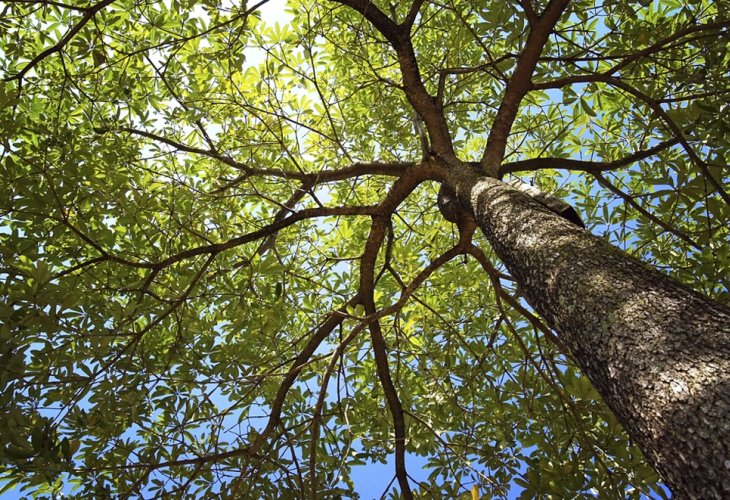
The sequoia trees of North America — the largest trees in the world, can rise to heights of more than 100 meters. Water, which carries essential nutrients, must travel from the roots all the way to the highest leaf.
Have you ever wondered how water overcomes gravity to reach such heights? How do these giant trees, towering over 100 meters, manage to move water upward? How does the tree absorb water from the soil and deliver it to every part of its structure? How does water climb against gravity all the way to the tree’s crown?
To find the answer, consider what happens when you place a narrow glass tube into a dish of water: the water begins to rise inside the tube. Why does this happen?
Water molecules are polar — one side carries a positive charge and the other a negative charge. Because of this, water molecules form hydrogen bonds with other polar molecules, including the glass molecules along the tube's inner wall. At the same time, the bonds between the water molecules themselves pull up the surface water and lift the molecules beneath it, like links in a chain. These forces of adhesion and cohesion, also operate in trees.
Inside the trunk, water climbs through tiny tubes. Meanwhile, the evaporation of water from the leaves pulls the entire chain of molecules upward. Together, these forces lift water, and all the nutrients it carries, to every branch, twig, and leaf.
Within the tree is a natural “system pump” that pushes water upward from the roots, overcoming both gravity and internal friction. This extraordinary process happens silently and continuously — from the smallest wildflower to the tallest tree, providing food and oxygen for humans and animals.
Who is the “plant engineer” who designed such a sophisticated, elegant system to lift water from the ground to the treetops?
Electric Shocks and the Heart’s Mysterious Electrical System
We are all familiar with the dramatic scene of a medical team performing CPR, placing two electric paddles on the chest of a patient whose heart rhythm is irregular. After the electric shock, the patient’s body jolts, and ideally the heart rhythm returns to normal.
The heart contracts and pumps blood in response to electrical signals produced by its internal electrical system. When this system malfunctions, an arrhythmia occurs — an irregular heartbeat that may be too fast, too slow, or uncoordinated.
One treatment for a dangerous arrhythmia is cardioversion, an emergency procedure in which an electric shock is delivered to the chest to restore a normal rhythm.
Amazingly, the human heart contains a natural pacemaker known as the SA node (sinoatrial node) — a cluster of special cardiac muscle cells that generate electrical impulses and regulate heartbeat timing. This ensures that the atria and ventricles contract in the proper sequence to supply oxygen-rich blood throughout the body.
To this day, no scientist can fully explain what causes the SA node to spontaneously generate electrical pulses. But we know that the Creator is the One who commands that tiny point in the heart to fire, sustaining life with every beat.
“How does electricity get there?” The answer is something beyond nature, something genius, that no human mind can replicate.
 (Photo: shutterstock)
Warning Lights in Cars — And the Body’s Version
Every driver has experienced the uneasy moment when a warning light appears on the dashboard. Some warnings require a mechanic, while others require stopping immediately to prevent serious damage.
Despite the inconvenience, we all understand that a warning light can save our lives.
Consider the most complex machine on earth — the human body. What is its warning light? What alerts us when something is wrong?
The human body is a masterpiece of interconnected systems:
The circulatory system, with 100,000 km of blood vessels
The endocrine system, coordinating chemical processes
The senses — vision, hearing, smell, taste, touch
The digestive and respiratory systems, supplying energy
The urinary and immune systems, removing toxins and defending from harm
The skeletal and muscular systems, giving structure and movement
The reproductive system, enabling continuity of life
When something goes wrong, the Creator programmed the nervous system to send a signal: pain.
Pain pushes us to act quickly and seek help. Why didn’t God choose a red dot on the skin, like a car's warning light? Because sharp pain motivates urgent action far more effectively.
Pain is unpleasant — but it can also save your life.
“God Will Help.” Really?
I met a friend who sadly told me he'd been fired from his job, ending with a sigh: “God will help.”
I told him, “My heart is with you, and God willing it will all turn out for the best — but something doesn’t add up. If you truly believe that God will help you, why are you sad? Why the despair? Shouldn’t someone who believes God will help be joyful and confident?”
When we face struggles or challenges that seem overwhelming, we must internalize that the Creator — who is all-powerful and loves us, will help us. Then there is no reason to fear.
God loves us. Like any parent, even when angry, He wants to hear His child’s requests and to do good for them. We only need to make a small effort, and God will open a massive opening in return.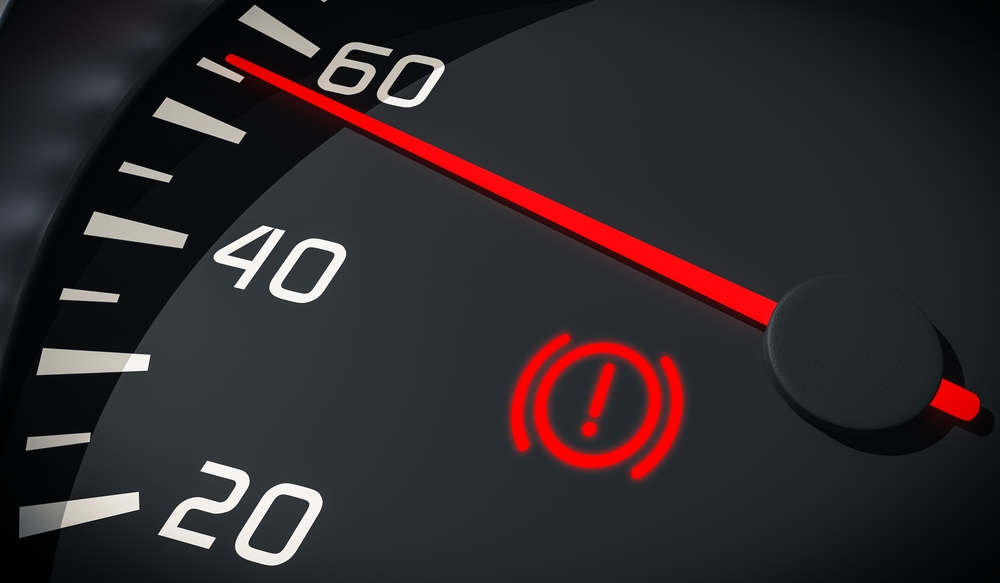 (Photo: shutterstock)
Only One Day in Life
The human body has a blood-clotting mechanism essential for stopping bleeding and preventing life-threatening blood loss.
If you filled a sack with blood and poked a small hole, would exposure to air cause the blood to clot and seal the hole? Of course not — the blood would pour out until the sack was empty.
Yet in the human body, when we bleed, “something” commands the blood to clot at just the right moment, sealing the wound and saving the person’s life.
What makes the difference? Why does blood clot outside the body only under specific conditions, but inside the body it acts precisely and intelligently?
The Torah commands us to circumcise a baby boy on the eighth day. Why not after six months, when he’s stronger? Why so early?
Modern medicine discovered something astonishing: during the first days after birth, the baby’s clotting factors are significantly low — so even a small cut could be dangerous. But by the eighth day, clotting factors peak at 110%, the highest level of the baby’s entire life. Afterward, they drop to the normal 100%.
There is one single day in a man’s entire lifetime when his blood clotting is at 110% — the eighth day. Who knew this 3,000 years ago? Who aligned the peak of clotting ability with the commandment of circumcision?
Coincidence? Highly unlikely.

