
5 Points to Ponder
More Than Biology: What the Human Body’s Mysteries Teach Us About Survival
A powerful journey through the body’s hidden systems — and what they suggest about purpose, protection, and existence

We eat, we enjoy, we feel satisfied, and then what? From that point on, the food enters an astonishing internal processing plant that absorbs, breaks down, sorts, redirects nutrients, and finally eliminates waste. All of this happens automatically.
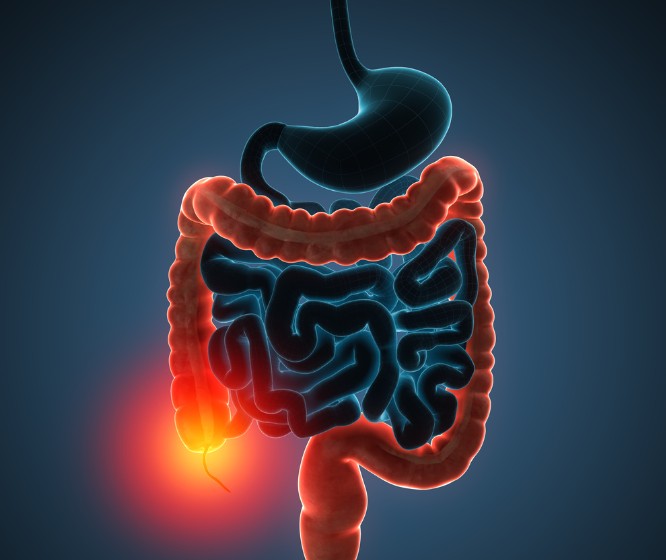
In this article we’ll focus on one section of this remarkable system: the stomach.
What Exactly Does the Stomach Do?
The stomach breaks down food using digestive juices released by numerous glands in the stomach lining. Gastric juice contains enzymes that chemically break down proteins, as well as hydrochloric acid, which is essential for enzyme activity. The acid also disinfects the food by destroying harmful bacteria that enter with our meals.
Why doesn't the stomach digest itself? If gastric acid can dissolve tough foods like beef, why doesn’t it dissolve the stomach too?
The body has a built-in protective system. Specialized cells and glands in the stomach lining secrete a thick, protective mucus layer that shields the stomach from being digested by its own acid.
In other words, the stomach produces both the acid and the mechanism that keeps that acid from harming the stomach itself.
Is it reasonable to assume such a complex safeguard “just happened” by chance? Many see in this coordination a level of design that points to an intelligent source behind nature.
 (Photo: Shutterstock)
A Lamb Among Seventy Wolves
Imagine a lamb standing among seventy wolves. What would happen? Clearly, it would be torn apart instantly.
The metaphor is used to describe Israel — a tiny country surrounded by nations that have repeatedly declared hostility toward it.
Why haven’t all these nations united to wipe out Israel — something that numerical logic suggests they could easily succeed at? History shows that attempts to unite against Israel, such as in the Six-Day War, ended in dramatic defeat.
The ancient claim is that Israel’s survival reflects divine protection: “The Lord foils the plans of nations… Many are the thoughts in a man’s heart, but the Lord’s plan will stand.”
Whether one interprets this historically, spiritually, or symbolically, the sheer improbability of Israel’s survival is a point many ponder.
 (Photo: Shutterstock)
We See Only What We Need to See
Do human eyes see everything around us? Surprisingly, no — and that limitation is a blessing.
The Human Visual Spectrum
We see only a narrow band of electromagnetic wavelengths: 380–760 nanometers. We cannot see:
Infrared (above 760 nm)
Ultraviolet (below 380 nm)
Some animals can, for example:
Bees see ultraviolet.
Certain snakes detect infrared.
Why is the “pinnacle of creation” — the human being, more limited than insects?
Why Limited Vision Protects Us
If we could see everything in the electromagnetic spectrum, our daily lives would be overwhelming.
Consider:
1. Bacteria Everywhere
If we could see microscopic organisms dancing around our drinking water, on our hands, or floating in the air, eating or drinking would become terrifying.
2. Dust Mites
Dust mites — tiny creatures with eight legs, live on books, bedding, furniture, and clothing. They float easily through the air. Seeing thousands of them crawling around would horrify most people.
Our limited vision filters out what would otherwise paralyze us. This filtering allows us to live comfortably and function normally. It demonstrates a form of natural optimization: we see only what we need for survival, safety, and quality of life.
 (Photo: Shutterstock)
Why Royalty Dresses With Modesty and Restraint
Have you ever noticed the clothing style of the royals? They consistently wear modest, formal attire — long skirts, long sleeves, high necklines, even gloves. Someone unfamiliar with her might assume they belong to a very conservative religious community. Why does a monarch dress this way?
Imagine the King of Spain driving through his capital and suddenly noticing his son, the prince, eating falafel on the sidewalk like a regular passerby. The king would be embarrassed: “A prince does not behave this way!”
If the prince replied, “But everyone else does this,” the king would answer: “You are not everyone. You carry a higher standard.”
People who represent something greater must behave in a way that reflects that responsibility.
Jewish tradition uses this analogy to describe the Jewish people as “children of a King,” expected to maintain higher moral and behavioral standards — not as a burden, but as an identity of dignity.
 (Photo: Shutterstock)
Who Needs Sleep — the Body or the Soul?
Who needs sleep more: the body or the soul? Many would instinctively say the body.
But consider this scenario: A person works intensely all day and collapses into bed at night. His body rests motionlessly for hours, but he does not fall asleep. In the morning — despite lying down for hours, he wakes up exhausted.
If the body simply needed “not to move,” he should feel refreshed. But he doesn’t.
Sleep rejuvenates the inner self — the consciousness or “soul”, more than the physical body.
Restoring Inner Energy
Throughout the day, we expend mental and emotional energy. By evening, that “spiritual battery” is drained. Sleep recharges it, the way a phone is plugged into a charger overnight.
Sleep has well-documented physical benefits. But its psychological and inner-restorative functions are equally essential.
This raises further questions:
What is this “inner self” that needs restoration?
Where does it come from?
Are we giving it what it truly needs?
These are points for reflection.

