
Jewish Law
Havdalah: How to End Shabbat with Light, Fragrance, and Blessing
The Torah source, meaning, and step-by-step guide to the sacred transition from Shabbat to the weekday
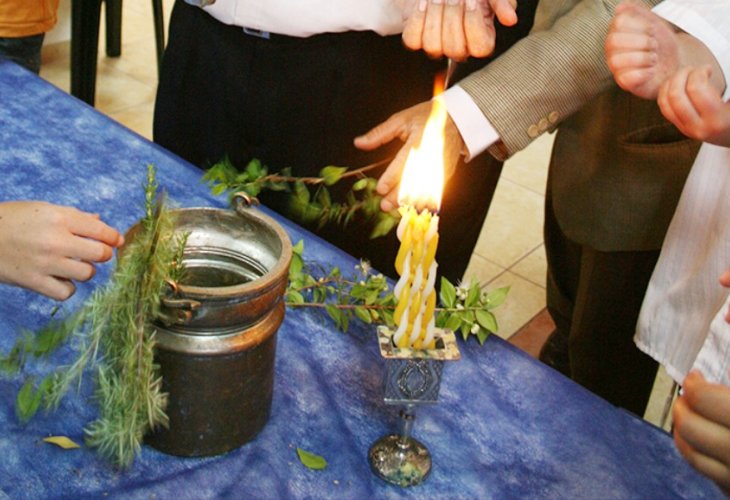
The mitzvah of Havdalah (separation) is a positive commandment from the Torah, as it is written: “Remember the Sabbath day to sanctify it” (Shemot 20:8). This means to remember the Shabbat both when it enters and when it departs — through Kiddush at the beginning and Havdalah at its conclusion.
The essence of Havdalah is to declare the distinction between the holy seventh day and the six weekdays — to verbally express the separation between Shabbat and the rest of the week, just as there is a separation between sacred and profane, light and darkness, and Israel and the nations.
These concepts are opposites that cannot merge, and so too, the seventh day is distinct from all others.
When and How is Havdalah Performed
Havdalah is recited at home immediately upon returning from the evening (Arvit) prayer at the synagogue. One may not eat after Shabbat ends until Havdalah is said. If someone wishes to perform a weekday activity before Havdalah and has not yet recited “Atah Chonantanu” in the Amidah, he should first say: “Baruch haMavdil bein kodesh lechol” — “Blessed is He who separates between the holy and the mundane.”
Before the blessings, it is customary to recite verses that inspire faith and hope for the week ahead, such as: “I will lift up the cup of salvation and call upon the name of the Lord” (Tehillim 116:13),
and “The Jews had light and gladness, joy and honor” (Esther 8:16).
These verses are intended to bring light, joy, and blessing into the new week.
The order of blessings during Havdalah is as follows:
Blessing over wine:Borei pri ha-gafen — “Who creates the fruit of the vine.”
Blessing over spices:Borei minei besamim — “Who creates various kinds of fragrances.” Afterward, the spices are smelled.
Blessing over fire:Borei me’orei ha-esh — “Who creates the lights of fire.” After this, one raises the hands and looks at the reflection of the flame on the fingernails.
Blessing of separation:“Blessed are You, Lord our God, King of the universe, Who separates between the sacred and the profane, between light and darkness, between Israel and the nations, and between the seventh day and the six days of labor. Blessed are You, Lord, Who separates between the sacred and the profane.”
The order of the blessings is the Hebrew acronym יבנ"ה (Yavneh) — standing for Yayin (wine), Besamim (spices), Ner (candle/fire), Havdalah (separation). The order follows the human senses — from mouth (wine), nose (fragrance), eyes (fire), to mind (the verbal declaration of separation).
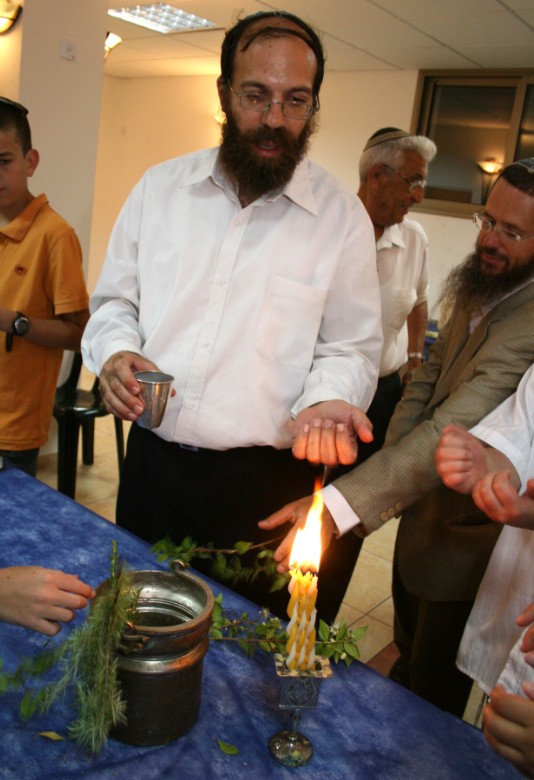 (Photo: Gershon Elinson / Flash 90)
The Blessing on Spices
On entering Shabbat, God grants each Jew an extra soul (neshamah yetera) — a heightened spiritual awareness. When Shabbat departs, this added soul leaves, and the person feels a subtle sense of loss or sadness. The pleasant fragrance serves as comfort to the soul, and serves as a sensory bridge between spirit and matter, holiness and the everyday.
The Blessing on Fire
This blessing thanks God for granting humankind the gift of light and warmth. We recite it on Saturday night because, according to tradition, on the first Saturday night of creation, Adam struck two stones together, producing fire for the first time — and so we bless God for this creation anew each week.
If one did not recite Havdalah on Saturday night, whether due to lack of wine or another reason, it may still be recited until Tuesday night.
Suitable Beverages
The preferred drink is wine, but grape juice is also valid. If wine is unavailable, Havdalah may be made on other alcoholic beverages such as whiskey or beer. Some halachic authorities permit using coffee or milk, although this is not the ideal practice.

