
Jewish Law
The Power of the Mezuzah: Faith, Protection, and Blessing at Your Doorway
Discover the deep meaning, laws, and spiritual benefits of the mezuzah — a timeless sign of God’s presence and love in every Jewish home
 (Photo: shutterstock)
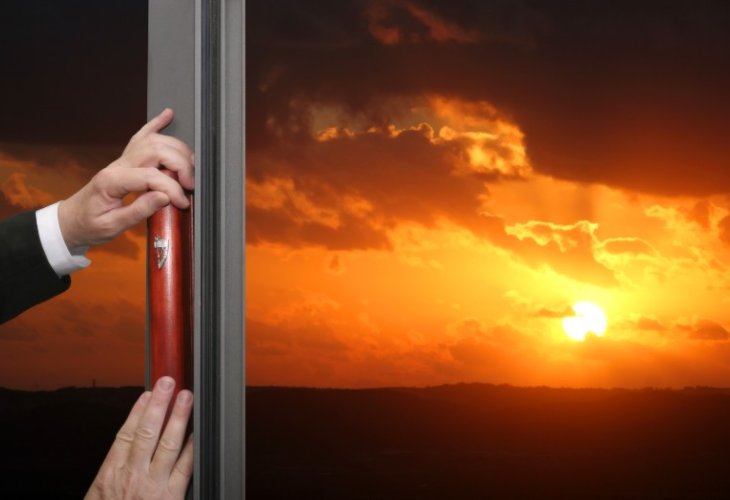
Affixing a mezuzah is a positive commandment from the Torah, as it is written: “And you shall write them upon the doorposts of your house and upon your gates” (Devarim 6:9). The mezuzah contains the essence of Jewish faith — the two opening paragraphs of the Shema Yisrael prayer, expressing belief in God’s unity and love for Him.
Placement of the Mezuzah
It is affixed on the right side of the doorpost, in the upper third of the doorway, at every entrance of the home. Both men and women are equally obligated in this mitzvah.
How the Mezuzah is Written
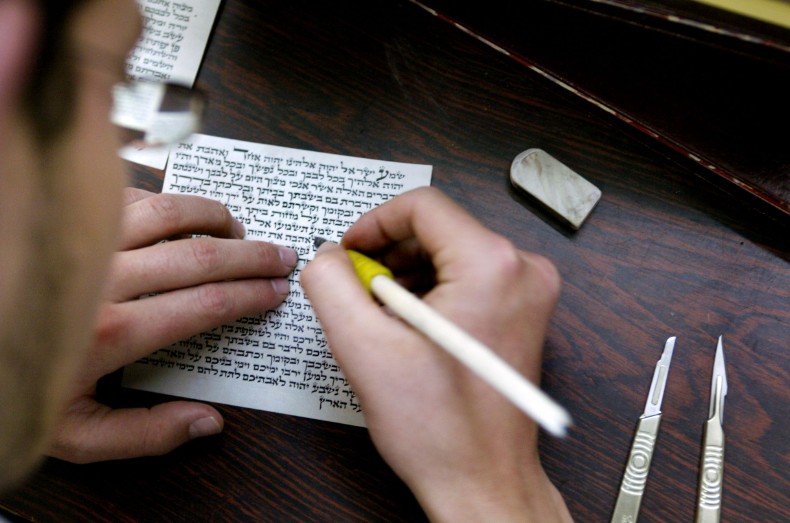
The scriptural passages are written by a qualified scribe (sofer STaM) on kosher parchment (klaf) according to all the precise laws governing the writing of a Torah scroll.
The Spiritual Meaning
Placing a mezuzah on one’s doorway is a public declaration that the household lives by the spiritual and moral principles symbolized within it. Jews customarily kiss the mezuzah upon entering or leaving the home — an expression of love for the mitzvah and identification with the Shema’s two central ideas:
Acceptance of God’s sovereignty (Kabbalat ol malchut shamayim).
Acceptance of the yoke of the commandments (Kabbalat ol mitzvot).
 (Photo: Olivier Fitoussi / Flash 90)
Divine Protection and Love
The Divine Name written on its back is an acronym for “שומר דלתות ישראל” — “Guardian of the doors of Israel.”
Thus, the mezuzah serves as a symbol of God’s protection over the home and its inhabitants.
This mitzvah reflects God’s love for His people. Out of His affection, He commanded that His name be written upon the entrances of our homes. One who is careful with this mitzvah merits protection both when entering and when leaving.
The Kesef Mishneh (commentary on Rambam) writes: “When the mezuzah is written properly, the divine protection of the Holy One rests upon that home.” The Mordechai adds: “I guarantee that no harm can befall a house whose mezuzah is properly fixed.”
And the Talmud (Shabbat 23b) teaches: “Whoever is careful with the mitzvah of mezuzah will merit a beautiful dwelling.”
The mezuzah provides spiritual protection only if it is halachically valid. Therefore, one should purchase mezuzot only from a trustworthy, G-d-fearing source, ensuring that they are properly written and certified kosher.
Stories of Divine Providence
A man once suffered a serious car accident. When his mezuzah was later checked, it was discovered that the word “nafshecha” (“your soul”) was invalid — hinting to the mishap.
In another case, a Torah scholar inspected the mezuzah of a relative who had been childless for years. Though a neighbor had previously declared it kosher, he chose to check again. He found that the letter yud in the word “beneichem” (“your children”) was missing. After replacing the mezuzah, the couple was soon blessed with twins.
The book Derech Yeshara teaches: “One who regularly checks his mezuzot will live long, be protected from evil spirits, and merit righteous children.”

